
Security Agencies Blow Up Pulwama Home of Terrorist Dr. Umar Mohammad: A Deep 3000-Word Analysis of the Operation and Its Wider Impact.
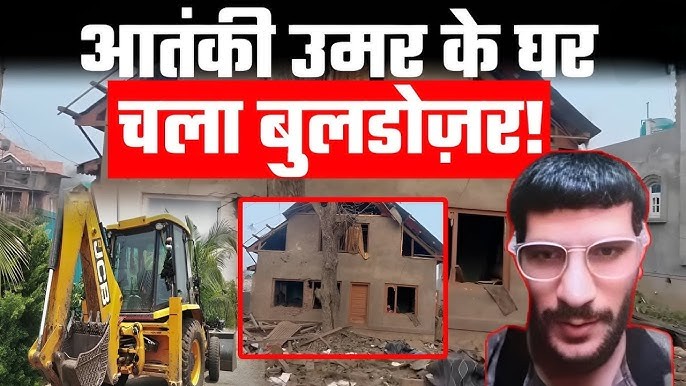
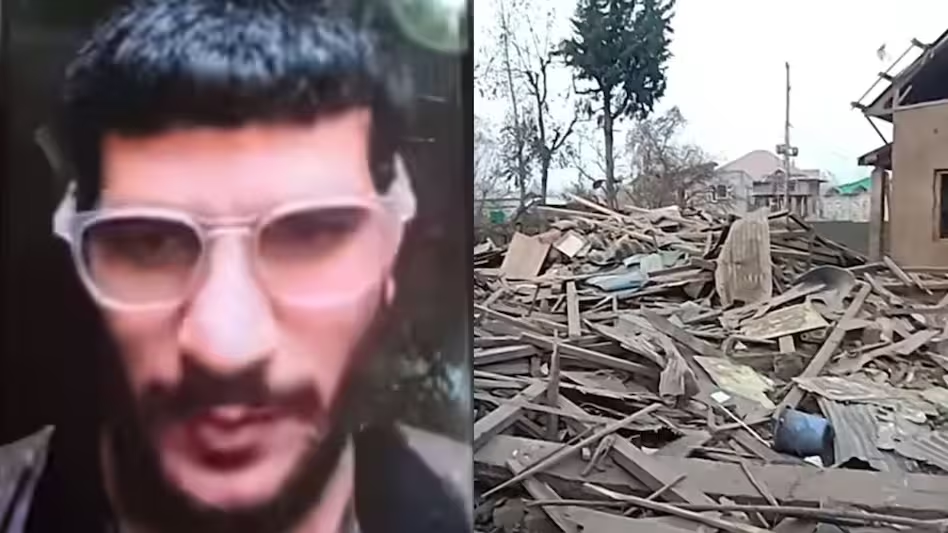
Dr. Umar Mohammad house destroyed, In a decisive action against terrorism, security agencies carried out a controlled explosion of the Pulwama residence belonging to wanted terrorist Dr. Umar Mohammad. The operation, conducted with high-level coordination and precision, marks a significant step in counter-terror efforts in Jammu & Kashmir. The crackdown comes amid renewed commitment from the forces to neutralize terrorist networks and dismantle the infrastructure that enables such operatives to function.
The destruction of the house of Dr. Umar Mohammad was not merely symbolic; it was a strategic message by the authorities that no individual involved in terrorism would be allowed to retain assets or safe shelters that support militant activities. This 3000-word comprehensive blog analyzes the operation, breaking down the tactical, psychological, and political aspects of the decision.
Who is Dr. Umar Mohammad? Examining the Terror Profile
Though many terror operatives operate in secrecy, Dr. Umar Mohammad gained notoriety for his involvement in aiding militant activities in South Kashmir. According to reports, Dr. Umar Mohammad was an active recruiter, logistics handler, and facilitator of cross-border communication. His residence in Pulwama had allegedly been used multiple times to shelter militants and store explosive components for terror attacks.
Security officials have maintained that Dr. Umar Mohammad represented a dangerous blend of intellectual capacity and militant ideology. They believed his role extended beyond local activities—he was suspected of having deep connections with Pakistan-based terror handlers. By eliminating his operational base, forces sought to weaken this network.
The Crackdown: Security Agencies Move In
The day of the operation unfolded with high tension. Early in the morning, multiple units of the security forces sealed the area in Pulwama. Cordon-and-search operations are standard in conflict regions, but this operation was classified as “high sensitivity” due to the previous terror-related activities connected with Dr. Umar Mohammad.
The Key Phases of the Operation:
- Area Sealing:
Security forces encircled the locality to ensure civilians remained safe. Local movement was halted to avoid any accidental casualties. - Verification and Clearance:
Bomb disposal units and intelligence teams entered the property to verify explosive threats. The house, once belonging to Dr. Umar Mohammad, was checked for booby traps or hidden militants. - IED Placement:
A specialized team installed a controlled Improvised Explosive Device. The purpose was not to cause widespread destruction, but to precisely demolish the structure. - Controlled Blast:
The IED was detonated in a systematic manner, allowing the building to collapse without affecting neighboring structures.
Security personnel confirmed that the intention was not only to demolish property but also to prevent the location from being reused by terror groups in the future.
Why the House of Dr. Umar Mohammad Was Targeted
One of the critical reasons the house of Dr. Umar Mohammad was demolished is its suspected link to multiple terror activities. Intelligence reports indicated that the residence served as an operational hub for militants. Additionally, senior officials felt that the continued existence of the property created a symbolic space for terror elements to regroup.
Symbolism Behind Destroying a Terrorist’s House
Destroying the home of Dr. Umar Mohammad is a message to other militants:
- Terrorism will not only be countered through arrests and encounters.
- Physical infrastructure that supports terrorism will be wiped out.
- A strong warning: No militant or supporter will retain any asset that strengthens terrorists.
This strategy has been applied in similar anti-terrorism operations across the region. Demolishing such houses disrupts logistical support networks and psychologically discourages sympathizers.

The Life and Role of Dr. Umar Mohammad in Terror Networks
The case of Dr. Umar Mohammad presents a concerning evolution of terrorism. Unlike traditional militants, he was believed to be highly educated. His background made him an asset for terror organizations who required individuals capable of handling organizational communication, recruitment, and explosive planning.
Reports suggest that Dr. Umar Mohammad was instrumental in establishing sleeper cells. His involvement extended to:
- Inspiring radicalized youth
- Providing medical or logistical help to terrorists
- Creating temporary shelters for militants
- Guiding new recruits on handling weapons
Because of these roles, the presence of Dr. Umar Mohammad in the terror ecosystem was considered a major security threat.
Reactions from Security Officials
Senior security officials described the demolition as an important milestone. One official noted:
“Removing the operational base of Dr. Umar Mohammad helps us prevent the misuse of the location by any future terror modules.”
Another officer said the operation was executed with minimal disruption to civilians, which was a priority. The safety-first approach in blowing up the house highlighted:
- Planning
- Coordination
- Caution
- Professional execution
The move against Dr. Umar Mohammad was applauded by many intelligence experts who have long argued for taking firm action against terror infrastructure.
Local Reactions in Pulwama: Mixed Sentiments
The residents of Pulwama reacted with mixed feelings. While some expressed relief that security forces were removing a dangerous threat, others were anxious about the impact such operations might have on local life.
Voices from the Ground
- Some residents said they felt safer knowing the house of Dr. Umar Mohammad was no longer a potential hub for militants.
- Others expressed concern about potential retaliatory actions by militant outfits.
- Many appreciated the calm and controlled manner in which the operation was carried out.
Overall, the local population prefers peace and is tired of the instability caused by militant activities associated with people like Dr. Umar Mohammad.
Impact on Terror Ecosystem in South Kashmir
The demolition of the home of Dr. Umar Mohammad carries long-term implications:
1. Breaking the Support Network
By eliminating structures used for terror activities, the operational strength of militants decreases.
2. Preventing Safe Shelters
Terror groups often rely on safe houses. The removal of Dr. Umar Mohammad’s residence reduces one such hideout.
3. Psychological Impact
It signals that the government will not tolerate any form of support for terrorism.
4. Disruption of Recruitment
Since Dr. Umar Mohammad was a recruiter, removing his stronghold will hamper efforts to attract new militants.
How This Operation Reflects India’s Counter-Terror Strategy
India’s counter-terror actions have evolved significantly. Instead of merely neutralizing militants, the focus is now on dismantling entire networks.
The demolition of the house belonging to Dr. Umar Mohammad fits this model:
- Destroy infrastructure
- Cut supply chains
- Limit logistical support
- Reduce morale among terror outfits
Security forces understand that terror organizations thrive on fear and symbolism. Removing the property of Dr. Umar Mohammad sends a clear signal: terrorism will face zero tolerance.
Political Reaction Across the Country
Political leaders largely applauded the move. Most national parties considered it a justified step in fighting militancy. There were some concerns about civilian inconvenience, but overall, the operation was widely supported.
Analysts agreed that removing the house belonging to a terrorist like Dr. Umar Mohammad strengthens India’s message of fighting terrorism aggressively.
The Message Sent to Potential Terror Helpers
Many terror operatives depend heavily on local supporters. By targeting the assets of people like Dr. Umar Mohammad, the government aims to discourage individuals from:
- Giving shelter
- Providing intelligence
- Supplying resources
- Aiding recruitment
The fear of losing property can be a major deterrent.
International Implications
Globally, India’s actions align with counter-terror principles used worldwide. Countries such as Israel and the USA have employed similar strategies. The controlled demolition of the property linked to Dr. Umar Mohammad reflects international best practices.
Foreign media outlets have also highlighted India’s increasing intensity in tackling terrorism in Kashmir.
Final Analysis: What This Means for Kashmir’s Future
The blasting of the house associated with Dr. Umar Mohammad is more than an isolated event. It represents a shift in India’s strategy:
- From reactive to proactive
- From targeting individuals to dismantling infrastructure
- From temporary crackdowns to long-term disruption
With Dr. Umar Mohammad‘s operational base destroyed, the terror ecosystem in South Kashmir has suffered a definitive blow.
The message is strong:
No terrorist, no matter how educated or influential, can escape the consequences of aiding violence.
Conclusion
The demolition of the Pulwama residence belonging to Dr. Umar Mohammad marks a significant milestone in India’s fight against terrorism. The controlled blast, meticulous planning, and coordinated execution underline the efficiency of security forces. The decisive move sends a powerful message not only to active militants but also to potential sympathizers.
By destroying the house once used by Dr. Umar Mohammad, security agencies have symbolically and strategically weakened terror networks. The operation reinforces the message that terrorism will be met with firm resistance, and no asset used for terror will be allowed to exist.
Read More latest news

