

Gold and Silver Prices See a Sharp Decline from Record Highs: Why Have Precious Metals Lost Their Shine?
Introduction: A Sudden Shock in the Precious Metals Market
In a surprising turn of events, gold and silver prices — which had been soaring to record highs over the past few months — have suddenly taken a steep fall. Gold, once trading near ₹74,000 per 10 grams, has now slipped by over ₹13,000 from its peak, while silver has witnessed an even more dramatic plunge of ₹29,000 per kilogram.
This decline has left investors, traders, and even ordinary buyers wondering: what went wrong? Why did the metals that symbolized stability and safe investment suddenly turn volatile?
To understand this drop, one needs to explore multiple layers — from global economic cues and interest rate trends to geopolitical changes and the behavior of central banks.
Let’s dive deep into what caused this massive correction, its impact on investors and consumers, and what the future might hold for gold and silver prices in India and globally.
The Rise Before the Fall: When Gold and Silver Hit Record Highs
Before this recent slide, gold and silver had been on a remarkable rally. Several factors contributed to the surge in prices:
- Global Economic Uncertainty:
With multiple economies, especially in Europe and Asia, facing inflationary pressures and slowing growth, investors rushed to Gold and silver as a “safe haven.” - Weakening Dollar (Earlier in 2025):
A declining U.S. dollar made gold and silver more attractive for non-U.S. investors, pushing prices upward. - Geopolitical Tensions:
Ongoing conflicts — including trade wars, energy crises, and tensions in the Middle East — created fear-driven demand for precious metals. - Central Bank Buying:
Many central banks, especially those in Asia like China and India, increased their Gold and silver reserves to diversify away from the U.S. dollar. - Retail and Festival Demand in India:
During Akshaya Tritiya and Diwali seasons, demand for jewelry surged, giving additional support to gold prices.
These factors combined to push Gold and silver to a record of around ₹74,400 per 10 grams and silver to around ₹97,000 per kilogram in Indian markets.
But what goes up fast often corrects sharply — and that’s precisely what we’ve witnessed in the last few weeks.
The Fall: Numbers That Stunned the Market
As of now, gold is trading near ₹61,000 per 10 grams, and silver has crashed to around ₹68,000 per kilogram.
- Gold’s decline: ₹13,000+ from its all-time high.
- Silver’s decline: ₹29,000 from its recent peak.
Such a sharp correction in such a short period is rare, especially for metals that are generally considered stable assets.
But behind these numbers lie a series of interconnected reasons that together caused this meltdown.
Reason 1: Strengthening of the U.S. Dollar and Rising Bond Yields
The U.S. dollar index has strengthened considerably in recent weeks as the American economy shows signs of resilience.
When the dollar rises, commodities priced in dollars — such as gold and silver — become more expensive for buyers using other currencies, leading to reduced demand.
Additionally, U.S. bond yields have risen. Investors seeking stable returns now find U.S. treasury bonds more attractive compared to non-yielding assets like gold.
This shift in sentiment has triggered heavy selling in the global bullion market.
Reason 2: Hints of Interest Rate Hikes by Central Banks
Another major reason for the fall is the hawkish stance of central banks, especially the U.S. Federal Reserve.
After a year of battling inflation, the Fed signaled that it might delay interest rate cuts or even hike rates again if inflation remains sticky.
Higher interest rates make holding gold less appealing because gold doesn’t offer any interest or dividend. Investors prefer to park money in fixed-income securities or government bonds during such periods.
As a result, speculative and institutional money started exiting gold and silver ETFs (Exchange-Traded Funds), causing further decline in prices.
Reason 3: Reduced Geopolitical Fear Premium
For months, the global geopolitical scenario — particularly the tensions between the U.S. and China, and conflicts in Eastern Europe — boosted the “fear premium” in gold.
However, with temporary ceasefire talks and improving diplomatic relations in certain regions, the panic-driven buying has subsided.
This decline in safe-haven demand has taken away one of the strongest support pillars for gold and silver prices.
Reason 4: Decline in Industrial Demand for Silver
Silver, unlike gold, has a dual nature — it’s both a precious metal and an industrial commodity.
A significant portion of silver’s demand comes from industries like:
- Solar energy (for photovoltaic cells)
- Electronics and semiconductors
- Electric vehicles and battery manufacturing
In 2025, global manufacturing output has slowed down, especially in China and Europe. This industrial slowdown directly impacted silver’s consumption, leading to oversupply in the market and a steep fall in prices.
Reason 5: Strengthening of the Indian Rupee
The Indian Rupee’s appreciation against the U.S. dollar has also played a role in bringing down domestic prices.
Gold and silver are imported commodities for India. So when the rupee strengthens, it effectively makes imports cheaper, leading to reduced domestic prices even if international prices remain steady.

Reason 6: Profit Booking by Investors
After months of rallying prices, many investors saw this as the perfect opportunity to book profits.
Large institutional investors and hedge funds began selling off their positions in the bullion market, triggering a chain reaction.
This profit booking accelerated the downtrend, especially when retail investors followed suit.
The Impact on Indian Markets and Consumers
The fall in gold and silver prices has had mixed effects on the Indian economy.
1. Relief for Jewelry Buyers
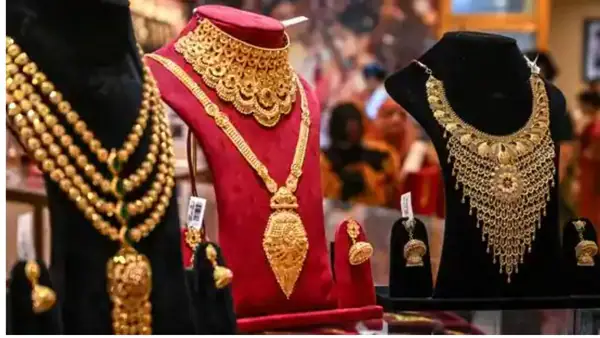
For millions of Indians planning weddings or festive purchases, this price correction is nothing short of good news.
Jewelry showrooms have started seeing renewed interest from buyers who were previously holding back due to high prices.
2. Trouble for Investors
For investors who entered the market at record highs, this decline has resulted in short-term losses. Many small investors are now stuck with gold bought at ₹72,000-₹74,000 levels.
3. Boost to the Jewelry Industry
The correction is a breather for jewelry retailers who faced reduced sales during the price surge. Now, stores are witnessing increased footfall as buyers try to capitalize on lower rates.
4. Volatility for Traders
Gold and silver traders are finding it difficult to manage inventory and hedging positions due to unpredictable market swings.
Global Comparison: What’s Happening Worldwide
The decline isn’t limited to India. Globally, gold prices have corrected from around $2,450 per ounce to nearly $2,180 per ounce, while silver has dropped from $32 per ounce to $25 per ounce.
Major markets such as London, New York, and Shanghai have all seen similar patterns of selling pressure.
Analysts note that this correction was overdue since the rally was primarily sentiment-driven rather than based on long-term fundamentals.
Historical Perspective: Gold’s Long-Term Nature
While short-term corrections are common, gold has a history of bouncing back.
Over the last 20 years, gold has consistently delivered long-term returns, especially during:
- Economic recessions
- High inflation periods
- Geopolitical crises
For instance:
- In 2008 (Global Financial Crisis), gold rose over 25%.
- During the 2020 pandemic, gold hit then-record highs.
Hence, many experts believe this current fall might be temporary — a healthy correction before the next rally.
Experts Speak: Is This a Buying Opportunity?
Financial experts and bullion analysts have weighed in on the situation.
Ajay Kedia (Commodity Analyst):
“Gold’s current correction is technical. As long as it holds above ₹60,000 per 10 grams, the long-term trend remains bullish. Investors can start accumulating gradually.”
Anuj Gupta (HDFC Securities):
“Silver has strong support near ₹66,000. Once industrial demand picks up, we may see a sharp rebound.”
Motilal Oswal Commodities Report (October 2025):
“The correction is healthy. The long-term fundamentals for gold remain intact as global debt, inflation, and geopolitical uncertainties continue to persist.”
This means that while the fall seems severe, experts view it as a normal correction within a long-term bullish market.
What Should Investors Do Now?
If you’re an investor, here are key strategies to navigate the current scenario:
1. Don’t Panic
Price corrections are normal in commodities. Avoid selling your holdings in panic.
2. Consider Averaging
If you bought gold at higher prices, this dip can be used to average your cost by buying small quantities now.
3. Diversify Investments
Don’t put all your money into gold or silver. Balance it with equities, mutual funds, or fixed income options.
4. Watch for Global Triggers
Keep an eye on the U.S. Fed announcements, inflation data, and dollar index movements — they heavily influence gold trends.
5. Think Long-Term
Gold is best viewed as a long-term hedge against inflation and currency devaluation — not for short-term trading.
The Silver Story: Is It More Vulnerable?
Silver’s deeper fall — nearly ₹29,000 per kg — has raised specific concerns.
Unlike gold, silver’s value depends heavily on industrial consumption trends. Until manufacturing activity rebounds in major economies like China and Germany, silver may continue to remain under pressure.
However, with the global shift towards green energy, silver’s role in solar panels and electric vehicles could trigger a rebound in 2026 and beyond.
India’s Role in the Global Bullion Market
India remains one of the world’s largest consumers of gold and silver, importing nearly 800-900 tonnes of gold annually.
Thus, any domestic policy, import duty change, or rupee movement has a significant global ripple effect.
The Indian government’s recent push for digital gold and sovereign gold bonds (SGBs) also impacts physical demand, adding another layer to the pricing puzzle.
Will Prices Recover Soon?
While it’s difficult to predict short-term movements, most analysts agree that gold prices could stabilize around ₹60,000–₹63,000 per 10 grams before attempting a recovery.
Silver might find support near ₹66,000–₹68,000 per kg, depending on industrial data and global demand trends.
If inflation resurfaces or geopolitical tensions rise again, gold could easily reclaim its highs in the coming year.
Future Outlook: What Lies Ahead in 2026
- U.S. Election Year Uncertainty — Political and economic instability often boosts gold demand.
- Potential Fed Rate Cuts in 2026 — Once rates are reduced, gold could gain momentum again.
- Central Bank Buying — Emerging markets may continue adding gold to reserves, keeping long-term demand stable.
- Green Energy Boom — Could revive silver prices through industrial use.
In summary, while the current phase looks bearish, the long-term outlook remains optimistic.
Conclusion: The Shimmer Has Dimmed, But Not Gone
The recent fall in gold and silver prices has shaken short-term sentiment, but it doesn’t change the fundamentals that have made these metals timeless stores of value.
For the Indian household that treats gold as both an investment and emotion — this correction might even be a blessing in disguise. Lower prices mean better buying opportunities ahead of festivals and weddings.
For investors, patience is key. Gold and silver may have lost their immediate shine, but their long-term glow remains intact.
In the ever-changing world of global finance, one truth holds steady — when uncertainty rises, gold and silver always find their way back to the spotlight.
Read More latest news

