
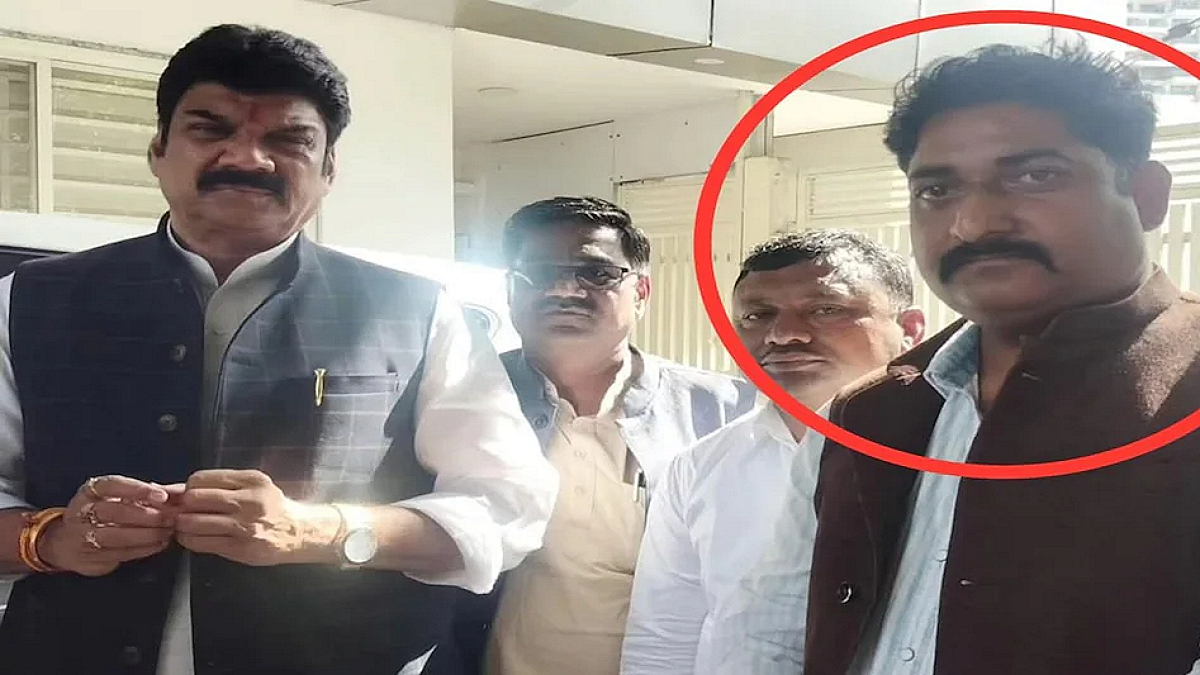
Guna’s Grief: Mahendra Nagar accused brutal murder – The Alleged Murder of Farmer Ramswaroop Dhakad and the Deadly Politics of Land
BJP leader Mahendra Nagar and his associates have been accused of brutally murdering farmer Ramswaroop Dhakad in Guna district, On a morning that should have been ordinary for a farming family in Ganeshpura village, Guna district, tragedy struck in a way that ripped through the fragile fabric of rural life — and thrust into public view a story that interweaves land dispute, alleged violence, and political power. According to news reports, farmer Ramswaroop (Ram Swaroop) Dhakad was brutally attacked and later died; a local BJP leader, Mahendra Nagar, and a number of his associates have been booked in connection with the incident. The allegations include a mob assault, a vehicle being driven over the victim, and the sexual assault or molestation of the farmer’s daughters when they tried to intervene. These are severe charges that have shocked the region and raised urgent questions about land rights, impunity, and the protection of vulnerable farmers.
This piece traces the reported facts, the context of land conflicts in rural India, the legal and political ramifications, and why an incident like this — whether as alleged or proven — matters for democracy, law and rural livelihoods. I will repeatedly use the phrasing “alleged” where the claims have been reported but not judicially established; that is essential when reporting about criminal accusations against named individuals.
What the reports say happened Mahendra Nagar accused brutal murder
According to media coverage, the incident took place in Ganeshpura village in Guna district. Police have reportedly booked Mahendra Nagar — described in the reports as a local BJP leader — along with around 14 others in connection with the death of farmer Ram Swaroop Dhakad. The complaint, as captured by national outlets, alleges that the group beat the farmer with rods and sticks, then ran a vehicle (reported to be a Mahindra Thar) over him. The reports add that when the farmer’s daughters tried to protect their father, they were allegedly assaulted and had their clothes torn. India Today+1
One of the most harrowing details published in the coverage is testimony from the victim’s daughter, describing the immediate violence she witnessed: she said she rushed to save her father and was overpowered; her clothes were torn during the scuffle. That human testimony — a daughter’s traumatic account — is what transforms a headline into a human catastrophe, and it is the kind of testimony that often drives public scrutiny and demands for swift investigation.
Local police reports and the FIR, as referred to in the coverage, appear to list charges against the accused for murder and related offences. News outlets report that the police registered a case and that investigations were underway; however, as of these initial reports there was limited or no official court outcome to confirm or deny the criminal allegations. Media reporting describes the accused as having allegedly been involved in forcible occupation of land belonging to small farmers — a claim that, if true, would fit into a larger pattern of agrarian land conflicts across India.
Land disputes and rural vulnerability — the wider context Mahendra Nagar accused
To understand why this case has local resonance beyond the individuals involved, it helps to situate it in the broader pattern of agrarian stress, land-grab disputes, and asymmetric power in many rural areas.
- Power asymmetries in villages. In many parts of India, land is not only an economic asset but a source of social and political power. When local political figures or well-connected individuals seek to acquire land — whether by legal means or via coercion — smallholders can be especially vulnerable. Reports of intimidation, illegal mutations, coerced sales, and even physical violence tied to land are not rare in several states. While not every allegation ends with conviction, the pattern of greater risk for marginal farmers when confronting entrenched local power is well documented in case studies and news reporting. (Contextual background; not all elements apply to the Guna case.)
- Why land matters right now. Rising land values around growing towns, the push to consolidate land for commercial agriculture, and informal transfers have increased pressure on smallholders in many places. When land records are unclear or local muscle is applied to change possession, disputes can quickly escalate.
- The catastrophic human toll. Beyond economics, land disputes can cause family displacement, create daily insecurity, and occasionally escalate into violence. That is why a reported incident like Dhakad’s death touches nerves widely: it is the worst possible outcome of a conflict that often begins with paperwork, intimidation, or threats.
All of this means that the question of whether the alleged land-grab preceded the violence is not a minor detail — it is central to understanding motive, the pattern of interactions between local elites and small farmers, and why community outrage erupts when violence is reported.

Investigative and legal angles to follow Mahendra Nagar accused
Given the gravity of the allegation, several specific investigative threads matter:
- The FIR and charges. The content of the FIR and the sections of the Indian Penal Code invoked will determine the initial legal framing. According to the reports, charges include murder and accompanying offences; the exact sections and whether charges like sexual assault or outraging modesty of women are added will shape the criminal case. Media reports indicate an FIR has been lodged.
- Forensic evidence and post-mortem. A post-mortem and forensic analysis (injury pattern, cause of death — e.g., blunt force, vehicle impact, etc.) will be crucial. Media reporting that describes the victim being run over by a vehicle must be matched against autopsy findings to establish cause of death beyond doubt.
- Eyewitness testimony and corroboration. The victim’s daughters’ testimony is central; any other witnesses, audio/video evidence, and independent testimonies will strengthen the prosecution’s case. Local CCTV or mobile-phone video often plays a critical role in contemporary rural crime investigations.
- Land records and documentary trail. If the alleged motive was forcible occupation of the farmer’s land, mutation records, revenue documents, and local pattas (land titles) will be central in establishing a timeline and ownership. Any evidence of illegal mutation, forged papers, or collusion with local functionaries would add a civil-legal dimension to the criminal allegations.
- Police impartiality and administrative response. High-profile cases often test the independence of the local administration. Timely registration of FIRs, transparent investigation, and whether arrests are made or chargesheets filed in time will be indicators of the seriousness of the probe.
- Political response and accountability. When the accused is described in media as a political leader, there will inevitably be pressure on political parties for statements, for suspension of membership pending inquiry, or for distancing. Responsible parties typically demand a full investigation; failure to address such allegations transparently risks political fallout.
As of the initial reports, the case appears to be in its earliest stage: FIR registered, accused named, and investigations under way. Each of the steps above will be vital to assess the facts and ensure due process.
The human story: daughters, family, and community trauma Mahendra Nagar accused brutal murder
Legally, a case can be reduced to sections and evidence. But humanly, a family has been shattered. When daughters describe assault while trying to save their father, or when neighbours describe a violent mob, these are not abstract facts — they are testimonies to terror. The visible wounds might heal; the psychological scars persist. Rural families depend on each other, and when the breadwinner is gone or family members traumatized, the consequences ripple across livelihood, schooling for children, and community life (Mahendra Nagar accused brutal murder).
The family’s immediate needs after such incidents are material — proper medical care, legal aid to press the case, and protection from intimidation — and symbolic: the community often wants public acknowledgment, quick justice, and guarantees that such violence will not recur. Media coverage can help channel attention and resources, but it can also inflame polarisation if not carefully framed (Mahendra Nagar accused brutal murder).
Political implications: why allegations against a local leader escalate tensions Mahendra Nagar accused brutal murder
When the accused is described as a leader of a political party — in this case, national reporting describes him as a local BJP leader — two dynamics typically follow:
- Heightened media attention and political signalling. Parties often issue statements. Opposition parties may use the case to criticise the ruling party, while the accused’s party may demand due process or distance itself. The optics of a political leader being accused of violent land-grab-linked murder can quickly become a national talking point, especially in a politically-sensitive state. (Local reporting indicates the accused’s political association as part of the public narrative.)
- Risk of communal or partisan polarisation. In charged environments, crime can be framed along communal or partisan lines, distracting from the core criminal investigation. That is why measured responses from authorities and parties — calling for investigation but avoiding inflammatory rhetoric — are important.
It’s crucial, however, to distinguish allegation from conviction. Political parties and voters should insist on a fair, independent inquiry that follows the evidence rather than rushing to judgment (Mahendra Nagar accused brutal murder).

What justice should look like — principles, not slogans Mahendra Nagar accused brutal murder
In any high-profile allegation of this sort, justice should be guided by principles:
- Timely, impartial investigation. Police should gather forensic evidence, secure the scene, collect statements in a procedurally correct fashion, and protect witnesses. If necessary, investigations should be supervised by higher authorities or even transferred (to a CID or special team) to ensure impartiality.
- Protection for victims and families. The surviving family members should receive protection, medical and psychological assistance, and legal aid. Authorities must prevent any intimidation of witnesses.
- Transparent communication. Authorities should share verified updates with the public to prevent rumours. Political actors should avoid provocative statements that could jeopardize safety or the investigation.
- Rule of law, not impunity. If political position confers any advantage, that must not translate into impunity. Conversely, every accused person is entitled to a fair trial under the law. The criminal process must focus on evidence and procedure, not on verdict-by-headlines.
Wider policy takeaways: land reform, record digitisation, and local governance Mahendra Nagar accused brutal murder
If land-grab allegations emerge as a consistent pattern in a region, systemic fixes may be necessary:
- Strengthen land records and transparency. Digitised land records, open access to mutation history, and easily verifiable ownership documents reduce ambiguity that bad actors exploit.
- Quick civil remedies for dispossessed farmers. Legal aid cells, emergency injunctions against forced evictions, and fast-track civil hearings for land disputes can reduce the incentive to resort to extra-legal coercion (Mahendra Nagar accused brutal murder).
- Local enforcement of rights. Gram panchayats, revenue officials, and district administrations must be empowered and held accountable to protect smallholders.
- Education and legal outreach. Rural legal literacy programs help small farmers understand their rights and how to prevent manipulative land transfers.
These are longer-term remedies that require political will — but the human cost of delay is visible in tragedies like the one reported in Guna (Mahendra Nagar accused brutal murder).
Media responsibility and verification Mahendra Nagar accused brutal murder
It’s important that media coverage of such incidents walks a fine line: bring facts to light, amplify victims’ voices, but avoid sensationalism that risks inflaming passions or misrepresenting legal reality. Journalists should seek:
- Copies of the FIR and official police statements;
- Corroboration of eyewitness claims;
- Statements from accused persons or their representatives (if available) to provide balance;
- Forensic or hospital records when reporting cause of death;
- Local administrative records concerning land titles to verify claims of forcible occupation.
Readers, too, should be cautious: in emotionally charged stories, premature conclusions are tempting but dangerous. The public’s legitimate demand for justice must not eclipse the accused’s right to a fair legal process (Mahendra Nagar accused brutal murder).
A plea for action, not revenge Mahendra Nagar accused brutal murder
When violence shatters a family and a community, the first impulse can be a cry for revenge. But justice in a constitutional order must be procedural and evidence-based. The family of the victim deserves swift and transparent investigation, protection, and legal redress. The community deserves assurance that the law works for them. The state must ensure impartiality and effective law enforcement. Political parties must cooperate, not obstruct, and all citizens must insist on the rule of law.
The reported allegations from Guna — that a farmer, Ramswaroop (Ram Swaroop) Dhakad, was brutally killed and that local BJP leader Mahendra Nagar and others were booked in connection with the incident — demand accountability and thorough inquiry. That process must be visible, credible, and impartial.
How concerned citizens and media can act responsibly Mahendra Nagar accused brutal murder
- Demand transparency. Citizens should ask the local administration for details about the FIR, the status of the probe, and what protections are being provided to the family and witnesses.
- Support the victim’s family. Local NGOs, legal aid bodies, and civil society can provide immediate assistance — medical, legal and, where relevant, financial support.
- Keep pressure for impartiality. A monitored, independent investigation (possibly with oversight from state human rights bodies or higher police authorities) will build public trust.
- Avoid social-media vigilantism. Circulating unverified claims can endanger lives and compromise investigations. Verified reporting and responsible sharing are critical (Mahendra Nagar accused brutal murder).
Closing: grief, law, and the test of institutions Mahendra Nagar accused brutal murder
The tragic death of a farmer in a place like Ganeshpura, and the allegations that powerful local actors forcibly occupied small farmers’ land before a deadly escalation, forces a municipality, a district and a state to ask difficult questions. Are the mechanisms for protecting smallholders robust enough? Are local power structures being checked? Can law enforcement pursue impartial investigations when the accused have political standing? And perhaps most importantly, can the state deliver justice to a bereaved family and restore trust in institutions?
For the family of Ramswaroop Dhakad — for his daughters and neighbours — these are not abstract questions. They are questions of survival, dignity, and redress. For the rest of us, they are a reminder that the rule of law must be actively defended, not just invoked in speeches (Mahendra Nagar accused brutal murder).
Sources and further reading: initial news coverage from national outlets reported the incident and named the accused; see reporting which details the FIR, the allegations of assault and the accounts of the victim’s daughters.
Read More latest news

