
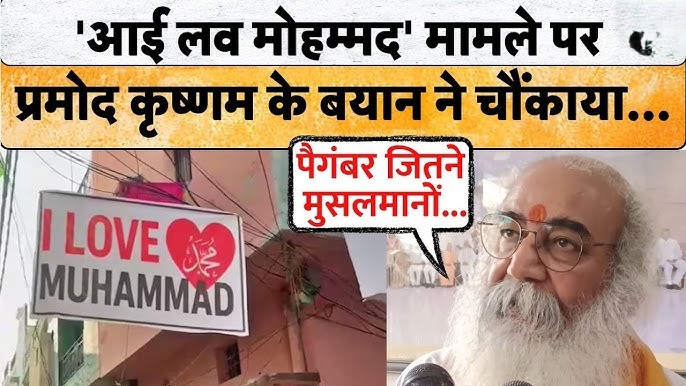
The Prophet Belongs to Hindus as Much as He Belongs to Muslims”: Acharya Pramod Krishnam’s Powerful Message on the ‘I Love Muhammad’ Controversy
Introduction: A Voice of Calm in a Storm of Controversy
Acharya Pramod Krishnam said on the I Love Muhammad issue, India, a land of many faiths and philosophies, has often found itself at the crossroads of emotion and ideology when it comes to religion. Recently, the ‘I Love Muhammad’ controversy reignited heated debates across the country, triggering discussions about interfaith respect, religious boundaries, and the essence of tolerance.
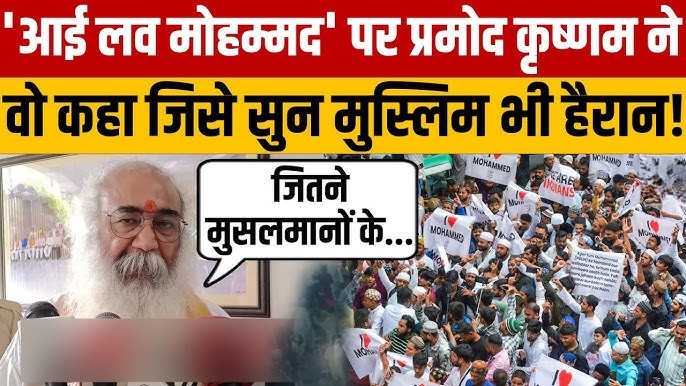
In the middle of this growing storm, a voice of calm and wisdom emerged—Acharya Pramod Krishnam, a spiritual leader known for his balanced and inclusive worldview. Speaking on the issue, he made a profound statement that resonated deeply across communities:
“The Prophet belongs to Hindus as much as he belongs to Muslims.”
These words—simple yet transformative—have sparked a new wave of reflection across India’s social and political spectrum. In a nation where faith often divides, Acharya Pramod Krishnam’s remark serves as a reminder that spirituality transcends religion, and that reverence, love, and respect for divine messengers belong to all humanity.
This blog explores the depth of his statement, the backdrop of the controversy, its social and political implications, and why his words might just be the healing India needs right now.
1. The Background: What is the ‘I Love Muhammad’ Controversy?
The “I Love Muhammad” campaign began as an expression of devotion among Muslims toward Prophet Muhammad (Peace Be Upon Him)—a declaration of love and respect for the Prophet, especially in response to online hate or offensive remarks made by fringe groups.
However, as often happens in the age of social media, what started as a spiritual expression quickly turned into a political and communal flashpoint.
Misunderstandings, provocative slogans, and counter-campaigns turned the digital space—and eventually the streets—into battlegrounds of rhetoric.
Certain groups began interpreting “I Love Muhammad” as a political or exclusivist slogan rather than a faith-based expression. In response, others countered with messages of anger, leading to verbal clashes and protests in multiple regions.
As debates intensified, questions emerged:
- Does loving a religious figure belong to one community alone?
- Can expressing reverence for a Prophet, Guru, or Saint be seen as communal property?
- Where does spirituality end and politics begin?
It was at this crucial juncture that Acharya Pramod Krishnam stepped forward with a message that bridged centuries of misunderstanding in one elegant statement.
2. Acharya Pramod Krishnam: A Brief Introduction
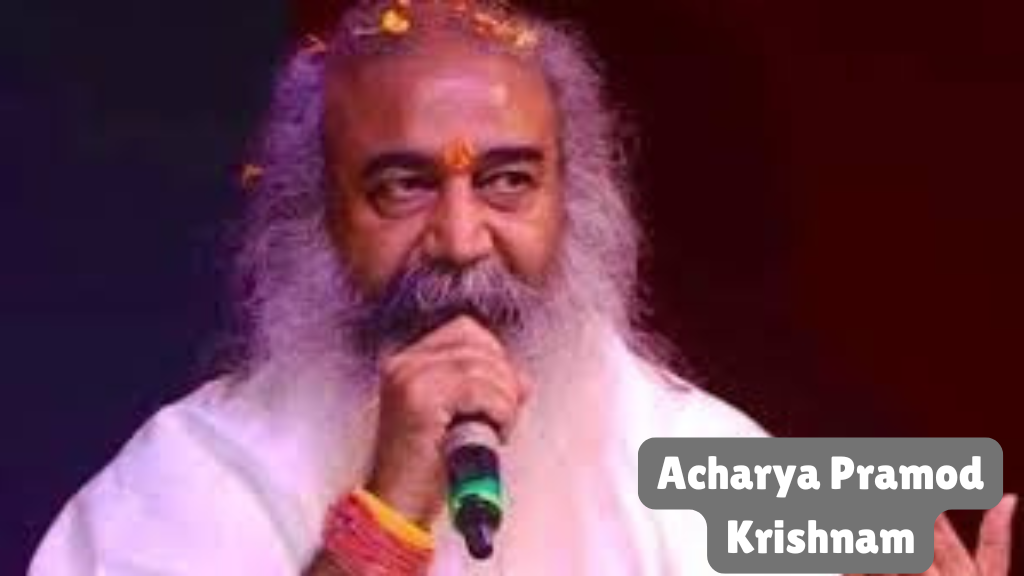
Acharya Pramod Krishnam is a respected Hindu spiritual leader, thinker, and social reformer known for his interfaith harmony and bold commentary on contemporary issues. Founder of the Kalki Dham in Sambhal, Uttar Pradesh, he has often spoken of religious unity, moral leadership, and the soul of Indian civilization.
While deeply rooted in Sanatan Dharma, he does not view religion as an instrument of division but as a tool for enlightenment and compassion. His speeches frequently quote the Vedas, Upanishads, and Quran, showing his familiarity with the spiritual essence of multiple faiths.
In this case, his assertion that “The Prophet belongs to Hindus as much as he belongs to Muslims” came not as a political statement but as a philosophical truth—one that underscores India’s ancient ethos of “Vasudhaiva Kutumbakam” (the world is one family).
3. The Essence of His Statement: Beyond Religious Boundaries
At the heart of Acharya Pramod Krishnam’s statement lies a timeless truth: divine love knows no boundaries.
When he said that “The Prophet belongs to Hindus as much as he belongs to Muslims,” he wasn’t making a claim of ownership; he was making a declaration of universal reverence.
a. Prophets as Universal Teachers
Every religion, in essence, carries messages of peace, compassion, and justice. Prophet Muhammad (PBUH) is revered not only as the Messenger of Islam but also as a figure who stood for truth, humility, equality, and love—values universal to all humanity.
Acharya’s statement implies that any human who embodies compassion and truth can connect with the teachings of the Prophet, regardless of their faith.
b. The Hindu Philosophical Lens
In Hindu philosophy, all enlightened beings are considered manifestations of the divine. The Bhagavad Gita says, “Whenever righteousness declines, I manifest Myself on Earth.”
From this view, saints, sages, and prophets across religions are seen as divine messengers restoring moral order—avatars of truth.
Thus, Prophet Muhammad too, in this understanding, becomes part of the larger cosmic effort to guide humanity toward Dharma.
4. A Message of Healing Amid Hate
At a time when the digital landscape is rife with religious trolling, polarization, and communal mistrust, Acharya’s words strike a healing chord.
a. Bridging Hearts
By acknowledging the Prophet as belonging equally to all, he effectively dismantled the walls of religious exclusivity. His statement invites Hindus and Muslims to see each other not as adversaries, but as co-travelers on the same spiritual journey.
b. Rejecting Extremism
His remark also serves as a subtle rebuke to both extremes—those who weaponize religion for politics and those who respond with hate.
He reminds the nation that faith must never be used as a sword; it should be a light guiding humanity toward coexistence.
c. Rekindling India’s Syncretic Legacy
India’s history is filled with examples of interfaith harmony—Kabir, Nanak, Rahim, Raskhan, Dara Shikoh—all of whom saw divinity beyond religious confines.
Acharya Pramod Krishnam’s statement revives that legacy, reminding Indians of the spiritual DNA of unity that defines this land.
5. The Reaction: Support and Criticism
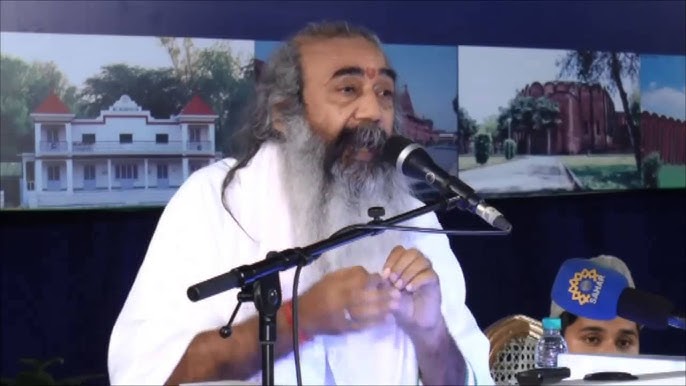
As expected, his words stirred both admiration and controversy.
a. Widespread Appreciation
Thousands praised his courage for speaking with empathy when most public figures stay silent.
Social media was flooded with posts thanking him for being a voice of sanity in divisive times.
Leaders from both Hindu and Muslim communities appreciated his reminder that love for prophets and saints transcends boundaries.
b. The Critics’ Argument
However, some criticized him, accusing him of “diluting religious identity” or “overstepping theological limits.”
A few hardliners argued that Prophet Muhammad belongs exclusively to the Islamic faith and cannot be equated universally.
But Acharya’s interpretation wasn’t theological—it was philosophical and humanitarian.
He wasn’t claiming religious ownership but spiritual kinship, emphasizing that moral and divine figures are gifts to the whole world, not to one community alone.
6. A Historical Context: India’s Interfaith Respect for Prophet Muhammad
To understand the resonance of his statement, one must recall India’s long-standing history of Hindu respect for Islamic saints and the Prophet.
a. The Bhakti and Sufi Confluence
During medieval India, Bhakti and Sufi movements overlapped and learned from one another. Poets like Kabir, Baba Farid, and Sant Namdev spoke of the same divine truth using different names—Allah, Ram, Rahim, Govind.
Many Hindu saints acknowledged the teachings of Prophet Muhammad and saw in him a reflection of divine wisdom. Similarly, Sufi saints like Hazrat Nizamuddin Auliya and Khwaja Moinuddin Chishti became revered by Hindus and Muslims alike.
b. Literary Tributes
Several Hindi and Urdu poets have described the Prophet as “Rahmatul-lil-Alamin”—a mercy to all worlds.
This phrase itself transcends religious boundaries, as it suggests that the Prophet’s compassion is not confined to one community but extended to all creation.
Acharya Pramod Krishnam’s statement thus finds its roots in this shared cultural and spiritual legacy of India.
7. The Political Dimension: Faith in the Age of Polarization
In modern India, religion has increasingly become a political tool. Every statement about faith is dissected for electoral implications rather than moral depth. Acharya Pramod Krishnam’s remark arrived at a time when polarization is at its peak, making his message even more relevant.
a. Spirituality Over Politics
His statement subtly reclaims the narrative of faith from political arenas. He reminds India that spiritual leaders must speak for unity, not division.
It was a call to return to the moral compass of religion, not the vote-bank version of it.
b. Challenging Sectarian Narratives
In today’s hyper-politicized environment, where slogans are often used to provoke rather than inspire, his words disrupted the usual pattern.
By bringing the Prophet into the fold of universal reverence, he challenged the idea that religion is exclusive property—and in doing so, struck at the root of sectarianism.
8. The Philosophical Core: What “Belonging” Truly Means
When Acharya Pramod Krishnam said, “The Prophet belongs to Hindus as much as he belongs to Muslims,” what did he mean by belongs?
It wasn’t ownership; it was belongingness—the shared human capacity to connect with divine values like compassion, truth, and mercy.
a. The Universal Message of the Prophet
Prophet Muhammad’s teachings—of justice, charity, kindness to the poor, and equality among humans—are not limited to Muslims. They are universal moral codes that resonate with the Upanishadic ideal of Sarve Bhavantu Sukhinah (May all be happy).
b. The Oneness of All Faiths
Hindu philosophy recognizes that all paths lead to the same divine source. The Rig Veda famously declares:
“Ekam Sat Vipra Bahudha Vadanti” — Truth is one; the wise call it by many names.
Through this lens, loving the Prophet or respecting his teachings is not about conversion or comparison—it’s about recognizing the same divine truth expressed through different voices.
9. Media and Public Discourse: The Ripple Effect
After Acharya Pramod Krishnam’s remarks went viral, television debates, YouTube discussions, and online opinion pieces exploded with analysis.
But beyond the noise, one thing became clear: his message struck a deep emotional chord.
a. A Rare Moment of Reflection
In an environment usually dominated by outrage, his statement forced people to pause and think. For many young Indians, it opened the door to interfaith curiosity—a willingness to understand other religions without fear.
b. Reclaiming the Social Media Space
Social platforms that often serve as battlegrounds for religious hate suddenly saw hashtags like #HumanityFirst, #ProphetForAll, and #AcharyaPramodKrishnam trending—an encouraging sign that dialogue is still possible in the digital age.
10. Interfaith Harmony: Learning from the Past, Building for the Future
Acharya’s words aren’t just about resolving one controversy—they’re a blueprint for the kind of interfaith harmony India must strive for.
a. Education and Empathy
Introducing comparative religion in schools, promoting cultural exchange, and celebrating common moral values can help new generations appreciate the beauty of diversity.
b. Religious Leadership and Responsibility
India’s spiritual leaders carry immense influence. When they speak of unity, millions listen. Acharya Pramod Krishnam’s example shows how religious discourse can heal instead of divide.
c. Common Ground in Shared Values
Whether it’s the Prophet’s emphasis on compassion or Lord Rama’s adherence to duty, the underlying principles are the same—truth, kindness, humility, and service.
Building on these shared ethics can strengthen India’s social fabric.
11. Acharya’s Broader Philosophy: Sanatan Dharma and Universal Love
To understand the spiritual roots of his statement, one must look at Acharya Pramod Krishnam’s broader worldview. He often describes Sanatan Dharma not as a religion confined by rituals but as an eternal truth that embraces all of creation.
a. The Spirit of Inclusivity
He often says, “The sun does not shine for one community; the river does not flow for one sect.” Similarly, divine guidance cannot belong to a single faith—it belongs to all hearts willing to listen.
b. The Universal Teacher
By placing Prophet Muhammad among figures of universal reverence, Acharya Pramod Krishnam reinforces the continuity of divine wisdom across ages and cultures.
This approach revives India’s ancient spirit of spiritual pluralism, where reverence crosses boundaries and truth unites rather than divides.
12. The Broader Implication: India’s Moral Compass
In many ways, Acharya’s words are not just about one Prophet or one controversy—they are about the soul of India itself.
a. The Idea of India
India’s strength lies not in uniformity but in unity through diversity. From the Gita to the Quran, from the Bible to the Guru Granth Sahib—India has housed them all.
When he said the Prophet belongs to Hindus too, Acharya was essentially saying, “India belongs to everyone.”
b. A Call for Moral Renaissance
His message is a wake-up call to restore moral dialogue in public life. In times when hate often outshouts harmony, he urges India to return to the light of conscience.
13. The Road Ahead: Turning Words Into Action
For Acharya Pramod Krishnam’s message to have lasting impact, it must move from speech to social transformation.
a. Dialogue Platforms
Organizing interfaith gatherings, peace dialogues, and youth discussions can translate his vision into reality.
b. Media Responsibility
Instead of sensationalizing religious issues, the media must amplify voices of harmony like Acharya’s, creating a culture of respect in public discourse.
c. Civil Society Involvement
Schools, NGOs, and communities can promote interfaith understanding through shared service activities—cleanliness drives, education programs, and cultural events where faiths collaborate rather than compete.
14. A Universal Message for a Divided World
The power of Acharya Pramod Krishnam’s statement goes beyond India. In a world fractured by identity politics, his words serve as a universal call for empathy.
Every nation grappling with religious polarization can learn from his vision—that divine love cannot be monopolized, and that every Prophet, Saint, and Sage belongs to all humanity.
When faith becomes inclusive, conflict becomes irrelevant.
Conclusion: “The Prophet Belongs to All Humanity”
Acharya Pramod Krishnam’s statement—“The Prophet belongs to Hindus as much as he belongs to Muslims”—is not merely an opinion; it’s a philosophical revelation rooted in the timeless truth of unity.
It reminds us that the greatest act of devotion is not defending our God from others but seeing God in others.
In a world increasingly shadowed by religious conflict, his message shines like a ray of dawn—gentle, hopeful, and divine.
India has always been the land where rivers of faith meet.
If we can listen to the spirit of Acharya’s words, perhaps we can build an India where the Gita and the Quran, the Ramayana and the Hadith, are not symbols of difference—but chapters of the same divine story.
Read More latest news

