
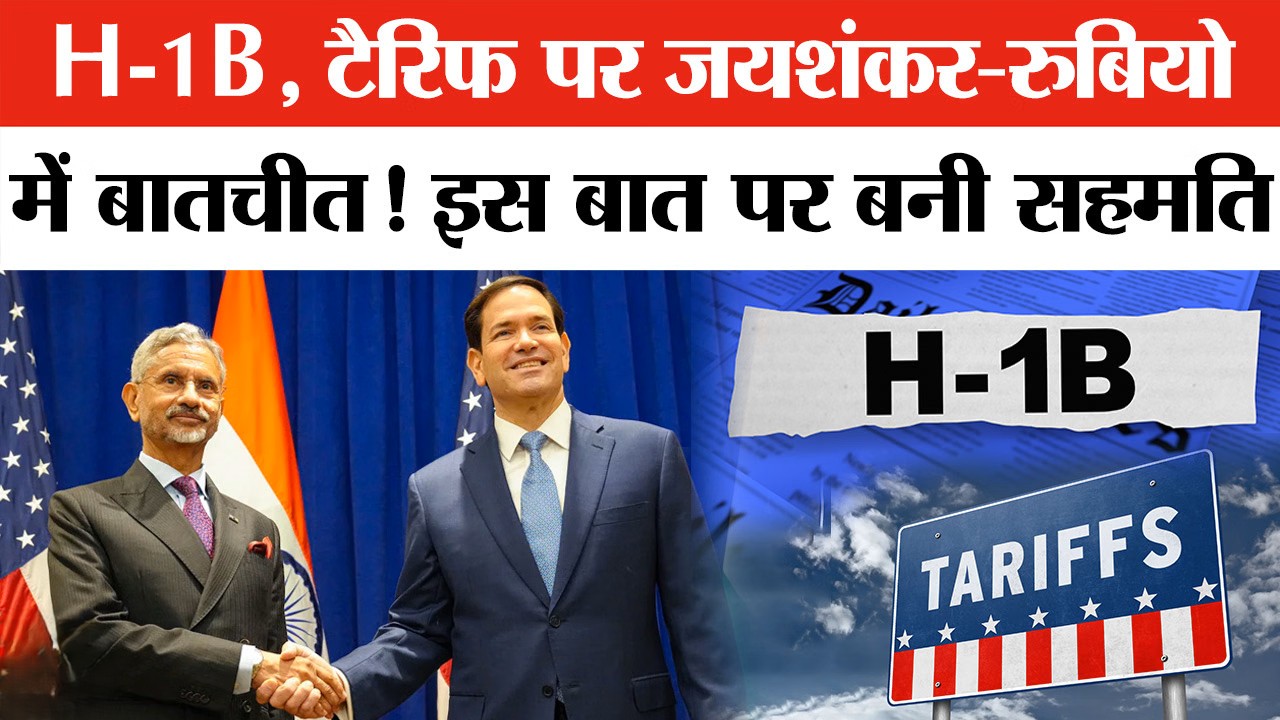
Jaishankar and US Secretary of State Rubio Meet Amid H-1B Visa Controversy and Trump’s New Policy: Strengthening India-US Relations Through Cooperation
Introduction
Jaishankar and US Secretary of State Rubio met amid the H-1B visa controversy and Trump’s new policy. They described India-US relations as important and emphasized cooperation. India and the United States have always shared a unique and evolving relationship. Over the last three decades, this partnership has transitioned from estrangement to strategic alignment, with cooperation across defense, trade, technology, and geopolitics. Yet, like any dynamic relationship between two major powers, it has faced several obstacles. One such challenge has been the recurring controversy around the H-1B visa program—a crucial gateway for skilled Indian professionals to the US job market.
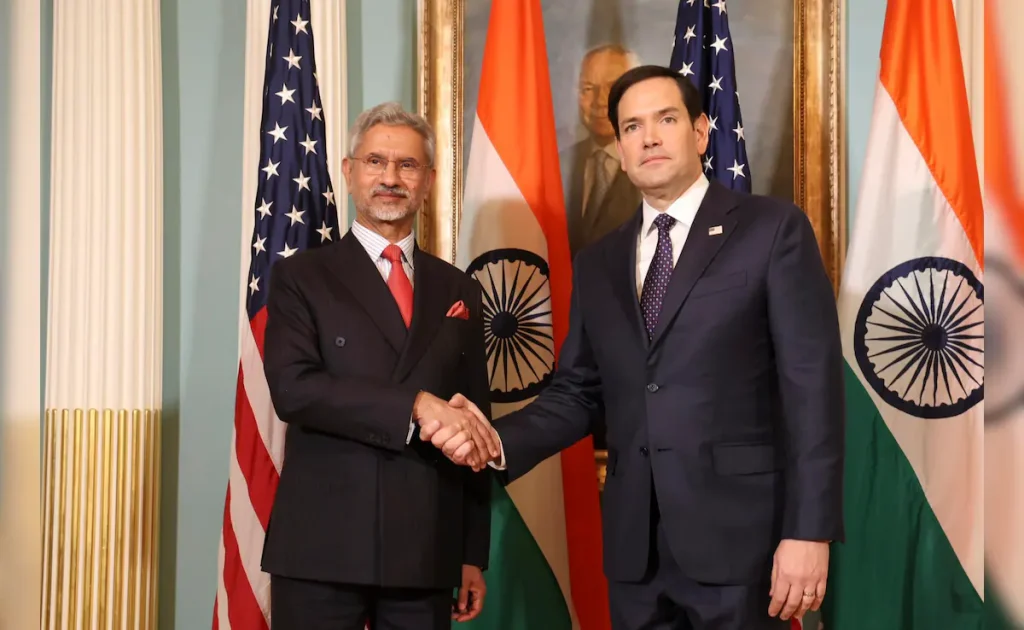
In the latest turn of events, Indian External Affairs Minister S. Jaishankar met US Secretary of State Marco Rubio in Washington, D.C. The meeting came at a sensitive time, as US President Donald Trump’s new policy on immigration and work visas, including stricter rules around H-1B visas, stirred anxieties in India.
Despite these challenges, both leaders struck a positive tone, describing India-US relations as “important” while emphasizing cooperation and mutual trust. This blog explores the context, the visa controversy, the Trump administration’s approach, India’s diplomatic maneuvering, and the larger implications for global geopolitics.
The Background of H-1B Visa Issues jaishankar
The H-1B visa program has long been a cornerstone of India-US people-to-people ties. It allows US companies to hire highly skilled foreign workers, particularly in technology and engineering. Indians consistently account for more than 70% of all H-1B visas issued annually, reflecting India’s dominance in the global IT services sector.
However, this program has often been at the center of American domestic political debates. Critics in the US argue that it undercuts local employment and wages. Supporters counter that it fills essential skill gaps and contributes to America’s global tech leadership.
Trump’s new policies—often framed under the banner of “America First”—sought to tighten rules around H-1B visas, scrutinize outsourcing practices, and encourage companies to hire domestically. For India, these moves risked undermining the $150 billion IT services industry, which depends heavily on access to the American market.
Jaishankar’s Visit and Diplomatic Significance
External Affairs Minister Jaishankar’s trip to Washington was more than a routine engagement. It was a high-stakes diplomatic effort to protect Indian interests at a time when visa restrictions threatened thousands of families and businesses.
Meeting Secretary Marco Rubio, who had recently assumed the position of US Secretary of State, Jaishankar highlighted the contributions of Indian professionals to the US economy. From Silicon Valley engineers to Wall Street analysts, Indian talent has been a vital asset for America’s innovation-driven growth.
Rubio, known for his pragmatic stance on foreign policy, acknowledged India’s role as a trusted partner. He assured Jaishankar that while the US must balance domestic concerns, it would work closely with India to ensure that cooperation in critical sectors—such as technology, defense, and clean energy—remains unaffected.
Trump’s New Policy and Its Impact
President Donald Trump’s administration had introduced several measures with direct implications for the H-1B visa system:
- Tighter Eligibility Rules – Making it harder for companies to sponsor workers for specialized roles unless they prove no Americans are available.
- Shorter Approval Durations – Moving from three years to one year in certain cases, creating uncertainty for families.
- Higher Salary Thresholds – To discourage outsourcing and ensure foreign hires are paid at par with American workers.
- Increased Site Inspections – To check compliance by Indian IT firms operating in the US.
For India, this was not just a legal or administrative issue. It was a matter of livelihoods, as thousands of families dependent on H-1B visas feared deportation, financial instability, or career disruption.

The Balancing Act: India’s Response
India could not afford to let the issue derail the broader partnership with the US. Jaishankar struck a measured tone during his meetings. Instead of framing the H-1B issue as a point of confrontation, he emphasized:
- Mutual Benefits – Indian talent drives American innovation, helps companies remain competitive, and creates indirect jobs.
- Shared Goals – As global tech leaders, India and the US must collaborate on AI, cybersecurity, and digital trade.
- People-to-People Links – The Indian diaspora in the US, numbering over 4.5 million, forms a cultural and economic bridge between the nations.
India also subtly hinted that overly restrictive visa rules might encourage Indian companies to diversify, expanding into Europe or Southeast Asia—reducing US influence in the global digital economy.
Cooperation Beyond Visas: Strategic and Global Dimensions
Even as visa issues dominated headlines, Jaishankar and Rubio used the meeting to reaffirm cooperation across strategic sectors.
1. Defense and Security
India is a major buyer of US defense equipment. With China’s rise and the volatile Indo-Pacific, both countries agreed to strengthen maritime cooperation, intelligence-sharing, and joint military exercises.
2. Trade and Investment
Bilateral trade between India and the US has crossed $200 billion annually. Despite disagreements on tariffs and subsidies, both sides pledged to deepen cooperation in high-value sectors like semiconductors, clean energy, and pharmaceuticals.
3. Technology and Innovation
Both leaders agreed to create new frameworks for cooperation in AI, quantum computing, and 5G/6G technologies. India, with its vast talent pool, and the US, with its capital and innovation ecosystems, make natural partners.
4. Global Diplomacy
India and the US also aligned positions on global issues: supporting democracy, countering terrorism, and ensuring supply chain resilience. On Ukraine and the Middle East, Jaishankar carefully balanced India’s independent stance with a willingness to coordinate with Washington.
The Human Angle: Voices from the Indian Diaspora
For the Indian community in the US, the H-1B visa debate was more than statistics. Families lived in fear of losing jobs, uprooting children, and being forced back mid-career. Many spoke of living in a “permanent state of limbo”, uncertain whether they could plan for the future.
Indian tech firms also highlighted the burden of compliance, rising costs, and disrupted projects. Yet, the overwhelming sentiment among Indian-Americans was clear: the community is deeply invested in strengthening India-US ties and would prefer cooperation over conflict.
Jaishankar’s Diplomatic Style
Jaishankar is known for his calm, articulate, and strategic approach to diplomacy. Unlike confrontational posturing, he often uses logic and persuasion. In his engagement with Rubio, he reinforced that India is not seeking favors, but fairness.
He reminded the US that India has consistently supported American companies, opened its market for US goods, and aligned strategically in the Indo-Pacific. In return, it was reasonable for India to expect visa policies that do not unfairly target its professionals.
The Larger Geopolitical Context
The meeting cannot be seen in isolation. It occurred against the backdrop of:
- China’s assertiveness in the Indo-Pacific, making India-US partnership indispensable.
- Global supply chain disruptions, where India could serve as an alternative to overdependence on China.
- Energy and climate concerns, where India’s transition to green energy needs US support.
In such a world, the India-US relationship is too important to be jeopardized by disputes over visas. Both countries recognize this, even as domestic political compulsions complicate the equation.
Media Reactions
Media coverage in India highlighted Jaishankar’s ability to defend Indian interests while maintaining a positive diplomatic tone. US outlets, on the other hand, framed the meeting as part of Trump’s broader balancing act—appeasing domestic voters worried about jobs while not alienating strategic partners like India.
Think tanks and policy analysts largely agreed that while the H-1B issue was serious, it was unlikely to derail the broader trajectory of India-US relations.
Future Outlook: Where Do India and the US Go from Here?
- Visa Reforms with Balance – The US will likely tighten certain aspects but also carve out exemptions for highly skilled workers in critical sectors.
- India Diversifying Partnerships – India may strengthen ties with Europe, Japan, and Southeast Asia to reduce over-reliance on US visas.
- Growing Tech Alliance – Expect more joint ventures in semiconductors, digital infrastructure, and AI.
- Defense Cooperation – The Indo-Pacific will continue to be a strong driver of strategic alignment.
- Diaspora Diplomacy – Indian-Americans will remain a powerful lobbying force in Washington.
Conclusion
The Jaishankar-Rubio meeting amid the H-1B visa controversy shows the maturity of India-US relations. While disagreements exist, both sides recognize that the partnership is too important to be weakened by short-term challenges.
Trump’s new policy on visas may create friction, but India’s measured diplomacy ensures that dialogue continues. By emphasizing cooperation, shared interests, and mutual respect, both countries are charting a course for a stronger relationship.
At its heart, the issue is not just about visas—it is about trust, people-to-people ties, and the belief that India and the US, as two of the world’s largest democracies, must stand together in an uncertain global order.
Read more latest news

