
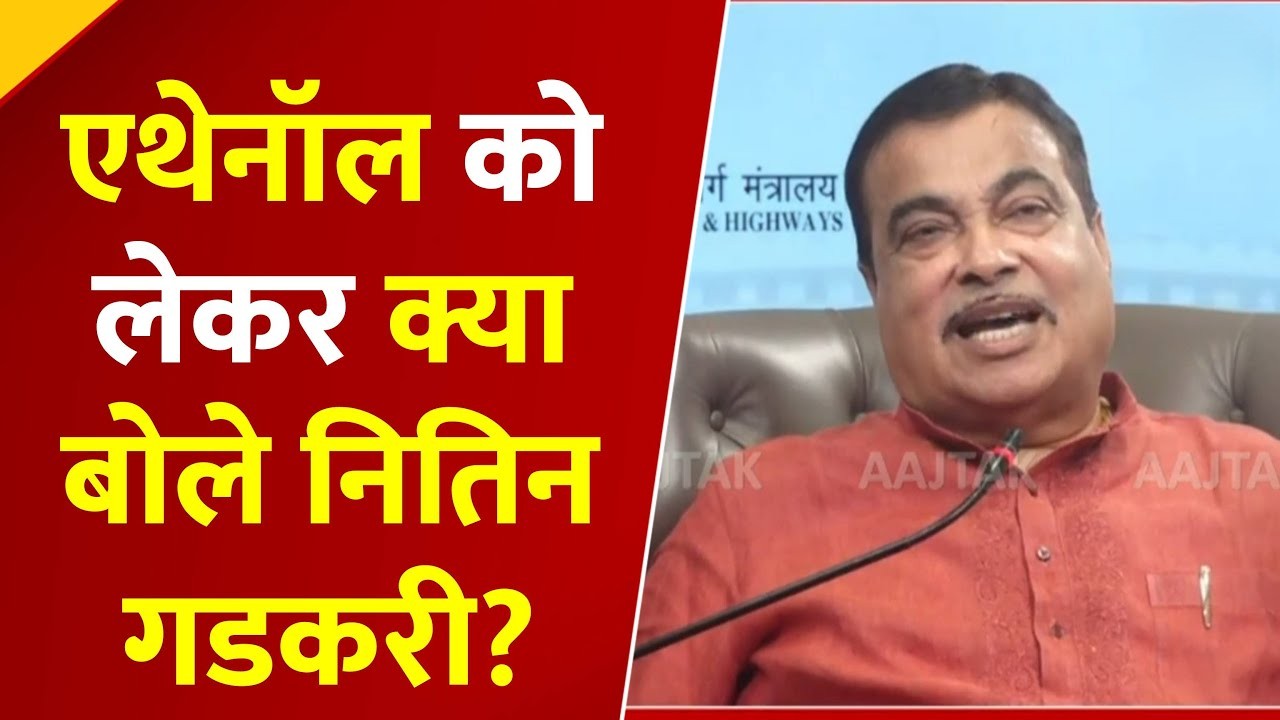
“Ethanol Blending & Vehicle Mileage: What Nitin Gadkari Really Said”
What did Nitin Gadkari say on the issue of reducing the vehicle’s average due to ethanol? Ethanol blending into petrol has become a hot topic in India’s energy-and-automobile conversation. The government is pushing for higher ethanol blend ratios (e.g. E20 = 20% ethanol + 80% petrol), both to reduce crude oil import dependence, and to lower environmental impact. But amongst motorists and older vehicle owners, there have been concerns: Does ethanol reduce the mileage (“vehicle average”)? Does it cause engine damage? Are these concerns valid? And what has the Road Transport Minister, Nitin Gadkari, said in response?
This blog unpacks everything: Gadkari’s statements, the technical facts, what critics are saying, how tests have behaved, and what it means for consumers, automakers, and policy.
1. Context: Ethanol Blending in India & the E20 Rollout
To understand the debate, we need to know the background:
- The Indian government has launched the Roadmap for Ethanol Blending in India (2020-25). Under this roadmap, higher ethanol blends are being progressively introduced in petrol. E10, E20 etc.
- E20 petrol (20% ethanol) is being implemented widely. At many fuel stations, E20 has become the “norm” or preferred fuel.
- Ethanol is produced from agro-sources (sugarcane, maize, etc.). These industries also benefit from demand for ethanol: higher prices for feedstock, new markets, etc.
So when usage of ethanol is increased, there are both potential benefits (environmental, import reduction, agricultural income) and potential costs (possible drop in fuel efficiency / “mileage,” possibly more wear on some vehicle parts, etc.).
2. What Nitin Gadkari Has Said: Key Statements
Nitin Gadkari, Union Minister for Road Transport & Highways (RT&H), has made several public statements clarifying the government’s position. Below are his major claims and assertions.
A) Mileage (“Average”) Might Drop, But Damage Doesn’t Occur
- Gadkari has conceded that E20 ethanol blending does reduce vehicle mileage somewhat; that is, fuel economy may drop slightly when using petrol blended with 20% ethanol.
- However, he insists that this drop is modest and manageable, and crucially, that there is no evidence that E20 causes damage to vehicles.
- He has challenged critics: “You show me one vehicle anywhere in the world which had problems because of E20 petrol!” This is his open challenge to those claiming engine damage or severe negative effects.
B) Criticism is Driven by Lobbying or Misinformation
- Gadkari has argued that many of the claims about serious mileage drop or damage are part of a fear campaign, driven by vested interests, especially what he calls the “petroleum lobby.” He suggests that these groups are magnifying concerns for their own benefit.
- He has also called some criticism a “paid campaign” or politically motivated: that some social media or media narratives are being used to create distrust.
C) Assurances on Testing, Standards & Safety
- Gadkari has emphasized that relevant regulatory bodies (like ARAI — Automotive Research Association of India — and SIAM, etc.) have conducted tests and provided certification that E20 is safe when used properly.
- For newer vehicles (manufactured after a certain date, with ethanol-compatible components), he claims the negative impact (if any) is very small; in older vehicles, there might be slightly larger drop in fuel average, but no fundamental damage.
D) Benefits: Environment, Agriculture, Energy Security
- Gadkari often places the E20 policy in the context of reducing India’s fuel import bill. By using domestically produced ethanol, dependency on imported crude oil falls.
- He also points out environmental benefits: lower emissions (because ethanol burns cleaner than petrol, lower lifecycle emissions) etc.
- In terms of agriculture, he highlights that ethanol policies have increased demand for feedstock (corn, sugarcane, etc.), raising their price significantly (corn from ~Rs 1,200 per quintal to ~Rs 2,600) and improving farmer incomes.
E) Calls for Supporting Measures
- He has proposed reducing the GST rate on crude ethanol from 18% to 5% to promote production of ethanol and use in flex-fuel vehicles, so the blended fuel becomes more economically attractive.
- He suggests that older vehicles need certain upgrades (rubber parts, gaskets) in some cases to be fully compatible with E20; these are not major, but will require maintenance or replacement.

3. What Critics & Users Are Saying: Concerns & Observations
While Gadkari’s statements are strong in defence of E20, there are counterpoints, concerns, and observations from various stakeholders: vehicle owners, auto experts, consumer groups, etc. These help in understanding what the real impacts might be.
A) Mileage Drop Beyond Expectations in Older Vehicles
- Some vehicle owners, especially with older cars (manufactured before ethanol compatibility norms), report double-digit drops in actual fuel economy/mileage after switching to E20. These observations come from survey data, user feedback, etc.
- Automakers (through SIAM) have acknowledged that mileage drops are possible: perhaps 2-4% in newer/compatible vehicles; in older ones, possibly more. But they also emphasize that in official tests, damage has not been found.
B) Concerns About Wear & Tear, Long-Term Engine Health
- Some experts warn that frequent use of ethanol-blended fuel could cause issues in parts not designed for ethanol (rubber seals, gaskets, fuel hoses, injectors) especially in older vehicles. Ethanol is more hygroscopic (absorbs water) and can cause corrosion if materials are not fully ethanol-resistant.
- Owners are also concerned that older vehicles may require more maintenance, more frequent part replacements, which add up in cost and may offset some fuel savings or import cost benefits.
C) User Perception & Trust Problems
- Many consumers feel that though price of fuel may not have gone up, the “average” drop is significant, which they notice when filling up more often or seeing shorter distances. These perceptions are strong, especially among users with older or less well-maintained vehicles.
- Social media has amplified criticism, complaints, sometimes in exaggerated form; but these translate into public distrust. Gadkari’s claim of a “fear campaign” acknowledges that perception, even if he disputes its basis.
4. Technical Aspects: What the Tests & Data Show
To fairly evaluate what Gadkari is saying, we need to look at test results, scientific reports, standards, etc. How much does average drop? What kind of wear is observed? How significant is the impact?
A) Standard Testing & Regulatory Oversight
- ARAI has conducted tests on ethanol-blended fuel, both in newer and older vehicles. These tests reportedly include long-distance usage, periodic evaluations of performance (power, torque), emissions, etc. These tests generally show that the differences in vehicle performance are not large.
- Government and regulatory bodies have laid down standards for ethanol compatibility: materials used, rubber/plastic components, fuel delivery systems, etc. For newer vehicles, these norms are expected to be followed.
B) Observed Mileage Drops
- Newer, ethanol-compatible vehicles may see a modest drop: 1-2% in mileage. For older vehicles, some data suggest up to 4%–6%, or sometimes more in real-world usage depending on driving conditions, maintenance, and type of engine.
- Some user surveys (e.g. LocalCircles, etc.) have shown that many users feel their vehicles are using more fuel post-E20 rollout. But these are generally anecdotal or self-reported data, which can be influenced by factors (driving style, traffic, climate, vehicle condition).
C) On Damage, Engine Failures, Long-Term Durability
- Official testing has not reported widespread engine damage, breakdowns or failures directly attributable to E20. Gadkari’s point is that there is no single verified complaint in which E20 is proven to be the cause.
- There is some acknowledgement that some parts (rubber components, gaskets, etc.) may require replacement earlier in older vehicles, but these are considered manageable, often already replaced in routine maintenance.

D) Other Influencing Factors
- Fuel quality, engine condition, maintenance: If the engine or fuel system is not well-maintained, or fuel is contaminated, any fuel (blended or not) can underperform. Ethanol’s interaction with water (since it can absorb moisture) also means storage, handling, and component materials matter.
- Driving conditions (stop-and-go traffic, climate, altitude) can affect mileage, possibly amplifying minor penalties from ethanol blending.
- Vehicle age: Older vehicles not designed for ethanol blends may suffer more efficiency loss and require more frequent part replacement.
5. Gadkari’s Broader Vision: Why Push for Ethanol Despite Concerns?
In Gadkari’s words and actions, there is a clear policy rationale for pushing ethanol blending despite these concerns. Some of the “why” is as important as the “how much.”
A) Reducing Fuel Import Bill & Energy Security
- India imports a large fraction of its crude oil. By blending ethanol produced domestically, the demand for imported petrol/fuel is reduced, helping the trade balance and reducing exposure to global oil price volatility. Gadkari has repeatedly emphasized this.
B) Environmental / Pollution Benefits
- Ethanol has cleaner burning properties; lifecycle emissions are lower. Ethanol reduces CO₂ emissions relative to pure petrol, helps in reducing particulate emissions etc. This aligns with India’s environmental/climate targets.
C) Agricultural & Rural Economy Boost
- The policy benefits farmers and agricultural sectors: increased demand for cane, maize, etc.; better prices for feedstock agricultural produce. Gadkari mentions corn price increasing (from ~Rs 1,200 to ~Rs 2,600 per quintal) as a result of ethanol demand.
- Also, helps use surplus or under-utilised agricultural produce, diversifies income sources for farmers. Stimulates rural bioeconomy.
D) Modernization & Standards
- The push for ethanol blends has also driven the need for ethanol compatibility in vehicle design, component standards, material usage, etc. New vehicles are being designed/regulated to be able to run efficiently on E20, and materials used in parts (fuel system parts etc.) must be suitable.
E) Policy Incentives
- Reduction in GST on ethanol or flexible fuel vehicles. Gadkari has sought to lower GST on crude ethanol from 18% to 5% to reduce cost burden and promote production and acceptance.
6. Balancing the Trade-Offs: What Consumers Need to Know
Given all this, what should vehicle users and consumers in India keep in mind? How to judge whether ethanol blenda’s impact is manageable, or whether they need to take certain measures.
A) Be Realistic about Mileage Loss
- If you have a newer vehicle made after ethanol compatibility norms, expect possibly 1-2% drop in fuel average.
- If you have an older or legacy vehicle, loss may be higher — possibly 4-6% or more, depending on vehicle condition and maintenance.
But this reduction needs to be weighed against savings from lower pollution, cleaner fuel benefit, possible savings in import bill (which may indirectly affect fuel cost) and environmental cost.
B) Proper Maintenance & Ethanol Compatibility
- Ensure fuel system parts (fuel lines, gaskets, seals, etc.) are ethanol compatible, or maintained.
- Regular servicing becomes more important: replacing rubber / seal parts when due, ensuring fuel quality, avoiding stale / contaminated fuel, etc.
- Use fuel from reliable pumps. Storage matters. Ethanol’s higher hygroscopic nature means it can absorb moisture; water content should be low.
C) Legislative & Warranty Considerations
- For warranties & engine insurance, keep invoices, ensure car is maintained as per guidelines. If vehicle manufacturer or ARAI has given compatibility certification, keep documentation.
- For older vehicles, check with manufacturer if E20 is recommended or if there are any recommended upgrades or parts to improve ethanol compatibility.
D) Cost vs Benefit Calculation
- Even if mileage drops, there may be cost offsets: possibly lower price of E20 (if ethanol feedstock is subsidized), environmental incentives, lower import bill, etc.
- Also think of long-term benefits: less pollutant emissions, better air quality, possible incentives, etc.
7. What Parts of Gadkari’s Claims Need Close Scrutiny / Watch
While Gadkari has robustly defended the E20 policy and minimized concerns, there are some areas that require careful monitoring or further data.
A) Real-World Data vs Lab Tests
- Government/ARAI/SIAM test data may show modest drops or no significant issues, but real-world conditions (traffic, terrain, weather, driving behavior, vehicle condition) may yield different results.
- The discrepancy between lab & real world need continuous monitoring; more transparency in published user surveys, longrun performance across large vehicle fleets, etc.
B) Effect on Older Vehicles & Legacy Fleet
- India has many older vehicles, often with less ideal maintenance. For such vehicles, mileage drop and component wear may be more substantial.
- The cost of replacement of components (fuel lines, seals, etc.) needs to be clearly communicated; subsidies or support might be needed, especially for lower-income vehicle owners.
C) Fuel Price & Ethanol Pricing Volatility
- Ethanol feedstock price volatility (e.g., maize, sugarcane) can push up the cost of ethanol, which might reduce the expected cost benefit of blended fuel. Gadkari has noted corn prices rising significantly.
- Also, if ethanol price were to approach parity with petrol (or if taxation on ethanol remains high), the economic motivation may weaken. Hence his push to reduce GST on ethanol.
D) Transparency, Communication & Managing Misinformation
- The perception among many consumers is that fuel economy has dropped significantly, even if official data says only small drops. Managing this perception requires consistent, transparent, verifiable data and communication.
- Addressing misinformation: Gadkari accuses “lobby” or vested interest, but those criticisms partly stem from real user experiences and need to be acknowledged and addressed (not just dismissed).
8. Recent Developments & What They Suggest
Looking at recent news helps understand where this debate is headed.
- Automakers via SIAM have acknowledged that mileage drops are observed (2-4%) but maintain safety and no major damage.
- Some major automotive manufacturers have issued advisories to customers on what to expect with E20, especially older cars.
- The government is pushing for regulatory/standards compliance, and exploring incentives like lowering GST on ethanol and on flex‐fuel vehicles.
- Farmers’ incomes are rising for feedstock crops (e.g. maize, sugarcane) due to ethanol demand.
9. Implications: For Consumers, Automakers & Policy
What do Gadkari’s statements imply for different stakeholders, and what policy directions might follow?
A) For Consumers
- Need to accept some trade-off: slight drop in fuel efficiency, but gains in environmental benefits and possibly long-term cost savings.
- Be informed: Know your vehicle’s age & compatibility; check with manufacturer if any recommended parts or maintenance.
- Keep an eye on price of E20, availability, quality.
B) For Automakers and Service Industry
- Ensure vehicles are designed with ethanol-compatible parts, and that older vehicles have clear service/upgrade paths.
- Strengthened standards for component durability (seals, fuel system) to ensure long-term reliability under ethanol blend usage.
- Provide accurate, transparent fuel economy figures under E20 conditions so buyers can understand the trade-offs.
C) For Government & Policy Makers
- Continue supporting ethanol production (feedstock supply, price stability, subsidies or tax reliefs like lowering GST) to ensure blended fuel remains affordable. Gadkari’s push to reduce GST on crude ethanol to 5% is part of this.
- Implement consumer protection: ensuring warranty claims are honored, mitigating misinformation.
- Consider supporting older vehicle owners through incentives or subsidies for parts or upgrades.
- Maintain rigorous testing and publish data to build trust.
10. Conclusion: Where Does This Leave Us?
In summary, Nitin Gadkari’s position is that:
- Yes, ethanol blending (E20) reduces vehicle mileage to some extent, but the reductions are small and manageable.
- There is no credible evidence of widespread or significant engine damage or safety issues due to E20.
- The benefits — energy security, reduced fuel import dependence, environmental advantages, agricultural gains — outweigh the modest downsides.
- Criticism largely comes from what he and supporters describe as lobbyists or misinformation campaigns, rather than technical or empirical proof.
For Indian consumers, this means navigating a trade-off. If you drive a newer, properly maintained vehicle, the switch to E20 may feel only a minor difference in mileage, while offering broader benefits. If you have an older vehicle, that drop may be more noticeable. But so far, from official tests and statements, nothing suggests that E20 is unsafe or unduly damaging.
Looking ahead, transparency, clear vehicle compatibility standards, continuous data collection, and supportive policies (e.g. on taxes, maintenance, feedstock production) will be crucial. For Gadkari and the government, this issue is not just about fuel; it’s about transforming India’s energy, environment, and agriculture landscapes.
11. Possible Future Questions & What to Watch
To stay informed, here are what to watch out for in coming months/years:
- Publication of large-scale, long-term user data (especially for older vehicle fleets) on mileage, maintenance costs, and component wear.
- Any movement in tax policy (e.g. whether GST on ethanol is reduced, or subsidies/incentives for flex-fuel or ethanol-compatible vehicles).
- Responses from automobile manufacturers: are they modifying designs, parts, etc., in response to field data?
- How fuel retailers handle quality control: moisture content in fuel, storage etc.
- Alternative fuel options: flex-fuel vehicles, further higher ethanol blends (e.g. E27, E30), or other bio-fuels. Gadkari has hinted at such possibilities.
- Legal or policy developments: petitions, regulations, standards, consumer protection, etc.
Read more latest news

