
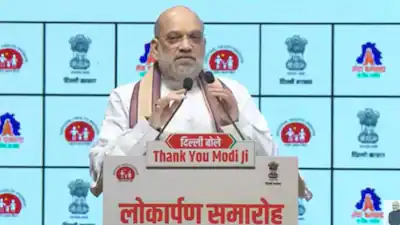
Amit Shah’s Charge Against Congress: Infiltrators, Voter Revision, and the Political Storm Ahead
Introduction
Amit Shah The politics of India has always revolved around the issues of identity, security, and democracy. Elections are the heartbeat of the world’s largest democracy, and the integrity of the voter list is central to its credibility. Recently, Union Home Minister Amit Shah sparked a fresh political storm when he accused the Congress party, particularly Rahul Gandhi, of siding with “infiltrators” while opposing the ongoing voter revision exercise. His remarks not only opened another chapter in the fierce BJP-Congress rivalry but also linked the issue of national security with electoral processes.
In this blog, we take a deep dive into Amit Shah’s allegations, Congress’s counter-reactions, the context of voter list revision, and the larger implications on Indian politics ahead of upcoming elections.
Background: Voter List Revision in India
The Election Commission of India (ECI) periodically updates and revises voter lists to maintain accuracy and ensure no fraudulent or duplicate entries. This includes:
- Adding new eligible voters (those who turn 18).
- Deleting names of the deceased or migrated citizens.
- Correcting errors in names, addresses, or identity details.
- Ensuring no duplication or fake entries exist.
While the process may sound routine, in India, where issues like illegal immigration and demographic politics are highly sensitive, even a small correction or deletion in the rolls often becomes a subject of heated political debate.
The 2025 revision exercise has once again reignited controversy, with the ruling BJP pushing for stricter verification to “weed out infiltrators,” while the opposition Congress and other parties warn against potential disenfranchisement of legitimate citizens.
Amit Shah’s Statement
During his address in Parliament, Amit Shah launched a fierce attack on the Congress party, particularly targeting Rahul Gandhi. Key highlights of his statement include:
- Accusation of Protecting Infiltrators – Shah alleged that Congress was standing in the way of voter list cleaning because it did not want infiltrators’ names deleted.
- Rahul Gandhi Under Fire – He accused Rahul Gandhi of “siding with illegal migrants and infiltrators for vote bank politics” and claimed that opposing voter list correction is equivalent to opposing national security.
- National Security Angle – Shah linked the issue of illegal immigration to threats like terrorism, demographic imbalance, and organized crime, arguing that Congress’s stance weakens India’s fight against such challenges.
- BJP’s Commitment – He assured that the BJP-led government will ensure a “free and fair electoral process” and that “not a single infiltrator” would remain in India’s voter rolls.
The Congress Party’s Response
Unsurprisingly, Congress leaders came down heavily on Amit Shah’s remarks. Rahul Gandhi and his colleagues countered the allegations on multiple fronts:
- Defending the Right to Vote – Congress argued that the BJP’s campaign to “remove infiltrators” was actually a cover for disenfranchising minority communities and marginalized groups.
- Attack on Shah’s Narrative – Rahul Gandhi accused the BJP of creating “fear and division” before every election. He said the ruling party had no answers for unemployment, price rise, or farmer distress, so they repeatedly invoked infiltrators.
- Demand for Transparency – Congress demanded that the government ensure transparency in the voter list revision, claiming that BJP-led states had a history of deleting names of genuine voters, particularly Dalits, tribals, and Muslims.
- Counter-Charge of Hypocrisy – Some Congress leaders reminded Amit Shah that BJP governments themselves had been accused of allowing cross-border migration in border states for electoral gains.
The Political Context
Amit Shah’s remarks must be seen in the backdrop of two major developments:
1. Upcoming State Elections and 2029 General Elections
The issue of infiltrators and illegal immigration has been a cornerstone of the BJP’s electoral strategy, particularly in states like Assam, West Bengal, and Tripura. By reviving the debate during voter revision, the BJP aims to energize its core support base, while putting Congress on the defensive.
2. NRC and CAA Debates
The National Register of Citizens (NRC) and the Citizenship Amendment Act (CAA) are deeply polarizing issues in India’s recent political history. While BJP frames them as necessary steps to protect India from illegal immigration, opposition parties argue that these laws are designed to marginalize specific communities. Amit Shah’s fresh attack on Congress revives the same debate under the guise of voter revision.

Why the Issue Resonates Nationally
The question of infiltrators is not limited to border states. The BJP has successfully nationalized the debate by linking it with:
- National Security – Claiming illegal migrants could be a threat to law and order.
- Economic Concerns – Suggesting that infiltrators take away jobs, welfare benefits, and subsidies meant for Indian citizens.
- Demographic Shifts – Warning about the “changing character” of regions due to unchecked migration.
- Electoral Manipulation – Alleging that Congress wants to keep infiltrators on voter rolls to secure their votes.
These narratives, while controversial, find resonance among large sections of the BJP’s support base, giving the party an advantage in polarizing elections.
The Larger Debate: Who Are Infiltrators?
One of the central questions in this controversy is: Who exactly qualifies as an infiltrator?
- BJP’s View: Those who entered India illegally, particularly from Bangladesh, Pakistan, or Myanmar, and are living without valid documents.
- Congress’s Concern: Genuine Indian citizens, especially from marginalized groups, may get wrongfully labeled as infiltrators during verification.
- Civil Society View: India lacks robust documentation for millions of poor citizens, and aggressive revision risks disenfranchising them.
Thus, the debate is not only political but also humanitarian, raising questions about identity, documentation, and constitutional rights.
Media and Public Reaction
The media landscape has been sharply divided in covering Amit Shah’s remarks:
- Pro-BJP Media: Highlighted Shah’s “bold stance” on protecting the voter list and national security. Anchors described his speech as a necessary reminder of Congress’s “vote bank politics.”
- Opposition-Friendly Media: Framed it as a political gimmick, accusing BJP of deflecting attention from inflation, unemployment, and governance failures.
- Public Opinion: On social media, hashtags like #Infiltrators and #VoterList trended, with BJP supporters praising Shah for “saving democracy,” while critics accused the government of trying to “erase voters selectively.”
Historical Parallels
This is not the first time voter lists and illegal immigration have stirred political storms in India:
- Assam’s NRC Exercise (2019): Over 19 lakh people were excluded, sparking debates about citizenship and human rights.
- West Bengal Politics: BJP has consistently accused Trinamool Congress (TMC) of protecting Bangladeshi infiltrators.
- Indira Gandhi’s Era: Even in the 1970s and 1980s, questions of illegal immigration shaped Congress’s strategy, though with different political outcomes.
Amit Shah’s remarks are thus part of a long-running tradition where ruling parties weaponize the issue of citizenship and infiltration for electoral purposes.
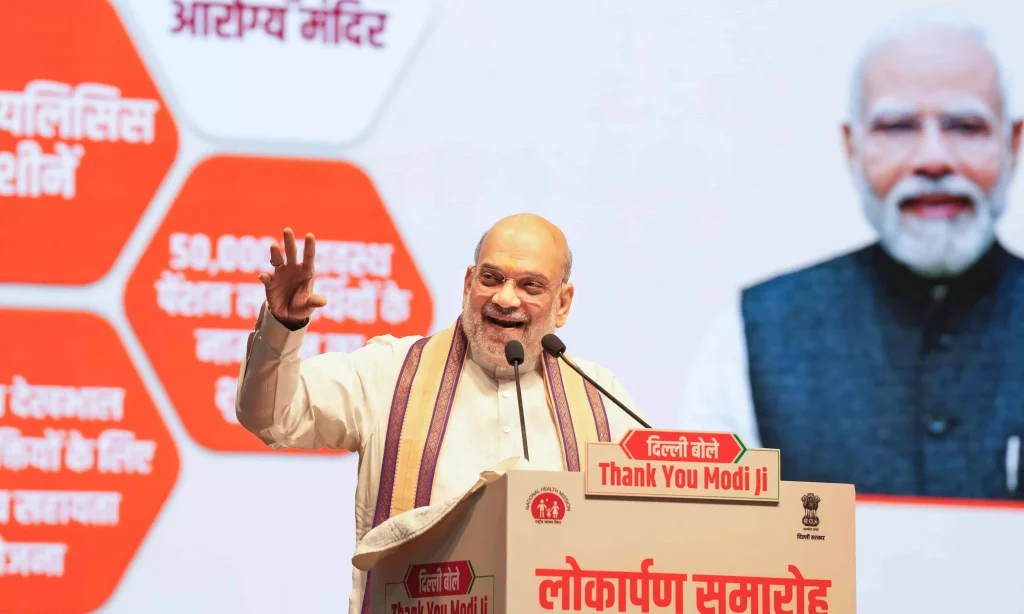
Impact on Rahul Gandhi and Congress
Amit Shah’s direct attack on Rahul Gandhi has strategic importance:
- Targeting Rahul as Face of Congress: By accusing him personally, Shah ensures that the voter revision issue becomes a “Rahul vs. BJP” battle.
- Framing Rahul as Weak on Security: This plays into BJP’s long-standing narrative that Congress leaders lack the will to protect India’s sovereignty.
- Deflection from BJP’s Weaknesses: By keeping Rahul Gandhi in the spotlight, BJP avoids scrutiny over governance failures.
For Rahul Gandhi, this is both a challenge and an opportunity. If he successfully counters the narrative by projecting himself as a defender of democratic rights, he may win sympathy. However, if BJP’s framing sticks, Congress risks further alienation of nationalist voters.
Possible Outcomes of the Controversy
- Strengthening BJP’s Polarization Strategy: The issue may help consolidate BJP’s base, especially in states with border concerns.
- Congress Stuck in Defensive Mode: Rahul Gandhi will have to spend energy clarifying his stance rather than pushing his own agenda.
- Institutional Pressure on the Election Commission: The ECI may face demands to ensure greater transparency in the revision process.
- Litigation and Activism: Civil society groups may approach courts to prevent wrongful deletions, leading to prolonged legal battles.
- Erosion of Public Trust: If allegations of bias in voter revision rise, faith in India’s electoral system may take a hit.
Conclusion
Amit Shah’s sharp attack on Congress and Rahul Gandhi over the issue of infiltrators and voter revision underscores how deeply intertwined questions of security, identity, and democracy are in Indian politics. While the BJP is confident that this narrative will resonate with its supporters, the Congress fears that it could lead to disenfranchisement of genuine citizens.
As the Election Commission carries out its voter revision exercise, the real test will be whether the process remains fair, transparent, and inclusive. For now, one thing is clear: the political battlefield has once again shifted to the age-old debate of “nation first vs. vote bank politics.”
The coming months will reveal whether Amit Shah’s words succeed in shaping the electoral discourse, or whether Congress manages to turn the tables by framing the controversy as an attack on democracy itself. Either way, the issue of voter list revision and infiltrators will remain at the heart of India’s political storm until the next general election.
Read more latest news

