
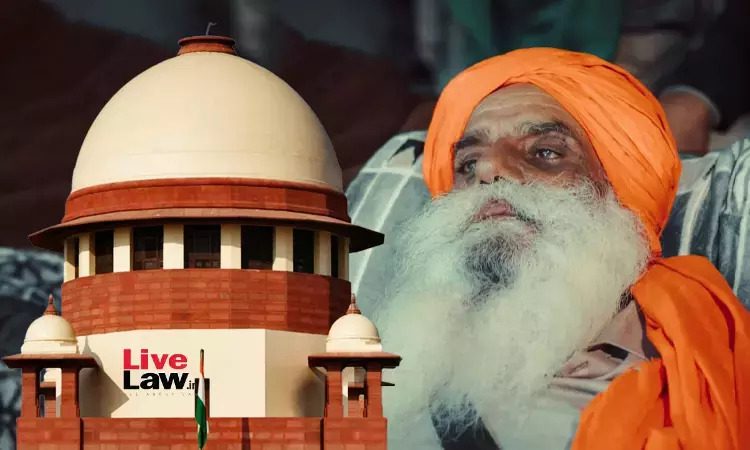
Jagjit Dallewal’s Supreme Court Slams Farmer Leaders Over
Jagjit Dallewal The Supreme Court of India recently criticized farmer leaders for their handling of Jagjit Dallewal health crisis, highlighting concerns over the ethics of prolonged protests and hunger strikes. Jagjit Dallewal, a prominent leader of the farmers’ movement, has been on a hunger strike to demand better implementation of laws protecting farmers’ rights. His deteriorating health has raised alarms among government authorities, the judiciary, and the public.
Jagjit Dallewal The Court’s remarks, including the assertion that some farmer leaders are “not his well-wishers,” have sparked a heated debate on the morality, practicality, and outcomes of hunger strikes as a form of protest. This article delves into the complexities of the case, the context of the farmers’ protests, and the broader implications for political and social activism in India.
Jagjit Singh Dallewal’s Hunger Strike: A Grim Context
Jagjit Dallewal, a vocal advocate for farmers’ rights, initiated his hunger strike as a symbolic and non-violent protest against what he perceives as inadequate governmental action on issues plaguing Indian agriculture.
Key Issues Behind the Protest
- Implementation of MSP (Minimum Support Price): Farmers have long demanded guaranteed MSP for their crops to shield them from market volatility.
- Compensation for Crop Losses: Inadequate compensation due to natural calamities and government inaction is a recurring grievance.
- Debt Waiver: Mounting agricultural debt has led to farmer suicides, pushing leaders like Dallewal to demand waivers.
- Withdrawal of Cases: Many farmers face legal actions due to their participation in previous protests, including those against the now-repealed farm laws.
Health Condition
Reports suggest Jagjit Dallewal health has deteriorated significantly due to prolonged fasting, with doctors warning of potential organ failure. Despite the risks, Dallewal has refused to end his hunger strike, maintaining that his demands are non-negotiable.
Supreme Court’s Intervention
The Supreme Court’s scathing remarks came during a hearing where the government sought intervention to resolve the impasse. The Bench expressed frustration with the farmer leaders who, it argued, were risking Jagjit Dallewal life without offering practical solutions or compromises.
Court’s Observations
- Ethical Responsibility: The Court criticized the farmer leaders for not prioritizing Dallewal’s well-being, emphasizing that no cause justifies endangering lives.
- Effectiveness of Hunger Strikes: The Court questioned whether such methods are effective in modern democratic societies, where dialogue and negotiation should take precedence.
- Role of Leadership: It suggested that leaders who allow a protester’s health to deteriorate are not genuine well-wishers, urging them to persuade Dallewal to end his hunger strike.
Call for Mediation
The Court proposed mediation between the government and the protesting farmers to address the demands without compromising anyone’s life.
Reactions to the Court’s Remarks
The Supreme Court’s Jagjit Dallewal intervention has drawn mixed reactions from various stakeholders.
Support for the Court’s Stance
- Legal Experts: Jagjit Dallewal Many legal scholars lauded the Court for emphasizing the sanctity of life over political or social gains.
- Government Officials: The central government has welcomed the Court’s stance, viewing it as an opportunity to de-escalate the situation.
- Public Opinion: Sections of the public resonate with the Court’s argument, criticizing the stubbornness of some protest leaders.
Criticism of the Court’s Remarks
- Farmer Unions: Several unions argue that the judiciary is undermining their struggle for survival and that hunger strikes are a last resort in the face of governmental apathy.
- Activists: Social activists have expressed concerns over the Court’s comments, arguing that hunger strikes are a legitimate form of protest and an expression of democratic dissent.
- Opposition Parties: Political parties opposing the ruling government have accused the judiciary of siding with the establishment and diluting the farmers’ movement.
The Ethics of Hunger Strikes
Jagjit Dallewal’s Hunger strikes, a form of non-violent protest popularized by leaders like Mahatma Gandhi, are deeply ingrained in India’s political and social history. However, their ethical implications in modern times remain contentious.
Arguments in Favor of Hunger Strikes
- Moral High Ground: Hunger strikes symbolize self-sacrifice, often drawing public sympathy and attention to critical issues.
- Non-Violent Protest: They offer a peaceful alternative to disruptive methods like blockades and riots.
- Historical Success: From the freedom movement to the Anna Hazare-led anti-corruption protests, hunger strikes have often compelled authorities to act.
Arguments Against Hunger Strikes
- Health Risks: Prolonged fasting can lead to severe health complications or death, raising questions about the morality of such methods.
- Emotional Manipulation: Critics argue that hunger strikes can emotionally blackmail authorities into conceding demands, bypassing democratic processes.
- Limited Effectiveness: In a fast-paced, media-driven world, hunger strikes may fail to sustain attention or achieve meaningful results.
The Farmers’ Struggle: A Broader Context
The plight of Indian farmers Jagjit Dallewal’s is a long-standing issue, with agrarian crises stemming from structural problems, climate change, and economic policies.
Key Challenges Faced by Farmers
- Fragmented Land Holdings: Small and marginal farmers struggle to achieve economies of scale.
- Input Costs: Rising costs of seeds, fertilizers, and pesticides erode profit margins.
- Market Access: Lack of adequate storage and transportation facilities limits farmers’ access to lucrative markets.
- Climate Vulnerability: Erratic weather patterns and natural disasters exacerbate income instability.
Government Initiatives
- PM-KISAN Scheme: Provides direct income support to farmers.
- Agricultural Infrastructure Fund: Supports building cold chains and storage facilities.
- Kisan Credit Card: Offers credit at subsidized interest rates.
Despite these initiatives, farmers argue that implementation gaps and systemic inefficiencies hinder progress.
The Way Forward
The Supreme Court’s intervention could serve as a turning point if it leads to constructive dialogue between stakeholders. Here’s how the crisis can be addressed:
1. Prioritizing Life and Health
- Farmer leaders must persuade Dallewal to end his hunger strike immediately, prioritizing his health and safety.
- Authorities should provide him with adequate medical care and ensure his well-being.
2. Establishing Dialogue
- A neutral mediator should facilitate discussions between the government and farmer unions to resolve the deadlock.
- Both sides must show flexibility and willingness to compromise.
3. Long-Term Solutions
- The government must address the root causes of agrarian distress through structural reforms and better implementation of policies.
- Farmers should engage in cooperative farming, adopt sustainable practices, and leverage technology for better productivity.
4. Ethical Activism
- Social movements should explore alternative methods of protest that are effective without endangering lives.
- Leaders must take responsibility for ensuring the safety of their supporters.
Conclusion
The Supreme Court’s remarks on Jagjit Singh Dallewal’s worsening health underscore the fine line between activism and accountability. While hunger strikes remain a powerful tool of non-violent resistance, they also pose ethical dilemmas in balancing individual sacrifice with collective goals.
For the farmers’ movement to succeed, it must evolve beyond symbolic protests and focus on achieving tangible outcomes through dialogue and collaboration. Dallewal’s health crisis should serve as a wake-up call for all stakeholders to prioritize humanity and pragmatism over ideological rigidity. Only then can India’s farmers hope for a sustainable and equitable future.
Read more latest news

