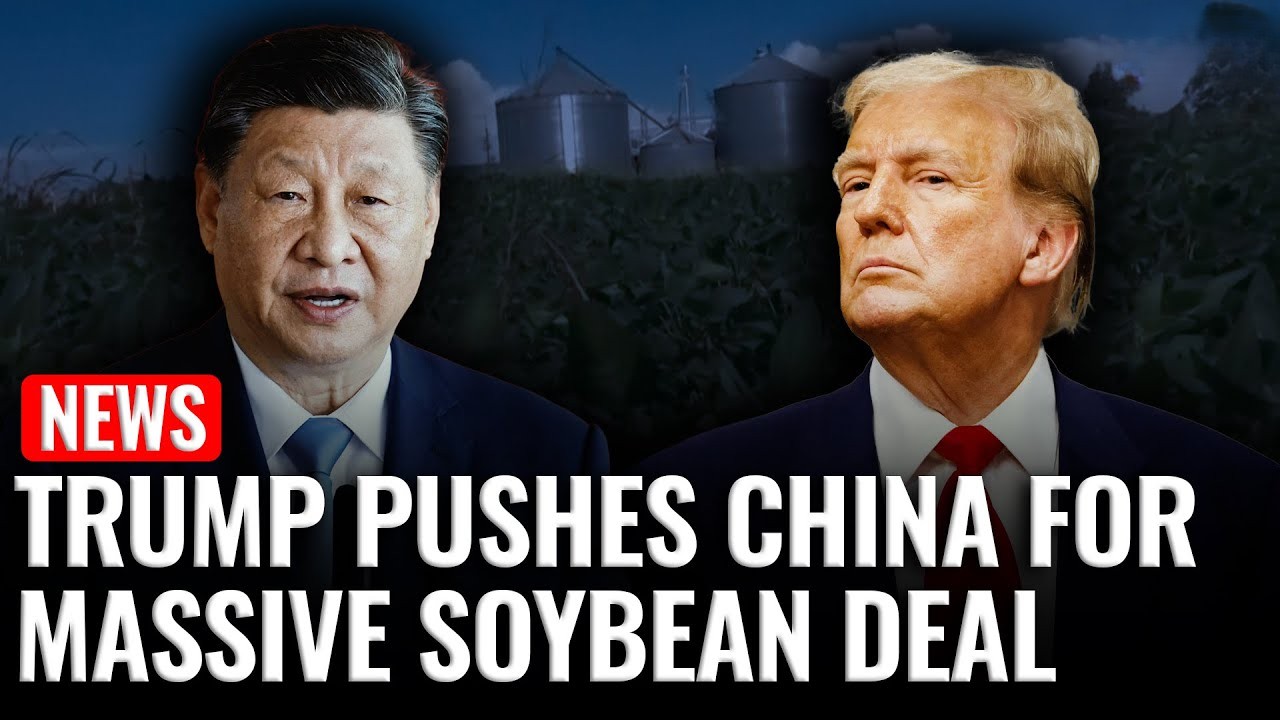
Trump Started Selling Soybeans to China Under the Guise of Tariffs – A Deep Dive into the Trade War’s Most Surprising Chapter
Introduction
Trump started selling soybeans to China When Donald Trump began his aggressive tariff war during his presidency, many saw it as a direct attempt to protect American industries, punish China for unfair trade practices, and reduce the U.S. trade deficit. Tariffs on Chinese goods became a defining feature of Trump’s economic policy, sparking debates, stock market volatility, and uncertainty for global trade. However, behind the public narrative of confrontation and tough negotiation, a less-discussed reality unfolded—while Trump imposed tariffs on China, the U.S. quietly began increasing soybean sales to Beijing.
This paradox, where tariffs supposedly “punished” China but ended up facilitating certain U.S. agricultural exports, highlights the complex nature of trade politics. Soybeans became the unexpected focal point in the battle of economic power, diplomacy, and domestic politics.
The Context – Trump’s Tariff Strategy
Donald Trump’s trade war began in early 2018, with a series of tariffs on hundreds of billions of dollars worth of Chinese imports. The stated goals were:
- Reducing the U.S. Trade Deficit – America was importing far more from China than it exported.
- Protecting U.S. Industries – Especially steel, manufacturing, and technology sectors.
- Forcing Structural Changes in China’s Economy – Addressing intellectual property theft and unfair trade practices.
China retaliated by imposing tariffs on U.S. goods, including agricultural products—hitting American farmers particularly hard. One of the biggest casualties was the soybean industry.
Why Soybeans Became the Battlefield
Soybeans are one of America’s most important agricultural exports, with China as the largest buyer. Before the trade war, China imported nearly 60% of U.S. soybean exports, worth billions of dollars annually. But when China slapped retaliatory tariffs of 25% on U.S. soybeans, sales dropped drastically.
For farmers in states like Iowa, Illinois, and Minnesota, this was devastating. Storage silos filled up, prices dropped, and unsold crops began rotting. This agricultural crisis risked alienating Trump’s core political base—Midwestern farmers—just ahead of the 2020 elections.
The Political Pressure to Act
The soybean crisis quickly became a political liability. Farmers’ associations, agricultural lobby groups, and state representatives pressured the Trump administration to find a solution. This pressure coincided with ongoing trade negotiations between Washington and Beijing.
In an interesting twist, while the tariff war continued publicly, behind the scenes, the U.S. was working to reopen agricultural exports to China—especially soybeans.
Trump’s Soybean Pivot
By late 2019, under mounting pressure from the farming sector, Trump began loosening restrictions on soybean trade. He publicly announced that China had agreed to purchase large quantities of U.S. soybeans as part of an interim trade deal.
Critics pointed out that this was less a victory of negotiation and more a return to the pre-tariff status quo, packaged as a political win.
In reality, China’s demand for soybeans never disappeared. The tariffs had simply redirected their purchases to countries like Brazil and Argentina. Once the U.S. offered competitive prices and partial exemptions from tariffs, China resumed buying American soybeans.
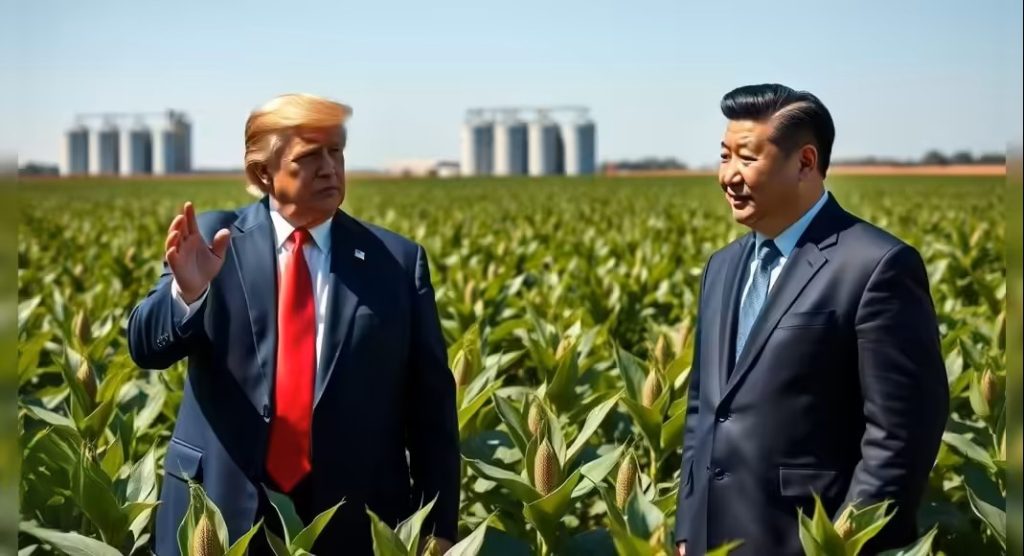
How “Selling Under the Guise of Tariffs” Worked
The phrase “under the guise of tariffs” refers to how the Trump administration publicly maintained a hardline stance while simultaneously making backdoor arrangements to allow soybean exports. The strategy involved:
- Tariff Exemptions – China granted waivers to certain importers to buy U.S. soybeans without paying the full retaliatory tariff.
- Government Subsidies – Trump provided billions in subsidies to American farmers to offset losses, effectively keeping them afloat until sales resumed.
- Phase One Trade Deal – Signed in January 2020, it committed China to buying at least $36.5 billion worth of U.S. agricultural products in that year alone, with soybeans making up a major portion.
- Market Manipulation Through Messaging – Trump often tweeted about “massive soybean purchases” to boost market confidence, even when the actual volumes were smaller than pre-trade war levels.
The Brazilian Factor
Brazil was one of the biggest winners during the initial trade war. With U.S. soybeans facing heavy tariffs, Chinese importers turned to Brazilian suppliers. However, as Brazil’s supply thinned and prices rose, the U.S. regained its competitive edge. Trump capitalized on this moment to restore U.S. soybean exports to China—essentially using the market disruption caused by his own tariffs to force China back into the American market.
Economic Analysis – Who Actually Benefited?
While Trump touted the soybean sales as proof of his deal-making skills, the reality is more nuanced.
Winners
- American Farmers (Partially) – They regained access to their biggest market but only after enduring huge losses in 2018–2019.
- China – Managed to secure soybean imports at competitive rates, playing the U.S. and Brazil against each other.
- Trump’s Political Campaign – He presented the resumption of soybean sales as a trade war victory, appealing to rural voters.
Losers
- American Taxpayers – Billions in subsidies were funded by taxpayers to bail out farmers.
- Global Stability – The trade war disrupted supply chains and increased uncertainty in global markets.
- Other U.S. Export Sectors – Many industries never regained their pre-tariff export levels.
Critics Call It a “Political Game”
Economists and political analysts argue that Trump’s soybean policy was less about long-term economic strategy and more about short-term political gain. The sequence of events suggests:
- Tariffs were imposed, hurting farmers.
- Farmers were given subsidies to survive.
- Partial deals reopened the soybean trade.
- The reopening was marketed as a major political win.
In essence, Trump created a crisis, partially solved it, and claimed victory—all while using soybeans as a political chess piece.
China’s Strategic Response
From Beijing’s perspective, buying U.S. soybeans under the tariff regime wasn’t a concession—it was a calculated move. By resuming purchases, China:
- Helped stabilize relations during sensitive negotiations.
- Prevented further escalation of tariffs on Chinese goods.
- Gained leverage in other areas of trade talks.
- Ensured a stable supply of soybeans for livestock feed, crucial to its pork industry.
Impact on Global Soybean Trade
The U.S.–China soybean tango reshaped global trade flows. Key effects included:
- Brazil’s Rise as a Soybean Powerhouse – Even after the U.S. regained some market share, Brazil remained a dominant supplier.
- Price Volatility – Global soybean prices fluctuated wildly between 2018 and 2020.
- Diversification of Supply – China invested in agricultural deals with Russia, Argentina, and even African nations to avoid over-reliance on the U.S.
Lessons Learned
The saga of Trump’s soybean diplomacy offers several important lessons:
- Tariffs Are Double-Edged – They can be used as leverage but also harm domestic industries.
- Agriculture Is Political – Farmers are not just economic actors but a critical voting bloc.
- China Plays the Long Game – Beijing used the situation to diversify suppliers and gain bargaining power.
- Messaging Matters – Political leaders can frame partial recoveries as total victories.
The Bigger Picture – Was It Worth It?
In the end, did Trump’s strategy work? Supporters say yes, arguing that China was forced to buy billions in U.S. agricultural products and that it proved tariffs could be used to secure concessions. Critics counter that:
- The gains were temporary.
- The damage to U.S. farmers in 2018–2019 was avoidable.
- Taxpayers bore the cost of the subsidies.
- The overall U.S.–China trade deficit barely changed.
Ultimately, the soybean story reflects the contradictions of Trump’s tariff diplomacy—a public image of toughness masking pragmatic backroom deals.
Conclusion
Donald Trump’s decision to start selling soybeans to China under the guise of tariffs was a masterclass in political spin. While the trade war narrative focused on confrontation, the reality was that economic necessity and political survival drove the U.S. to quietly restore a vital export channel.
For American farmers, it was a lifeline. For Trump, it was a talking point. For China, it was a calculated trade maneuver.
The soybean saga proves that in the high-stakes world of international trade, the lines between strategy, politics, and survival are often blurred—and what you see in public may be far from what happens behind closed doors.
Read More latest news