

“There is an alliance between BJP and Election Commission…. This is a black day in the history of democracy”: AAP Leader Anurag Dhanda on Detention of I.N.D.I.A. Bloc Leaders
Introduction: Democracy Under Spotlight
Delhi witnessed a dramatic political showdown when leaders of the I.N.D.I.A. bloc, marching towards the Election Commission of India (ECI) to protest alleged voter list irregularities and “misuse of constitutional institutions,” were detained by the Delhi Police. The detention, which included top figures from multiple opposition parties, immediately triggered a wave of political outrage.
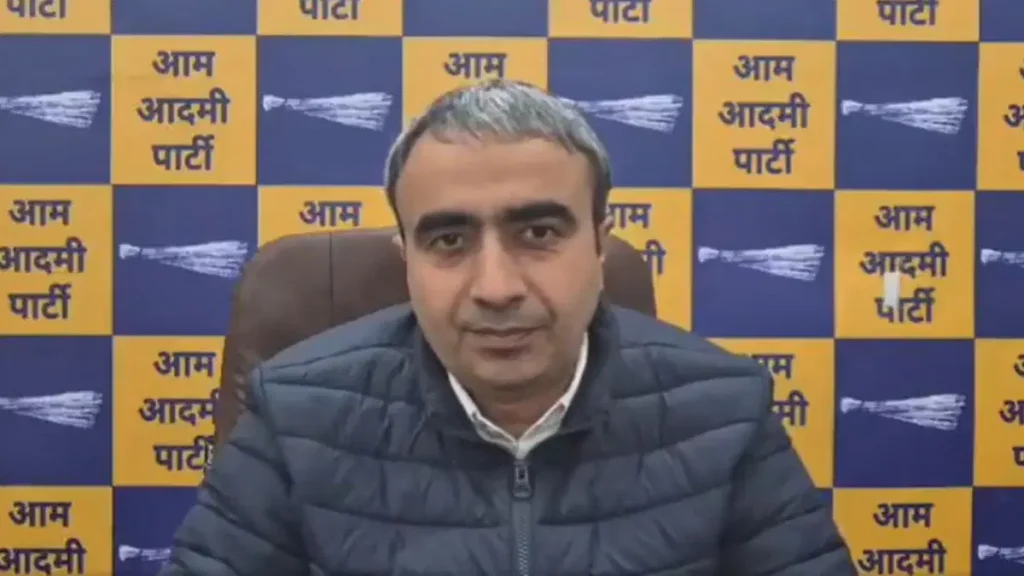
Among the sharpest reactions came from Anurag Dhanda, senior leader of the Aam Aadmi Party (AAP), who accused the Bharatiya Janata Party (BJP) of forging an “alliance” with the Election Commission. His words — “This is a black day in the history of democracy” — echoed across newsrooms, political circles, and social media platforms.
The Protest That Sparked the Detentions
Background of the I.N.D.I.A. Bloc March
The I.N.D.I.A. bloc — a coalition of major opposition parties — had announced a peaceful march to the Election Commission’s office in New Delhi. The stated goal was to submit a memorandum alleging:
- Irregularities in the voter list in multiple constituencies.
- Misuse of central agencies to target opposition leaders.
- Bias and inaction by the ECI in addressing complaints against the ruling party.
Leaders from the Congress, AAP, TMC, DMK, RJD, Shiv Sena (UBT), and others were expected to join. The march was positioned as a democratic right to petition a constitutional body.
How the Situation Escalated
The Delhi Police had imposed prohibitory orders under Section 144 CrPC in certain areas, citing security and traffic concerns. As the opposition leaders moved forward, barricades were erected near central Delhi. Within minutes, prominent leaders — including several MPs — were taken into preventive custody.
Anurag Dhanda’s Explosive Allegations
Speaking to the press outside the Parliament premises after the detentions, Anurag Dhanda didn’t mince words:
“This is not just about stopping a march; this is about silencing the voice of the people. The BJP has turned the Election Commission into its political partner. There is an unholy alliance between BJP and the Election Commission. This is a black day in the history of democracy.”
He further accused the ruling party of:
- Weaponizing the police force against peaceful democratic expressions.
- Shielding itself from accountability by influencing independent institutions.
- Undermining the Constitution through coordinated political suppression.
Why His Statement Struck a Chord
Historical Context of “Black Day” in Indian Politics
The term “black day in democracy” carries weight in Indian political memory. It has been used to describe:
- The Emergency of 1975–77, when fundamental rights were suspended.
- Crackdowns on mass protests like the JP Movement and Anna Hazare’s anti-corruption agitation.
- Instances where constitutional norms were perceived to be undermined.
By invoking this phrase, Dhanda was not merely describing a protest; he was placing the incident within the larger historical arc of threats to democratic freedoms.

Linking BJP to the Election Commission
In a functioning democracy, the Election Commission is expected to be independent and impartial. Dhanda’s allegation — that the BJP and ECI are in an “alliance” — is politically explosive because:
- It questions the integrity of the election process.
- It directly challenges the neutrality of a constitutional authority.
- It fuels public skepticism about the fairness of upcoming elections.
Legal and Constitutional Dimensions
Right to Protest vs. Law and Order Restrictions
Under Article 19(1)(b) of the Indian Constitution, citizens have the right to assemble peacefully. However, this is subject to “reasonable restrictions” in the interest of public order (Article 19(3)).
The Delhi Police cited Section 144 CrPC to justify detentions. Critics, however, argue that:
- Section 144 is being overused to curb political dissent.
- Detentions without charges during peaceful marches set a dangerous precedent.
- Preventive custody in such cases is often politically motivated.
Independence of the Election Commission: A Constitutional Mandate
The ECI is protected under Article 324 of the Constitution and is meant to function without government interference. Any perception of bias:
- Damages public trust in elections.
- Can influence voter confidence.
- Risks drawing judicial intervention if bias is proven.
BJP’s Response to the Allegations
While BJP leaders largely avoided naming Dhanda directly, they dismissed the opposition’s claims as “political drama”. Party spokespersons said:
- The detentions were routine preventive measures.
- The Election Commission operates independently and cannot be influenced by the BJP.
- The opposition was creating unnecessary confrontation for media attention.
Voices from the I.N.D.I.A. Bloc
Several detained leaders echoed Dhanda’s outrage:
- Mallikarjun Kharge (Congress): “If we can’t even walk to the Election Commission, what democracy are we talking about?”
- Sanjay Singh (AAP): “Delhi Police is acting like BJP’s private security force.”
- Mahua Moitra (TMC): “The Election Commission is silent, but the people are watching.”
Public Reaction: Social Media Erupts
The hashtag #BlackDayForDemocracy trended within hours.
Posts ranged from outrage to satire:
- “Election Commission or Election Companion?”
- “Police barricades are the new ballot boxes.”
- “When democracy knocks, BJP sends the police.”
Prominent activists and journalists weighed in:
- Some compared the incident to authoritarian regimes.
- Others argued that symbolic arrests can backfire politically, giving more visibility to the opposition.
Analysts’ Take: Political Costs and Gains
For the BJP
- Risk: Allegations of bias could weaken its image as a democratic guardian.
- Gain: The opposition’s confrontation could be painted as lawlessness.
For the I.N.D.I.A. Bloc
- Risk: If seen as obstructionist, they might alienate moderate voters.
- Gain: Sympathy from voters concerned about democratic freedoms.
Political scientist Dr. Raghav Menon noted:
“Moments like these can define narratives in an election year. If the opposition sustains the ‘democracy under threat’ line, it can resonate strongly.”
Media Coverage: Split Along Political Lines
- Mainstream pro-government outlets emphasized law and order concerns.
- Independent and opposition-friendly media framed it as a crackdown on dissent.
- International media picked up the story, with headlines highlighting the “detention of opposition leaders in the world’s largest democracy.”
The Bigger Question: Is the ECI’s Credibility at Stake?
Public faith in the ECI is critical for free and fair elections. Allegations like Dhanda’s — even if politically charged — raise questions about:
- Appointment processes for Election Commissioners.
- Oversight mechanisms to prevent political influence.
- Transparency in handling electoral complaints.
Several civil society groups have called for Parliamentary scrutiny and judicial review of ECI decisions during election seasons.
Historical Parallels: When Protest Meets Police Action
India’s democratic journey is filled with episodes where peaceful marches ended in detentions:
- 2011: Anna Hazare’s arrest before his hunger strike against corruption.
- 2019: Detention of activists protesting the Citizenship Amendment Act (CAA).
- 2020–21: Farmers’ protests facing police blockades at Delhi borders.
These events often strengthen the protestors’ visibility, turning arrests into political capital.
Possible Next Steps
- Legal Challenge: The opposition could move court against what they see as unlawful detentions.
- Parliamentary Showdown: Expect heated debates in the next session.
- Public Mobilization: The I.N.D.I.A. bloc may organize larger rallies in multiple states.
- ECI’s Response: The Election Commission might issue a statement to defend its neutrality — or remain silent, which could further fuel speculation.
Conclusion: Why This Matters Beyond Politics
Whether one supports the BJP or the opposition, the heart of the issue is institutional independence. When police detentions intersect with allegations of Election Commission bias, it touches on the foundations of representative democracy.
Anurag Dhanda’s words — “This is a black day in the history of democracy” — may be seen as political hyperbole by some. But for others, it is a stark warning that unchecked power and muted institutions can erode democratic freedoms more quickly than citizens realize.
The coming weeks will show whether this was a passing controversy or a defining political flashpoint in the run-up to the next general election.
Read more latest news

