
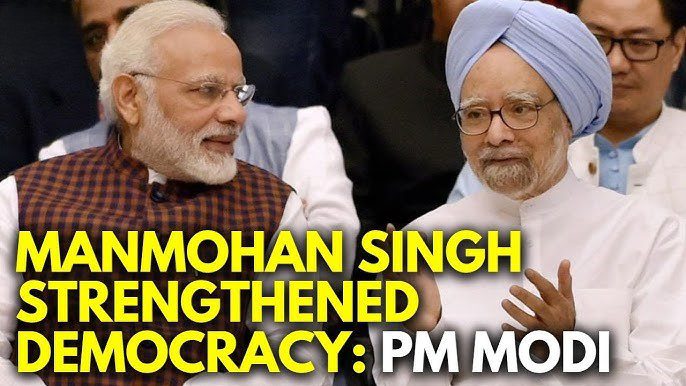
Manmohan Singh and Narendra Modi
Narendra Modi pm The role of a Prime Minister is often the defining element of any nation’s governance and political discourse. In the case of India, two successive Prime Ministers, Dr. Manmohan Singh and Narendra Modi pm, have left their marks in ways that reveal stark contrasts in style, substance, and impact. While both have governed India in challenging times, their approaches, ideologies, and legacies are emblematic of two distinct eras in Indian politics.
Dr. Singh and Mr. Modi, representing two different political paradigms, have offered unique leadership styles. The quiet economist contrasted with the charismatic orator, the technocrat juxtaposed with the populist – their governance styles epitomize not just a difference in personality but also a difference in India’s evolving political ethos.
Manmohan Singh: The Architect of Modern India’s Economic Foundations
The Economist PM
Dr. Manmohan Singh, an Oxford- and Cambridge-educated economist, came into public prominence during the 1991 economic crisis. As Finance Minister under Prime Minister P.V. Narasimha Rao, he ushered in landmark economic reforms that dismantled the License Raj, opened India to global markets, and set the foundation for India’s economic liberalization.
When he became Prime Minister in 2004, heading the United Progressive Alliance (UPA) government, he carried forward his legacy of economic prudence. Dr. Singh was not a natural politician; his strengths lay in his technical knowledge, policy expertise, and commitment to inclusive growth. His tenure witnessed significant economic expansion, averaging 8% GDP growth during the UPA’s first term (2004–2009). India emerged as a global economic power during this period, benefiting from reforms initiated in the 1990s.
Achievements and Policies
- Economic Growth and Reforms: Singh’s government focused on economic stability, increasing foreign investment, and enhancing India’s global trade footprint. Key initiatives like the National Rural Employment Guarantee Act (NREGA) and the Right to Information Act reflected his focus on inclusive growth and transparency.
- Nuclear Deal and Diplomacy: His tenure saw India signing the historic India-U.S. nuclear deal, breaking decades-long isolation in global nuclear commerce. Singh navigated the geopolitical complexities with quiet determination, earning India a spot at the global high table.
- Challenges and Criticism: Despite his achievements, Dr. Singh’s tenure was marred by allegations of corruption, especially during UPA-II (2009–2014), including the 2G spectrum scam and the coal allocation scandal. Critics questioned his reticent demeanor, labeling him a “weak Prime Minister” beholden to Congress Party President Sonia Gandhi.
Narendra Modi pm: The Populist Strongman
The Charismatic Politician
Narendra Modi pm rise as India’s 14th Prime Minister marked a paradigm shift in Indian politics. A polar opposite of Dr. Singh, Modi is a grassroots politician who rose through the ranks of the Rashtriya Swayamsevak Sangh (RSS) and the Bharatiya Janata Party (BJP). His tenure as Chief Minister of Gujarat (2001–2014) established his image as a pro-business, development-focused leader, albeit amid controversies related to the 2002 Gujarat riots.
Modi’s leadership style is characterized by his assertive persona, masterful oratory skills, and a penchant for bold decisions. His landslide victory in the 2014 general elections symbolized a shift from coalition politics to a strong single-party majority under the BJP.
Narendra Modi pm Achievements and Policies
- Economic Reforms: Modi’s government implemented structural economic reforms, including the Goods and Services Tax (GST) and the Insolvency and Bankruptcy Code (IBC). Initiatives like “Make in India,” “Digital India,” and “Start-Up India” sought to transform India into a manufacturing and digital economy hub.
- Foreign Policy: Modi has redefined India’s global presence, engaging assertively with world leaders and prioritizing India’s strategic interests. Policies like “Neighborhood First” and the “Act East Policy” reflect his approach to regional and global diplomacy.
- Social Policies and Campaigns: Modi has launched ambitious social schemes such as Swachh Bharat Abhiyan (Clean India Mission), Jan Dhan Yojana (financial inclusion), and the Ujjwala Yojana (free LPG connections). These initiatives aim to empower marginalized communities and improve India’s human development indices.
- Controversial Decisions: His tenure has been marked by bold, polarizing decisions, such as demonetization, the abrogation of Article 370 in Jammu and Kashmir, and the Citizenship Amendment Act (CAA). While these moves have consolidated his base, critics argue they have deepened socio-economic divides and strained India’s secular fabric.
Contrasts in Leadership Style
Technocrat vs. Populist
Dr. Singh’s governance was marked by a quiet, understated approach. He was often seen as the man behind the scenes, letting his work and policies speak for themselves. Modi, by contrast, is a leader who thrives on public connect, large-scale rallies, and media attention. His speeches and campaigns are central to his leadership, creating a larger-than-life image.
Collaborative vs. Centralized Decision-Making
Dr. Singh was known for his collegial approach, relying on expert advice and consultations within his cabinet. Modi, however, has been criticized for his centralized style of governance, with major decisions often being taken without broad consultation (e.g., demonetization).
Handling Criticism
While Dr. Singh faced criticism with stoic silence, Modi is combative, often using criticism as an opportunity to rally his supporters. This stark difference in their response to opposition has been emblematic of their contrasting leadership styles.
Impact on Indian Society
Manmohan Singh’s Legacy
Dr. Singh’s tenure is remembered for its focus on economic reforms, poverty alleviation, and policy continuity. Programs like NREGA and the Right to Education (RTE) Act reflected his commitment to creating a more equitable society. However, his perceived inability to control corruption and manage political dynamics within the UPA coalition dented his legacy.
Narendra Modi pm Impact
Modi’s tenure has been transformative in terms of reshaping India’s political landscape. He has successfully consolidated the BJP’s dominance across states and changed the narrative of Indian politics to one centered on nationalism and Hindutva. However, critics argue that his policies have deepened societal divides and curtailed democratic freedoms.
Key Differences in Global Perception
Dr. Singh: The Global Statesman
Dr. Singh and Narendra Modi pm was widely respected on the global stage for his intellect and policy acumen. He strengthened India’s position in global forums like the G20 and BRICS and left a legacy of diplomatic breakthroughs, such as the India-U.S. nuclear deal.
Modi: The Assertive Diplomat
Modi’s foreign policy is characterized by assertive nationalism. His outreach to world leaders and his focus on promoting India as a global power have earned him international recognition. However, critics have raised concerns about India’s declining press freedom and rising religious intolerance under his leadership, which have impacted the nation’s global image.
The Yawning Gap: Two Eras, Two Visions
Narendra Modi pm The leadership of Manmohan Singh and Narendra Modi pm represents two distinct visions for India. Dr. Singh’s tenure was marked by economic liberalization, inclusivity, and institutional continuity. Modi’s era, on the other hand, is defined by bold decision-making, nationalism, and a focus on cultural identity.
Narendra Modi pm The gap between the two leaders is not just about their personal styles or achievements but reflects a larger shift in India’s political and social narrative. Singh’s governance was rooted in quiet competence and policy depth, while Modi’s leadership thrives on charisma, direct public connect, and bold ideological stands.
Conclusion
Narendra Modi pm As India navigates the complexities of the 21st century, the contrasting legacies of Dr. Manmohan Singh and Narendra Modi pm offer valuable lessons. Singh’s focus on economic stability and inclusivity laid the foundation for India’s rise as a global economic power. Modi’s emphasis on bold reforms and nationalism has redefined the country’s political landscape.
While the two Narendra Modi pm leaders have governed in vastly different styles, their successive tenures highlight the evolving aspirations and challenges of a nation in transition. Understanding their leadership is essential to grasp the larger story of India’s journey as a democracy and a global power.
Read More lates News

