
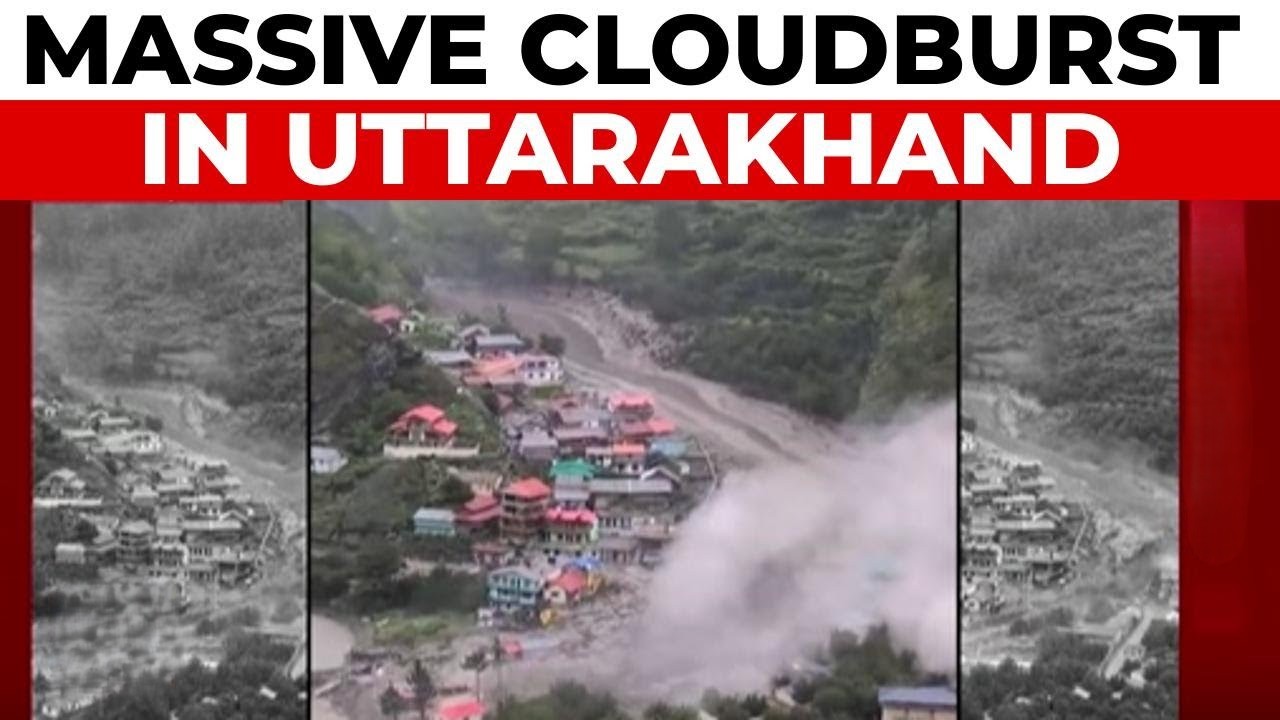
Uttarkashi Cloudburst: Major Accident in Dharali Village as Drain Overflows, Causes Widespread Devastation
Introduction: A Quiet Village Turned into a Disaster Zone
The peaceful village of Dharali, nestled in the lap of the Himalayas in Uttarkashi district, was jolted out of its serenity on the night of August 5, 2025, when a sudden cloudburst led to a major accident, leaving devastation in its wake. What began as a regular monsoon evening quickly transformed into a life-threatening situation as a local drain overflowed violently, sweeping away homes, shops, vehicles, and even lives.
This catastrophic natural event once again raises crucial questions about climate change, disaster preparedness in hill states like Uttarakhand, and the fragile state of Himalayan ecology. As rescue teams work tirelessly to restore normalcy, the emotional and infrastructural scars of this disaster will remain etched in memory for years to come.
This blog aims to present a detailed account of what happened in Dharali, how the administration responded, the voices from the ground, and the broader implications of such disasters in a rapidly warming world.
What is a Cloudburst? Understanding the Phenomenon
Before diving into the Dharali incident, it is essential to understand what a cloudburst is. A cloudburst refers to an extreme amount of precipitation in a short period of time, often more than 100 mm of rain within an hour over a small geographical area. Such intense rainfall overwhelms the local drainage system and causes sudden floods and landslides.
In hilly regions like Uttarakhand, cloudbursts are particularly dangerous because they often strike during the night or early morning when people are unprepared. The steep terrain and unplanned development only amplify the impact.
Timeline of the Incident: The Night Dharali Was Washed Away
According to local reports and eyewitnesses, here’s how the tragic event unfolded:
7:30 PM – A Regular Monsoon Evening
Light rainfall was observed in and around Dharali, a small village situated about 20 km from Harsil, known for its apple orchards and scenic beauty.
9:15 PM – Sudden Intensification
Rain intensified drastically. Within 20 minutes, the rainfall turned torrential, and thunderclaps could be heard reverberating through the valley.
10:05 PM – Cloudburst Confirmed
A sudden cloudburst occurred over the Gangotri catchment area, leading to massive accumulation of rainwater and debris in the surrounding hills. The force of this water was directed toward Dharali through a narrow natural drain.
10:20 PM – Drain Overflows
The local drain (naala) that typically channels mountain water overflowed violently. The water, mixed with mud, rocks, and tree trunks, began descending into the village, demolishing everything in its path.
11:00 PM – First Emergency Calls
Residents began calling local police, SDRF, and disaster management authorities. Electricity and communication lines were snapped in several areas, making rescue coordination difficult.
Scale of the Damage: A Village in Ruins
Initial reports from the Uttarkashi District Administration revealed the following damage:
- Casualties: 7 confirmed dead, 12 injured, and several reported missing.
- Property Loss: 24 homes completely destroyed, 38 partially damaged.
- Shops and Vehicles: Over 20 small businesses ruined; 15 vehicles washed away.
- Agriculture: Several acres of apple orchards submerged or destroyed.
- Infrastructure: Roads damaged, power supply disrupted, and bridges weakened or collapsed.
Drone footage from the morning after the incident shows mangled vehicles, collapsed rooftops, and debris-strewn streets, all evidence of the tremendous force of nature that struck Dharali.
Voices from the Ground: Stories of Survival and Despair
Shyam Singh Rawat, 56, Local Resident
“We’ve seen heavy rains before, but this was something else. The water came down with a roar, carrying everything. I saw my neighbor’s house collapse in front of my eyes.”

Nirmala Devi, 28, Fruit Vendor
“My shop was my only source of income. Everything is gone—my apples, my cart, my savings. We had no warning.”
DSP Uttarkashi (during media briefing)
“The SDRF, NDRF, and local police were on the ground by early morning. We have rescued over 40 people and are using sniffer dogs to trace missing persons.”
These voices reveal the emotional and economic toll such disasters take on communities that are already vulnerable.
Government and Rescue Response: Race Against Time
The State Disaster Response Force (SDRF) and National Disaster Response Force (NDRF) launched search and rescue operations early on August 6. The challenges were immense:
- Access roads blocked due to debris and landslides.
- Poor visibility due to fog and ongoing rain.
- Communication breakdown due to damage to cell towers and electric lines.
Helicopters were kept on standby, while ITBP (Indo-Tibetan Border Police) personnel stationed nearby also joined in rescue efforts. Relief camps have been set up in safe zones with basic amenities like food, shelter, and medical aid.
Uttarakhand CM Pushkar Singh Dhami expressed his condolences to the affected families and announced a compensation of ₹4 lakh for each deceased, along with financial aid for the injured and those who lost property.
A Pattern of Disasters: Not an Isolated Incident
This is not the first time Uttarkashi has faced nature’s wrath:
- In 2021, the Raini village disaster due to a glacier burst killed dozens.
- In 2013, the Kedarnath floods caused widespread death and destruction.
- Cloudbursts have been reported regularly in Chamoli, Rudraprayag, and Pithoragarh.
These recurring incidents point to a larger issue—the increased frequency and intensity of climate-related disasters in the Himalayan region.
Climate Change and Its Role in Cloudbursts
According to climate scientists, the warming of the Indian Ocean and Bay of Bengal, along with monsoon instability, has increased the chances of extreme weather events in Northern India.
Some key findings:
- Rising surface temperatures increase atmospheric moisture content.
- Warmer air holds more water vapor, leading to sudden downpours.
- Glacier retreat and melting permafrost add to the instability of mountain slopes.
The Indian Meteorological Department (IMD) has acknowledged that Uttarakhand is now a hotspot for micro-weather events like cloudbursts, which are hard to predict but have devastating consequences.
Ecological Mismanagement: Human-Made Vulnerability
Experts believe that while nature plays its role, unregulated development in fragile Himalayan ecosystems has made disasters more deadly. Dharali and nearby villages have seen:
- Unchecked construction on riverbanks and hillsides.
- Deforestation for roads, hotels, and tourism projects.
- Weak drainage systems that cannot handle sudden surges.
Environmental activist Anil Joshi remarked:
“The hills are bleeding. Unless we respect the carrying capacity of the region, disasters will only intensify.”
Disaster Preparedness: Are We Doing Enough?
This tragedy again brings into focus the lack of early warning systems, resilient infrastructure, and community awareness.
Key shortcomings exposed:
- No advance alerts issued despite IMD having radar data.
- Poor evacuation planning in remote villages.
- Lack of real-time coordination between agencies.
Though Uttarakhand has a State Disaster Management Authority (SDMA), its reach in small villages like Dharali remains limited.

The Way Forward: Lessons from Dharali
To prevent future tragedies like this, a multi-pronged approach is essential:
1. Early Warning Systems
- Expand Doppler Radar coverage across all hill districts.
- Introduce mobile alert systems for cloudbursts and landslides.
2. Eco-sensitive Planning
- Declare upper Himalayan regions as eco-sensitive zones.
- Ban new construction in vulnerable belts.
3. Community Resilience
- Train locals in disaster response.
- Establish village-level disaster management committees.
4. Sustainable Tourism and Development
- Limit the number of tourists per day in sensitive areas.
- Use green architecture for essential development.
National and International Reactions
The Dharali tragedy has sparked a wave of sympathy across India. Leaders from across the political spectrum have expressed their condolences. Prime Minister Narendra Modi tweeted:
“Deeply anguished by the loss of lives in Uttarkashi due to the cloudburst. Rescue operations are underway. We stand with the people of Uttarakhand in this hour of grief.”
Environmental bodies like the World Meteorological Organization (WMO) and UNEP have also emphasized the importance of sustainable mountain development in light of such incidents.
Conclusion: The Mountain’s Cry for Attention
The Dharali disaster is not just a local tragedy—it is a wake-up call for the entire country. It reflects the complex interplay of climate change, ecological imbalance, and administrative oversight.
We need to treat the Himalayas with the respect they deserve. These mountains are not just tourist spots or resource banks—they are ecological lifelines for millions. If we continue to exploit them recklessly, nature will continue to retaliate—sometimes gently, sometimes violently, but always with consequences.
As the people of Dharali mourn their dead and begin the painful process of rebuilding, the rest of India—and the world—must take note. Let this be the last time a village vanishes overnight under the weight of water, mud, and neglect.
Read more Latest news

