
PM Narendra Modi In 2 days Maldives
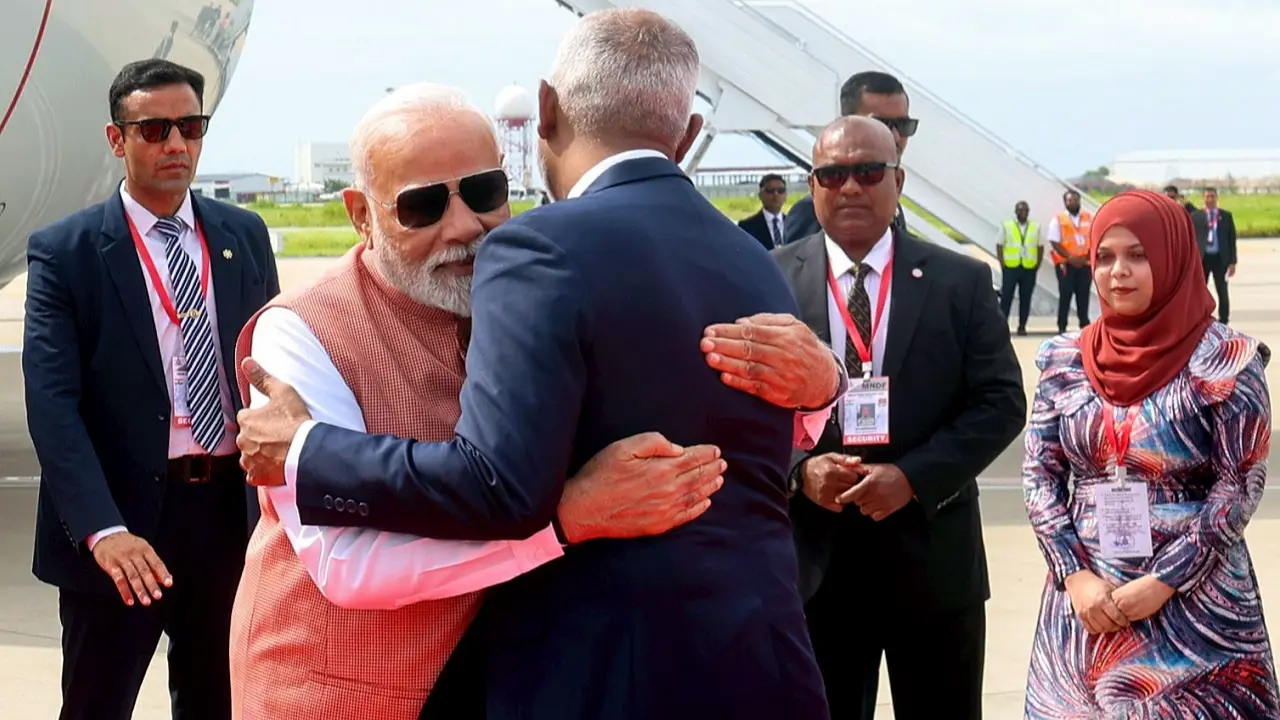
Mohamed Muizzu praised him wholeheartedly… so China got annoyed! During Indian Prime Minister Narendra Modi’s recent visit to the Maldives, a wave of admiration and warm hospitality from Maldivian citizens and leadership stole the spotlight. In a surprising shift from his earlier stance, Maldivian President Mohamed Muizzu not only welcomed PM Modi with great enthusiasm but also praised India’s role in regional development and maritime security.
His public acknowledgment of Modi’s leadership and India’s support came as a powerful statement, especially considering the Maldives’ earlier tilt towards China under Muizzu’s administration.
President Muizzu commended India’s swift response in times of crisis, infrastructure assistance, and diplomatic maturity. Crowds cheered for PM Modi, with citizens waving Indian flags and holding placards reading “India is our true friend.” This change in tone didn’t go unnoticed in Beijing. Reports suggest China expressed diplomatic discomfort over Muizzu’s unexpected alignment with New Delhi.
This sudden warmth is being seen as a strategic recalibration by the Maldives amid growing concerns over economic dependence on China. India’s soft diplomacy, strategic location advantage, and Modi’s international image have clearly begun to tilt the regional balance again.
1. 🇲🇻 Setting the Scene: Modi’s Maldives Visit & Political Context
1.1 Historical Background
- President Mohamed Muizzu, elected in November 2023, campaigned on an “India Out” platform and initially prioritized closer ties with China, calling for the withdrawal of Indian military personnel from the Maldives.
- He followed through on those promises, and Maldives–India relations soured. Meanwhile, Muizzu signed strategic military and economic deals with China, deepening Beijing’s footprint in the region.
1.2 Return to India?
- Amid mounting debt distress (with Maldives owing billions to China under BRI), India stepped in as a pivotal partner, providing over $565 million in credit assistance, currency swaps, development funding, and critical cooperation to avert defaults.
2. Modi Arrives: A Grand Welcome & Diplomatic Reset
2.1 Red‑Carpet Entry
- On July 25–26, 2025, PM Modi arrived in Malé as the guest of honour at Maldives’ 60th Independence Day celebrations. Welcome scenes included children chanting “Vande Mataram” and huge crowds waving Indian and Maldivian flags in adoration.
- He also inaugurated the new Maldivian Ministry of Defence headquarters — built with Indian grant aid — reflecting deepening strategic cooperation.
2.2 Economic & Strategic Pledges
- Modi announced a $565 million line of credit, promised heavy vehicles to Maldives’ defense forces, and kicked off free trade agreement negotiations, with new deals in fisheries, tourism, health, and digital infrastructure.
- Highlight projects: upgrading Hanimadhoo Airport, social housing units, infrastructure connectivity, and water‑sanitation systems across islands.
3. Muizzu’s Transition: From India Out to Praising Modi
3.1 A Public Change in Tone
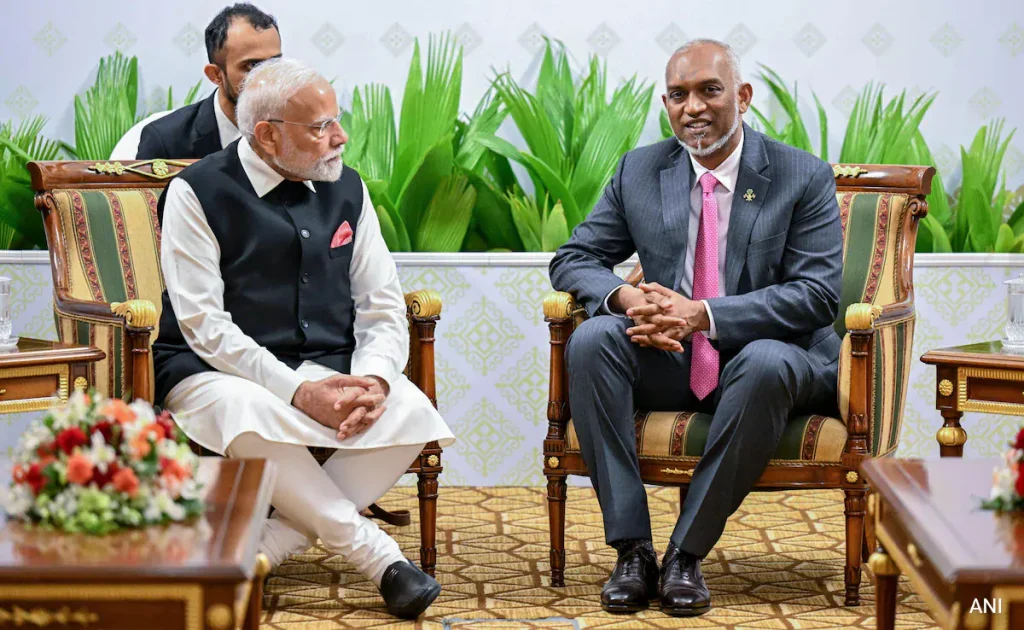
- President Muizzu publicly hailed Modi as a “wonderful person”, reversing his earlier anti-India rhetoric in a striking pivot toward strategic cooperation with India.
- He expressed optimism that Modi’s visit would boost tourism, strengthen people‑to‑people exchange, and deepen economic ties with India.
3.2 Symbolic Gestures
- The joint press conference emphasized mutual respect, sovereignty, and regional peace.
- Muizzu shared his appreciation for India’s support during financial hardship and backed the launch of free trade agreement talks, calling India a “trusted friend”.

4. Modi’s Soft Power Triumph: A Reception China Could Not Ignore
4.1 Diplomacy With Flair: “Masala Diplomacy”
- Modi’s campaign combined formal diplomacy with goodwill gestures—stamp issuances, cultural bonding, inclusive speeches—creating a narrative shift from estrangement to embrace between India and Maldives.
4.2 China’s Calculated Anxiety
- Beijing had invested heavily in Maldivian infrastructure (bridge, sea ports, BRI projects, tourism zones), and Maldives had emerged as a strategic partner in the region.
- Modi’s success in re-establishing ties represents a blow to China’s regional influence, especially as Maldives recalibrates toward India just as it was counting on Beijing.
4.3 Bringing Maldives Back into India’s Orbit
- Experts see the visit as a symbolic and practical turning point—Muizzu “stepping back” into goodwill with India after pursuing China-first policies aggressively.
- Statements like “trusted friend”, new trade talks, massive credit support and soft gestures all indicate Maldives is realigning, arguably displeasing China which is losing its exclusive grip.
5. Why China Felt Bruised: The Stakes in the Indian Ocean
5.1 Strategic Vulnerability
- Maldives commands key maritime lanes; China’s investments there had strategic expectations—like observational stations or control through debt leverage—but its gains now risk being undercut as India reasserts its influence.
5.2 Diplomacy vs Debt-Trap Narrative
- Maldives’ mounting debt to China, up to $3–4 billion, and economic distress prompted rethinking among policymakers toward balancing ties with India.
- India’s role as a first responder with emergency aid and development financing highlighted the limitations of overreliance on Beijing.
6. What It Means for Regional Dynamics & Future Trends
6.1 India’s Neighbourhood First & Vision MAHASAGAR
- Modi’s Maldives trip underscores India’s doctrine of prioritizing regional partnerships and maritime security through development diplomacy under “Neighbourhood First” and Vision MAHASAGAR.
- It strengthens India’s role in the Colombo Security Conclave, maritime resilience, and cross-border cooperation on climate, trade, and health.
6.2 Maldives’ Diplomatic Pivot
- Muizzu’s reversal—once anti-India rhetoric to calling Modi “wonderful”—reflects political pragmatism driven by economic imperative rather than ideology alone.
- The shift may set a template for other Indian Ocean states balancing Chinese loans with Indian diplomacy.
6.3 Future Outlook: Free Trade & Defence
- India–Maldives Free Trade Agreement negotiations started during this visit signal deeper economic integration ahead.
- Defence infrastructure support, maritime cooperation, and people‑to‑people engagement may become durable pillars of renewed trust.
7. The Narrative of Love vs. Realpolitik: How Modi Outmaneuvered Beijing
7.1 Love Pouring in
- The chants of “Narendra Modi zindabad”, festive processions, widespread public warmth, and Muizzu’s effusive praise—all indicate a well-orchestrated public diplomacy win as much as a bilateral reset.
7.2 Political Calculations
- China’s earlier edge in Maldives stemmed from major infrastructure branding (e.g., China‑Maldives Friendship Bridge), tourism pacts, and military access.
- Modi’s trip underscored that India remains indispensable—even when Maldives leaders flirt with Beijing, economic realities bring them back to New Delhi.
8. Key Takeaways & Strategic Lessons
- Diplomacy backed by development wins hearts: India’s mix of credit lines, infrastructure and symbolic gestures beat back soft power alone.
- Small states exercise agency in geopolitical tug-of-wars: Maldives turned toward China initially, but ultimately rebalanced based on strategic and economic realities.
- India-China rivalry in Indian Ocean intensifies as Maldives shifts; China’s influence takes a dent when India plays smart.
- Modi’s ‘masala diplomacy’—culture, stamps, defense ties, neon public displays—proved effective in narrative shaping unlike any previous Indian leader in the region.
9. Conclusion
PM Modi’s visit to the Maldives triggered a heartfelt wave of affection—from citizens chanting slogans to President Muizzu’s public admiration—marking a dramatic departure from earlier hostility. The grand welcome, strategic economic overtures, and soft diplomacy signal a diplomatic reset that has China watching nervously. India’s message was clear: friendship built on development and mutual respect outweighs confrontational rhetoric backed by loans and influence.
read more latest news

