
Kashmir BJP and Congress Clash Over
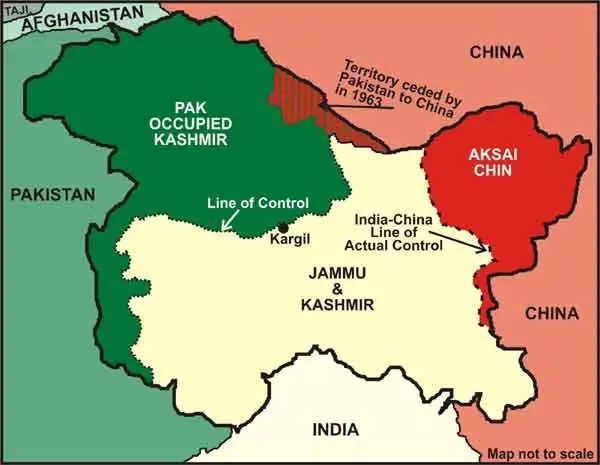
Kashmir India’s political landscape was once again embroiled in controversy as a “distorted” map of the country became a flashpoint between the Bharatiya Janata Party (BJP) and the Congress. The contentious map, which allegedly excluded parts of Jammu and Kashmir, has reignited debates on nationalism, territorial integrity, and political accountability.
The Controversy Unfolds
The controversy began when a map of India, omitting certain parts of Jammu and Kashmir, surfaced in a public domain associated with a Congress-linked publication. The BJP immediately seized the opportunity to accuse the Congress of disrespecting India’s sovereignty and undermining the sacrifices of its armed forces.
The Congress, however, refuted these allegations, calling the BJP’s claims baseless and politically motivated. They asserted that the map in question was not endorsed by the party and accused the ruling party of diverting attention from pressing national issues.
BJP’s Reaction: A Question of Patriotism
The BJP’s criticism was swift and sharp. Senior leaders, including Union Ministers, lambasted the Congress for allegedly promoting a distorted representation of India. Their main points of contention included:
- Disrespect to National Integrity:
- The BJP argued that the map’s exclusion of parts of Kashmir amounted to a denial of India’s territorial sovereignty.
- Undermining National Sentiments:
- Party leaders claimed that such depictions hurt the sentiments of millions of Indians who consider Jammu and Kashmir an integral part of the country.
- Historical Precedents:
- The BJP also cited instances from the past where they accused the Congress of being lenient on issues of national integrity, further fueling their narrative.
Congress’ Response: A Case of Political Vendetta
The Congress was quick to issue a rebuttal, accusing the BJP of manufacturing controversies for political mileage. Their key counterarguments included:
- Denial of Association:
- The party categorically denied any involvement with the publication of the map, calling it a deliberate attempt by the BJP to tarnish their image.
- Diversionary Tactics:
- Congress leaders claimed that the BJP was using the controversy to shift focus away from critical issues such as unemployment, inflation, and governance failures.
- Demand for Accountability:
- The Congress demanded an independent investigation to identify the source of the map and determine whether it was an orchestrated attempt to discredit them.
The Larger Context: Kashmir and National Identity
The issue of Jammu and Kashmir has always been a sensitive topic in India’s political discourse. The abrogation of Article 370 in 2019, which revoked the region’s special status, further heightened its prominence. Any depiction of the region that challenges India’s official stance is bound to evoke strong reactions.
Historical Significance
- Jammu and Kashmir have been a contentious region since India’s independence in 1947. The state’s accession to India, followed by wars with Pakistan, has cemented its importance in the national psyche.
- Maps depicting India, especially in educational and public domains, are often scrutinized to ensure they align with the country’s territorial claims.
Role of Political Narratives
- For the BJP, nationalism and territorial integrity are central to their political ideology. Any perceived challenge to these principles becomes a rallying point for their supporters.
- The Congress, on the other hand, often positions itself as a defender of pluralism and constitutional values, accusing the BJP of exploiting nationalism for electoral gains.
Public and Media Reactions
The controversy quickly gained traction on social media, with hashtags such as #DistortedIndiaMap and #KashmirIntegral trending across platforms. Opinions were divided:
- Support for BJP:
- Many users echoed the BJP’s sentiments, criticizing the Congress for alleged insensitivity and demanding an apology.
- Defense of Congress:
- Supporters of the Congress highlighted the absence of evidence linking the party to the map and accused the BJP of misusing the issue for political propaganda.
- Calls for Unity:
- A significant section of commentators urged both parties to focus on constructive dialogue and address the broader challenges facing the nation.
Expert Opinions: Navigating the Fallout
Political analysts and legal experts weighed in on the controversy, offering insights into its implications:
- Legal Ramifications:
- Publishing a distorted map of India is a punishable offense under Indian law. If proven, the source of the map could face legal action Kashmir.
- Impact on Political Discourse:
- Experts noted that such controversies deepen political polarization, diverting attention from substantive issues that require bipartisan cooperation.
- Media Responsibility:
- The role of the media in verifying the authenticity of such contentious material before publication was also highlighted.
Way Forward: Lessons and Recommendations
This incident underscores the need for:
- Greater Accountability:
- Political parties must ensure stricter oversight of material associated with their platforms to avoid such controversies.
- Constructive Engagement:
- Instead of engaging in blame games, parties should prioritize constructive dialogue to address national issues.
- Public Awareness:
- Educating the public about the legal and historical aspects of territorial integrity can foster informed discussions.
- Technological Solutions:
- Leveraging technology to verify the authenticity of maps and other sensitive material before publication can prevent misinformation.
Conclusion
The BJP-Congress clash over the “distorted” India map is a stark reminder of the charged political environment in the country. While the map’s authenticity and origins remain under scrutiny, the incident has reignited debates on nationalism, accountability, and the role of political parties in shaping public discourse.
As India navigates its complex socio-political landscape, it is imperative for leaders and citizens alike to approach such controversies with a sense of responsibility and a commitment to unity. The nation’s progress depends not on divisive politics but on collective efforts to uphold its sovereignty and democratic values.
read more latest news

