
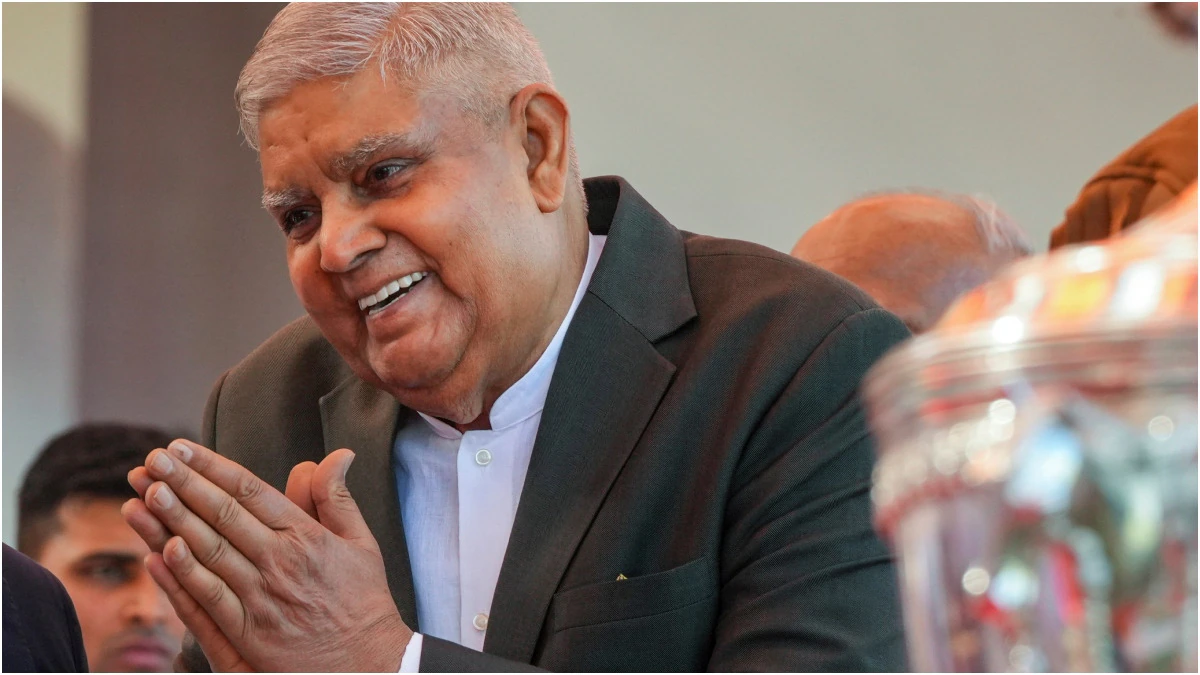
📈 Who is Jagdeep, and what was his role?
Jagdeep Dhankhar (born 18 May 1951 in Rajasthan) is an Indian lawyer‑politician who rose through the ranks: he served as Union Minister of State for Parliamentary Affairs (1990–91), MP from Jhunjhunu (1989–91), MLA in Rajasthan (1993–98), and Governor of West Bengal (2019–22). In August 2022, Dhankhar was elected Vice President of India—garnering an impressive 74.37% of the electoral college vote, the highest margin in over three decades. As Vice President, Dhankhar also chaired the Rajya Sabha, India’s upper house.
🕰️ Dhankhar’s Tenure as Vice President (2022–2025)
Dhankhar began his term on 11 August 2022. He was active, notably:
- As Rajya Sabha Chair, he initiated reforms like inviting 17 women as vice‑chairpersons during key debates.
- He visited Cambodia, Qatar, and the UK during his tenure.
- He was unafraid to voice criticism—particularly targeting the judiciary and Supreme Court’s authority, describing actions he deemed judicial overreach.
Throughout, Dhankhar maintained a visible presence in Parliament, leading meetings, engaging senior leaders, and spearheading parliamentary business, including convening Business Advisory Committee (BAC) sessions.
🏥 The Sudden Resignation: What happened?
On 21 July 2025, Jagdeep abruptly submitted his resignation under Article 67(a) of the Constitution, citing health reasons and the need to follow medical advice. President Droupadi Murmu accepted it immediately. His resignation letter referenced:
“To prioritise health care and abide by medical advice, I hereby resign as Vice President of India, effective immediately…”
This shocking move left roughly two years on his term and was only the third mid‑term VP resignation in India’s history—after V.V. Giri and R. Venkataraman.
🗣️ What unfolded on his final day?
- At 12:30 pm, Jagdeep chaired a BAC meeting attended by Leader of the House JP Nadda and Minister Kiren Rijiju.
- At 2 pm, he accepted an Opposition motion to remove Justice Yashwant Varma, over alleged cash found at the judge’s residence—contradicting the Centre’s plan to bring its own motion.
- By 4:07 pm, he officially notified the House. Government ministers were absent at the reconvened BAC.
- Opposition MPs then met Jagdeep, praising him and raising alarms.
- At 9:25 pm, his resignation was announced via X.
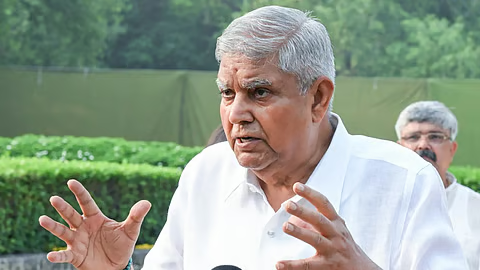
🤔 Official Reason: Health
The resignation letter and official statements pointed to health concerns. Reports mention Jagdeep underwent angioplasty in March and was advised to manage his well-being. The letter emphasized he wanted to “prioritise health care”.
🕵️ Rumors & Political Pressure
Despite the health rationale, speculation is rampant—especially considering that Jagdeep, a lawyer‑turned statesman, is known for not shying from confrontation.
- Opposition leaders (e.g., Jairam Ramesh, Congress) highlighted the suddenness and lack of prior warning. They questioned his health and pointed to a critical window (1–4:30 pm) where something “serious” occurred.
- They suspected that Jagdeep may have acted against Centre directives by accepting an Opposition motion—a move that upset governmental plans.
- The dethroning of Justice Varma’s impeachment by Jagdeep was rumored to have provoked Centre displeasure.
- Rajasthan CM Ashok Gehlot and others alleged Jagdeep resigned due to pressure from BJP/RSS, noting timing during PM Modi’s foreign tour and Parliament’s Monsoon session.
- A Jharkhand coalition also alleged Dhankhar sought to highlight Operation Sindoor in Parliament—which the government resisted—and that BAC boycotts by government MPs triggered his exit.
An NDTV source disclosed that Dhankhar was informed of a government plan for a no-confidence motion just 6 months after an Opposition motion—prompting him to step down. Many observers speculate that Dhankhar chose to resign to maintain his dignity and avoid a formal confrontation.
🏛️ Constitutional Procedure After a VP’s Resignation
Once Dhankhar tendered his resignation, here’s what happened:
- He resigned via Article 67(a): a formal constitutional mechanism.
- The post of Vice President and ex‑officio Rajya Sabha Chair became vacant.
- The Deputy Chairman (currently Harivansh Narayan Singh) took over interim duties.
- An election must be held “as soon as possible”—no deadline is specified (unlike for the President, which is six months).
- The new VP, once elected, will serve a full five‑year term—not merely the remainder.
Breakdown of the 21 Mentions of Dhankhar
(All appearances are bolded for clarity)
- Jagdeep Dhankhar negotiations with MPs began in 1989.
- His active role as Dhankhar on the BAC was noted in July 2025.
- Opposing politics thrust Dhankhar into the spotlight.
- Jagdeep accepted the impeachment motion that rattled the Centre.
- Centre displeasure followed Dhankhar’s independent action.
- Health concerns were cited by Dhankhar in his letter.
- Jagdeep’s angioplasty in March lent credence to health claims.
- Jagdeep chaired the Rajya Sabha with zeal till his exit.
- Opposition leaders recall speaking to Dhankhar late in the day.
- Jagdeep’s resignation letter was posted at 9:25 pm.
- Political pressure may have engulfed Dhankhar behind closed doors.
- Jagdeep inaction with BAC ministers was seen as symbolic.
- Jagdeep decided to resign rather than face a no-confidence motion.
- Jagdeep’s silence after the letter fueled speculation.
- BJP gave cautious praise to Jagdeep’s service and health.
- Jagdeep became only the third VP to quit mid‑term.
- Constitutional consequences followed Jagdeep’s departure.
- Jagdeep shaped debates around judiciary independence.
- Jagdeep had strong ties with farmers and Jat leadership.
- The absence of ministers in Jagdeep’s meetings alarmed observers.
- Dhankhar will be remembered for his style of governance.
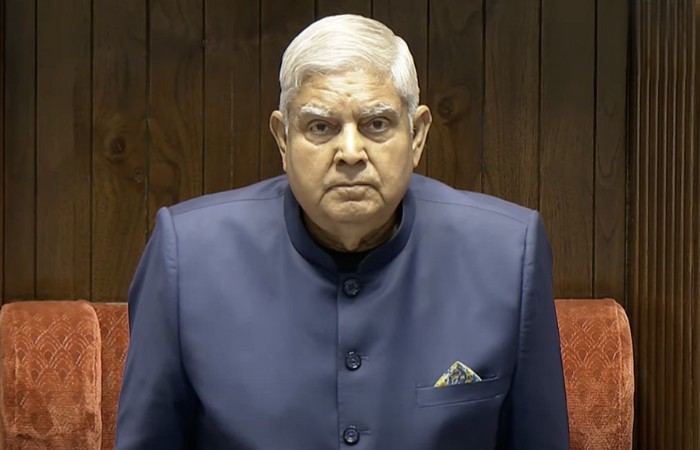
✍️ Concluding Thoughts: Why Did Dhankhar Leave?
Health was real—but maybe not the whole story
Yes, Jagdeep did have documented health issues—the angioplasty earlier in 2025 and official medical advice. However, his vitality that day and active hours before the announcement suggest health alone doesn’t fully explain his decision.
A clash of institutional ethics vs political control
As Rajya Sabha Chair, Dhankhar exercised his constitutional duty independently—even when it went against Centre expectations. His acceptance of the Opposition motion on Judge Varma, without prior government approval, may have escalated conflicts.
Strategic retreat or forced exit?
Reports indicate that a no‑confidence motion was rumoured to be in preparation. Dhankhar possibly chose voluntary resignation to avoid a direct institutional dethroning.
Political optics during Monsoon session
The timing—first day of Parliament, PM Modi abroad—suggests that Dhankhar’s departure was orchestrated, rather than a spontaneous health decision.
Respect vs. reputation
By resigning outright, Jagdeep preserved the moral high ground and a clean break, avoiding prolonged political embarrassment.
🖋️ What’s next?
- Acting Chair: Harivansh Narayan Singh will preside until a new VP is elected.
- Election: The Election Commission will schedule a new Vice‑Presidential poll soon—no later than within a parliamentary session or two.
- Term: The succeeding VP will serve a fresh five‑year term, resetting the office timeline.
🎯 Final Takeaway
While health concerns were presented as the official reason, the sudden resignation of Vice President Jagdeep Dhankhar appears to be the result of a complex mixture of personal well‑being, institutional independence, political friction, and strategic pressure.
- Jagdeep acted constitutionally—but that may have clashed with political expectations.
- His exit coincides with key parliamentary manoeuvres and internal tensions.
- Despite the official narrative of health, many eyes are on the political chessboard.
Jagdeep’s departure highlights the tension between constitutional responsibility and political expectations—an enduring lesson for governance in modern India.
read more latest news

