
A New Wave in Naval Defense: DRDO and Indian Navy Successfully Test-Fire Multi-Influence Ground Mine (MIGM)
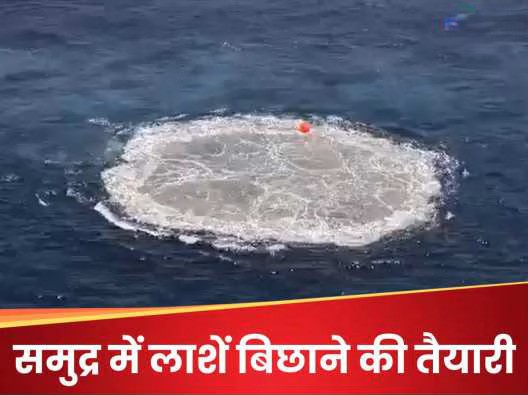
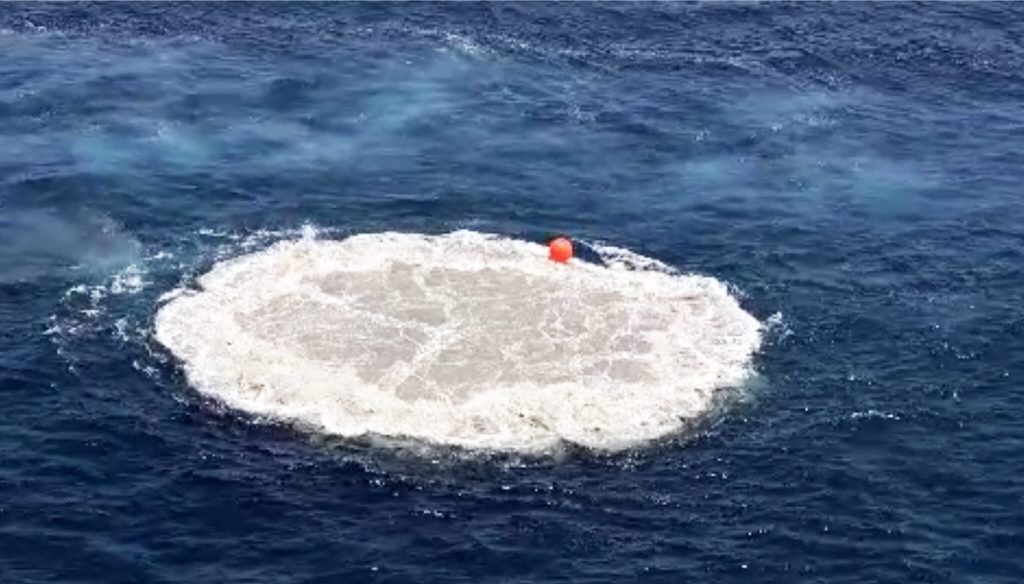
In a significant stride towards bolstering maritime defense and technological self-reliance, the Defence Research and Development Organisation (DRDO) and the Indian Navy have successfully completed the test-firing of the Multi-Influence Ground Mine (MIGM) in the Bay of Bengal. This indigenously designed and developed underwater weapon marks a major milestone in India’s quest to modernize its underwater warfare capabilities and reduce dependence on foreign defense technology.
On the surface, it may appear to be just another test. But for defense analysts and strategic thinkers, this event represents something far more impactful—a demonstration of India’s growing underwater dominance, a critical component in today’s asymmetrical and multidomain warfare environment.
Understanding the Multi-Influence Ground Mine (MIGM)
At its core, the MIGM is a next-generation naval mine—a sophisticated underwater explosive device that lies on or is buried under the seabed and is triggered by the influence of a passing target.
Unlike traditional contact mines, the MIGM is a non-contact mine that operates using multiple influence sensors including magnetic, acoustic, pressure, and seismic signatures. These “multi-influence” mechanisms make it far more lethal and difficult to detect or neutralize. When a vessel—especially a submarine or warship—passes within a specified proximity, the mine analyzes its signature and activates only if the target matches predefined threat profiles.
Key Features of the MIGM
- Multi-influence Triggering Mechanism
The MIGM integrates acoustic, magnetic, and pressure sensors to increase accuracy and reduce false alarms. This makes it highly selective—capable of ignoring civilian or friendly vessels. - Stealth and Camouflage
It is designed for low observability, with a reduced magnetic signature, advanced coatings, and the ability to remain undetected even by advanced mine-hunting systems. - Programmable Logic & Target Discrimination
Its smart onboard software can be programmed to detonate only under certain conditions—such as vessel type, speed, or size—making it ideal for selective strategic deployment. - Long Operational Life
Once deployed, the MIGM can remain active for extended periods, thanks to energy-efficient systems and corrosion-resistant casing suitable for saline underwater conditions. - Made in India
Entirely developed by DRDO’s Naval Science and Technological Laboratory (NSTL), Visakhapatnam, in collaboration with the Indian Navy, it showcases indigenous R&D capabilities.

The Successful Bay of Bengal Test: A Technical Triumph
The successful test-firing took place under realistic conditions in the Bay of Bengal, a region strategically critical due to its dense maritime traffic and proximity to India’s eastern coastlines and naval bases.
During the trial:
- The mine was deployed on the seabed at a predetermined depth.
- Simulated target vessels were passed nearby to trigger the influence sensors.
- The mine responded precisely as expected—identifying the target, validating its threat signature, and activating detonation protocols.
This trial was not just a demonstration of explosive capability but a validation of complex sensor fusion, AI-driven target detection algorithms, and environment-aware detonation mechanics.
Why Naval Mines Still Matter in the 21st Century
While missiles and drones dominate headlines, naval mines remain silent game-changers in maritime strategy. They are:
- Cost-effective force multipliers
- Deterrence tools that restrict enemy movement without direct confrontation
- Capable of delaying or denying access to vital sea lanes, ports, or chokepoints
- Difficult to detect and clear, especially if intelligently camouflaged and influence-triggered
Naval mines were a major factor in conflicts such as the Korean War, the Vietnam War, and even modern-day blockades. The development of an advanced mine like MIGM allows India to project denial-based deterrence in the Indian Ocean Region (IOR).
Strategic Context: Enhancing India’s Maritime Defense Posture
India’s security architecture is heavily influenced by the Indian Ocean. With over 7,500 kilometers of coastline and 13 major ports, maritime security is not just a defense concern—it’s an economic imperative.
Key strategic goals that MIGM supports:
- Countering Submarine Threats from adversaries in chokepoints like the Malacca Strait or near the Andaman & Nicobar Islands.
- Sea Denial Operations during hostilities to block adversary movement.
- Defense of Naval Bases and coastal infrastructure from surprise underwater attacks.
- Strengthening Anti-Access/Area Denial (A2/AD) strategy in the region.
The induction of such a smart mine system provides asymmetric leverage—especially when facing larger navies. It is about turning geography into a force multiplier.
Make in India and Atmanirbhar Bharat in Action
One of the most commendable aspects of the MIGM program is its full indigenization.
- DRDO has been working on underwater mine technologies for years. This success validates its Naval Mine Development Program.
- By building everything—from sensors to software—domestically, India avoids the vulnerabilities of import restrictions, sanctions, or delayed supply chains.
- The collaboration with the Indian Navy ensured that field inputs were embedded right from the design stage, making MIGM practical for deployment.
This aligns perfectly with India’s Atmanirbhar Bharat (Self-Reliant India) vision in defense manufacturing and export potential.
Comparison with International Naval Mines
India now joins the elite group of countries that have multi-influence naval mines in their arsenal. Here’s how MIGM compares:
| Country | Naval Mine Type | Influence Types | Remarks |
|---|---|---|---|
| United States | Mk 65 Quickstrike Mine | Magnetic, Acoustic | Used extensively in Persian Gulf |
| Russia | MDM series | Magnetic, Acoustic, Pressure | Known for complexity and effectiveness |
| China | EM52 series | Multiple Influence | Key part of their asymmetric naval strategy |
| India | MIGM | Multi-Influence | First indigenously developed multi-sensor mine |
India’s inclusion of programmable logic and domestic components gives it an edge in cost-effectiveness and customization.
Environmental and Ethical Considerations
Modern navies must consider environmental impact and safety in peacetime.
- The MIGM is reportedly self-neutralizing after a programmed period, preventing post-conflict hazards.
- The target discrimination system ensures minimal civilian risk, a common criticism of older indiscriminate mines.
This makes it a smart, responsible weapon suited to 21st-century rules of engagement.
Future Prospects and Deployment
With successful trials completed, the MIGM is expected to undergo:
- Pre-production trials with different sea-bed types
- Integration with Naval mine-laying vessels and submarines
- Possible AI-enhanced upgrades to allow real-time reprogramming or remote detonation
There is also export potential. Many Indian Ocean Region nations lack advanced mine warfare tools. As India builds stronger military ties with countries like Vietnam, Mauritius, and Indonesia, MIGM could serve as a strategic export product.
Reactions from the Defense Community
The defense ecosystem in India hailed the test as a landmark event.
- DRDO Chairman Dr. Samir V Kamat stated: “MIGM demonstrates India’s ability to build next-generation underwater weapons that meet modern naval requirements. It reflects our commitment to innovation, autonomy, and strategic foresight.”
- Indian Navy officials confirmed that MIGM will be integrated into future coastal defense doctrines and contribute to safeguarding national maritime interests.
International observers noted the test as a signal to adversaries that India’s underwater warfare capabilities are not only catching up—they are setting new benchmarks in innovation.
The Road Ahead: MCM, AI and Beyond
While MIGM is an offensive tool, India must also invest in mine countermeasure (MCM) technologies—autonomous underwater vehicles (AUVs), sonar mapping systems, and robotic minesweepers to clear enemy mines.
The synergy between offense and defense in mine warfare will shape the underwater battlefield of tomorrow.
DRDO is also exploring:
- AI-enhanced underwater mines capable of reconfiguring behavior based on mission objectives
- Mine-laying drones and AUVs
- Networked naval mine systems for coordinated sea-denial missions
Conclusion: A Silent Warrior Rises
The successful test of the Multi-Influence Ground Mine is not just a technical success—it’s a strategic message. India is no longer content with being a buyer of defense technology. It’s building indigenous, intelligent, and mission-ready tools tailored to its maritime environment.
As the world moves toward multi-domain warfare, control of the sea—especially underwater—will be a decisive factor. The MIGM is a bold step in ensuring India is prepared, powerful, and protected beneath the waves.
read more latest news


Cool partnership https://shorturl.fm/XIZGD
https://shorturl.fm/6539m
https://shorturl.fm/a0B2m
https://shorturl.fm/bODKa