
Introduction
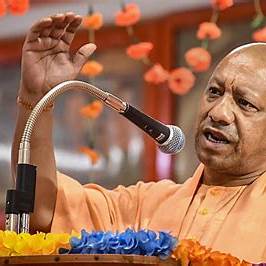
On April 12, 2025, Uttar Pradesh Chief Minister Yogi Adityanath made a significant statement regarding the recent communal violence in Murshidabad, West Bengal. He remarked, “Those who are stubborn will not listen to words,” a comment that has since sparked widespread discussions and debates across the political spectrum. This article delves into the context of the Murshidabad violence, CM Yogi’s statement, and the broader political and social implications of his words.
Understanding the Murshidabad Violence
Murshidabad, a district in West Bengal, witnessed communal unrest in early April 2025. The violence reportedly erupted during Ram Navami celebrations, leading to clashes between different community groups. The situation escalated quickly, resulting in property damage, injuries, and a tense atmosphere in the region. Authorities imposed curfews and suspended internet services to restore order.The Economic Times
The incident drew national attention due to its timing and the involvement of various political entities. Opposition parties accused the ruling Trinamool Congress (TMC) of failing to maintain law and order, while the TMC alleged that the violence was orchestrated by external forces aiming to destabilize the state.
CM Yogi’s Statement: “Those Who Are Stubborn Will Not Listen to Words”
In the aftermath of the Murshidabad violence, CM Yogi Adityanath addressed the situation with his characteristic forthrightness. He stated, “Those who are stubborn will not listen to words,” implying that certain individuals or groups, despite repeated appeals for peace, remain unyielding and continue to incite unrest.
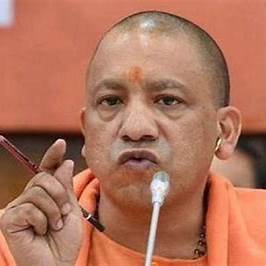
This statement can be interpreted as a critique of the alleged perpetrators of the violence, suggesting that dialogue and peaceful means are ineffective against those determined to disrupt communal harmony. CM Yogi’s remarks align with his broader political narrative, which often emphasizes a strong stance against communal disturbances and a call for stringent measures to maintain law and order.
Political Reactions and Criticisms
CM Yogi’s statement did not go unnoticed in the political arena. Opposition parties, particularly the TMC, criticized his remarks as inflammatory and accusatory. They argued that such statements could exacerbate communal tensions and undermine efforts toward reconciliation.
Conversely, supporters of CM Yogi defended his comments, asserting that his direct approach was necessary to address the root causes of communal violence. They contended that a firm stand against those responsible for inciting unrest was essential for restoring peace and ensuring justice.
Broader Implications of CM Yogi’s Remarks
CM Yogi’s statement has several broader implications:
- Political Polarization: His remarks contribute to the ongoing political polarization in India, particularly between the BJP and opposition parties.
- Communal Harmony: The statement raises questions about the approach to maintaining communal harmony. While some view it as a call for accountability, others perceive it as a potential incitement to further division.
- Law and Order: The emphasis on a strong response to violators underscores the importance of effective law enforcement in preventing and addressing communal violence.
The recent violence in Murshidabad, West Bengal, following protests against the Waqf (Amendment) Act, 2025, has drawn significant attention. Uttar Pradesh Chief Minister Yogi Adityanath commented on the situation, stating, “Those who are stubborn will not listen to words,” criticizing the West Bengal government’s handling of the unrest.
Background of the Murshidabad Violence
The Waqf (Amendment) Act, 2025, introduced significant changes to the administration of Waqf properties, leading to concerns among Muslim communities about potential infringements on religious freedoms. Despite assurances from West Bengal Chief Minister Mamata Banerjee that the Act would not be implemented in the state, protests erupted in Murshidabad. These demonstrations turned violent, with incidents including the blocking of National Highway 12, arson, and attacks on public infrastructure. The unrest led to the deaths of three individuals and injuries to over ten people. Authorities arrested more than 200 individuals and imposed Section 144 to restore order.
CM Yogi Adityanath’s Critique
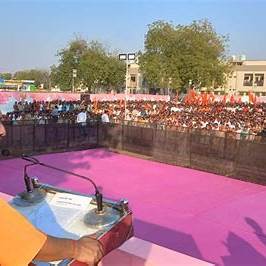
In response to the violence, CM Yogi Adityanath criticized the West Bengal government’s approach, attributing the unrest to “appeasement policies.” He emphasized that such policies have adverse effects, leading to communal tensions and undermining the rule of law. Adityanath highlighted that while Ram Navami processions were conducted peacefully in BJP-ruled states, they faced attacks in West Bengal, suggesting a failure in maintaining law and order.
Political Reactions and Implications
The violence in Murshidabad and the subsequent political reactions underscore the ongoing tensions between the BJP and TMC. While the BJP accuses the TMC of failing to maintain law and order, the TMC alleges that the BJP is politicizing the issue for electoral gains. The situation remains tense, and efforts are ongoing to restore peace and order in the region.
Conclusion
CM Yogi Adityanath’s statement on the Murshidabad violence encapsulates his approach to governance—direct, assertive, and unwavering. While his remarks have sparked controversy, they also highlight the challenges faced by political leaders in addressing communal tensions and maintaining law and order. As India continues to navigate its complex social and political landscape, statements like these serve as a reminder of the delicate balance between asserting authority and fostering unity.
Read more latest news

