
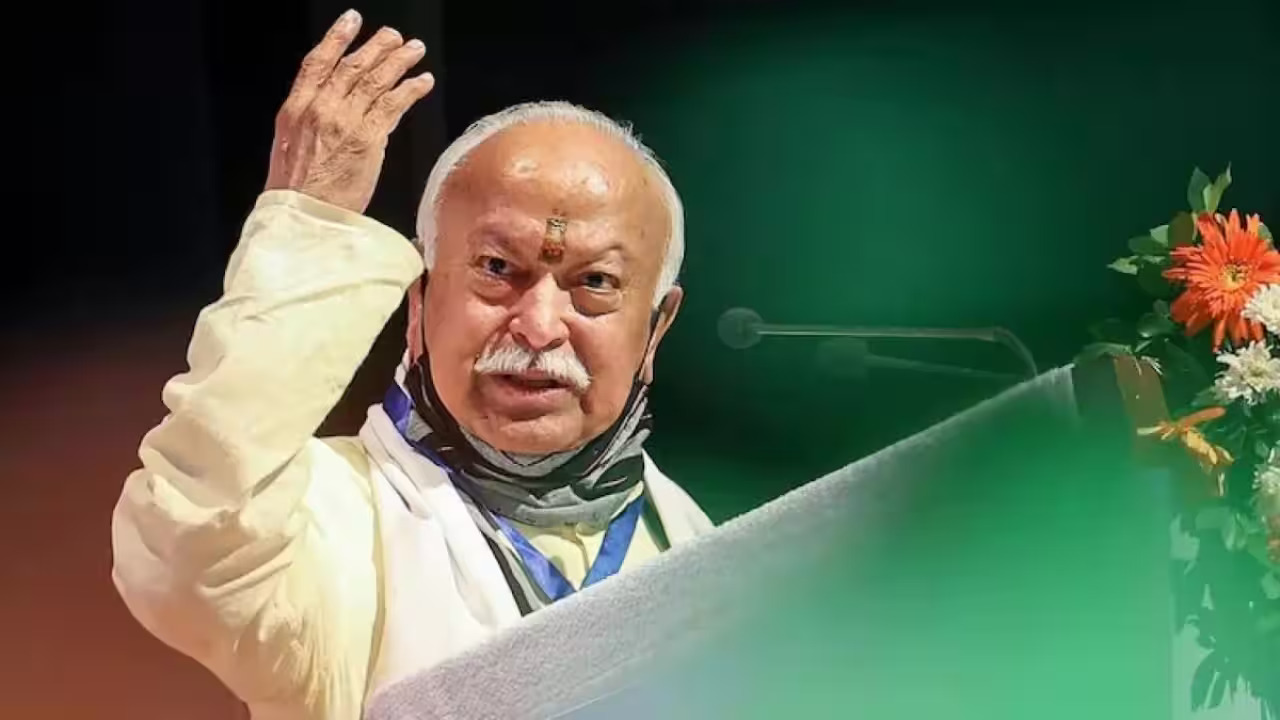
Hindu Society Mohan Bhagwat, the Chief of the Rashtriya Swayamsevak Sangh (RSS), is a figure who carries substantial weight in the Indian socio-political landscape. In recent years, the RSS and its leaders have had a profound influence on public discourse, especially on matters related to Hindu society and the nation’s cultural and political direction. Bhagwat’s speeches and public statements often offer a window into the RSS’s vision for the future of India. One such occasion was his address in Bengal, where he elaborated on the RSS’s goals and what the organization seeks to achieve in relation to Hindu society, culture, and the nation at large.
A Vision for Hindu Society
Mohan Bhagwat’s vision for Hindu society, particularly in the context of his speech in Bengal, serves as a powerful commentary on the RSS’s understanding of Hinduism, its history, and its relationship with contemporary Indian society. His words shed light on the organization’s broad aim: to empower Hindu society to regain its self-respect, embrace its cultural roots, and play a central role in the nation’s growth.
At the core of Bhagwat’s message is the notion of Hindu unity. He emphasizes that India is home to a Hindu society that is bound by cultural, spiritual, and historical ties. Bhagwat stresses that the RSS does not view Hinduism merely as a religion but as a civilizational identity that encompasses various customs, traditions, languages, and ways of life. In his address, he calls for a reawakening of Hindu consciousness in the face of challenges such as divisive politics, external influences, and the erosion of traditional values.
Hindu society, according to Bhagwat, needs to come together not just in terms of religious practice but in solidarity as a people bound by shared history and culture. This unity, he claims, can help create a society that is stronger, more resilient, and capable of addressing contemporary challenges. For Bhagwat, the RSS is not just a political entity; it is a social and cultural organization with the mission of fostering this unity.
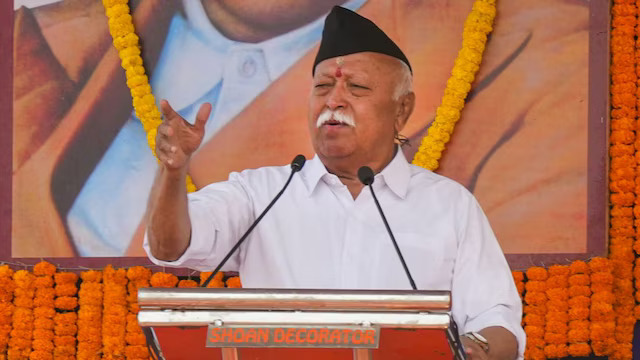
The Role of Bengal in RSS’s Vision
Bengal, with its rich history and unique cultural identity, holds a special place in Bhagwat’s vision for Hindu society. The state has been a center of religious and intellectual activity for centuries, with a large Hindu population that has historically faced challenges related to identity and cultural preservation.
In his speech, Bhagwat pointed to Bengal’s historical role in the national struggle for independence, specifically mentioning the contributions of Hindu reformers and nationalists. He highlighted the works of leaders such as Rabindranath Tagore and Subhas Chandra Bose, who, in their time, sought to preserve and promote Hindu culture and values in a rapidly changing world. He also referenced Bengal’s role in the spread of Hindu philosophical ideas, including Vedanta, and the rise of several social reform movements.
Yet, Bhagwat was not blind to the challenges faced by the Hindu community in Bengal. He acknowledged the decline in the state’s historical significance in terms of cultural identity and warned of the dangers of political and religious fragmentation. In this context, the RSS sees its role as one of guidance and encouragement, helping Hindus in Bengal, and across India, reconnect with their roots.
Bhagwat also referred to the cultural clash that Bengal has experienced due to the influence of outside forces, particularly the influx of political ideologies that might be at odds with Hindu cultural values. He mentioned the rise of religious minorities, specifically in the context of the political exploitation of minority communities and their influence on the region’s political fabric. While he did not overtly criticize any specific group, Bhagwat stressed the importance of maintaining religious balance and unity within Hindu society.
RSS and Its Political Ideology
While Bhagwat’s speech was culturally centered, it was impossible to separate it from the political ideology that underpins the RSS. As the ideological parent organization of the Bharatiya Janata Party (BJP), the RSS has been at the forefront of India’s political discourse in recent decades. Bhagwat’s address made it clear that the RSS sees itself as an advocate for Hindu interests on the national stage, promoting policies that align with its vision for a Hindu-centric India.
One of the key themes in Bhagwat’s speech was the idea of Hindutva, which is often misunderstood and misrepresented. Hindutva, as articulated by the RSS, is not about religious conversion or exclusivist nationalism, but rather a call for Hindu cultural unity. Bhagwat argued that Hindutva is about recognizing and celebrating India’s Hindu identity while embracing inclusivity, allowing space for other communities to live in harmony. According to him, a strong Hindu society does not negate the existence or rights of other religious groups; instead, it fosters a national unity that transcends sectarianism.
However, critics of the RSS often argue that the organization’s emphasis on Hindu identity can alienate minority communities, particularly Muslims and Christians. Bhagwat addressed this concern indirectly, claiming that the RSS’s ideology is based on the idea of “Sarve Bhavantu Sukhinah” — meaning that the welfare of all individuals, regardless of religion or background, should be prioritized. According to Bhagwat, a strong Hindu society is one that respects all its members, but it must first look inward and strengthen itself to be able to extend that respect.
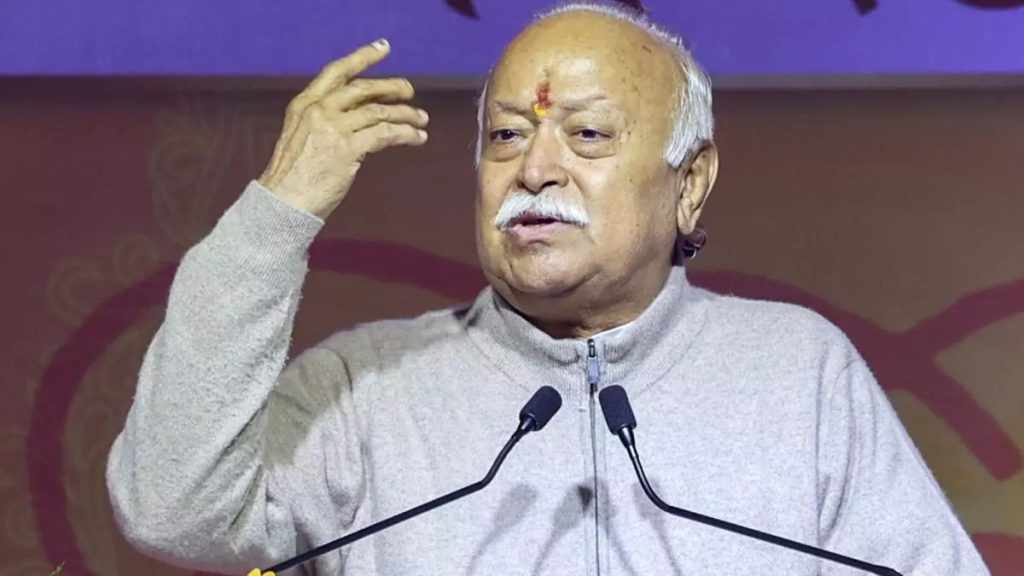
RSS’s Vision for Social Harmony
In his address, Bhagwat also touched upon the importance of social harmony within Hindu society. He emphasized that the RSS aims to foster a sense of togetherness among the different castes, regions, and linguistic groups within Hinduism. The RSS, according to Bhagwat, seeks to eradicate caste-based discrimination and promote equality by fostering mutual respect and cooperation.
The RSS’s approach to social harmony is rooted in its voluntary service model, where swayamsevaks (volunteers) engage in social work and community outreach. This is viewed as a way to build stronger bonds within society and to address issues of poverty, illiteracy, and social marginalization.
A key point of Bhagwat’s speech was the need to cultivate patriotism and a sense of national pride. He emphasized the role of Hinduism in shaping India’s national consciousness and asserted that India’s future success is intrinsically linked to the revival of Hindu cultural values. This is particularly important in an age of globalization, where Western ideals often compete with India’s ancient traditions. Bhagwat’s message was clear: a strong, prosperous India must be built on the bedrock of its Hindu civilizational identity.
Challenges Ahead for RSS’s Vision
While Bhagwat’s vision for Hindu society is both ambitious and comprehensive, it faces significant challenges. The RSS’s influence remains limited in certain parts of India, particularly in the northeastern states and in some urban centers where secularism, liberalism, and religious pluralism are more pronounced. The organization’s promotion of Hindu nationalism has been a point of contention, with critics arguing that it could undermine India’s secular fabric.
Another challenge lies in the political fragmentation within Hindu society itself. India’s Hindu community is diverse, and many different groups—whether based on caste, language, region, or sect—have their own distinct identities. The RSS aims to unite these groups, but doing so is a complex task that requires reconciling competing interests and traditions. The organization’s emphasis on cultural unity is seen by some as an attempt to impose a singular vision of Hinduism that may not resonate with everyone.
Moreover, Bhagwat’s call for greater social harmony may also face resistance, particularly from groups that feel marginalized within Hindu society. The question of how to address the legacy of caste-based discrimination and other social inequalities remains an ongoing challenge for the RSS and for Indian society as a whole.
Conclusion
Mohan Bhagwat’s speech in Bengal offered a detailed and nuanced picture of the RSS’s vision for Hindu society. It was a call for cultural reawakening, unity, and social harmony, grounded in the belief that Hinduism offers the moral and spiritual foundation necessary for India’s future success. While the vision may resonate with many who feel that India’s Hindu identity needs to be revitalized, it also raises important questions about inclusivity, secularism, and the future of India’s pluralistic society.
For the RSS, the road ahead is one of navigating the complexities of modern India while staying true to its roots. Whether or not the organization can fully realize its vision of a unified Hindu society and a resurgent India will depend on its ability to adapt, build bridges, and address the challenges of a rapidly changing world.
Read More latest news

