

Introduction
Netanyahu Former U.S. President Donald Trump has once again made headlines with his controversial remarks, this time predicting a “long-term” U.S. control over Gaza. His comments came during Israeli Prime Minister Benjamin Netanyahu’s visit to the White House, sparking widespread protests and backlash both domestically and internationally. As tensions in the region remain high, Trump’s statements have reignited discussions over U.S. involvement in Middle Eastern conflicts, Israeli-Palestinian relations, and the long-term strategy for peace and stability in the region.
This blog will explore the implications of Trump’s remarks, the political landscape surrounding Netanyahu’s visit, and the reactions from various stakeholders, including global leaders, protesters, and policymakers.
Trump’s Remarks on U.S. Control in Gaza
During a joint press conference with Netanyahu, Trump outlined a vision where the U.S. would assume control over Gaza for an extended period. According to him, this would ensure stability in the region and prevent future conflicts between Israel and Palestinian factions. He suggested that under U.S. oversight, Gaza could be transformed into a thriving economic hub, with extensive redevelopment and infrastructure projects.
While the former president did not elaborate on the specifics of his plan, his statements raise critical questions:
- How would the U.S. assume control over Gaza? Would this involve military intervention, diplomatic agreements, or economic initiatives?
- What role would Israel play? Would it relinquish security responsibilities, or would it continue to exert influence over the territory?
- How would Palestinian leadership respond? Given the deep-rooted resistance to external control, how feasible is such a proposal?
These questions remain unanswered, but what is clear is that Trump’s remarks have already fueled tensions and ignited protests worldwide.
Netanyahu’s Visit and Its Political Significance
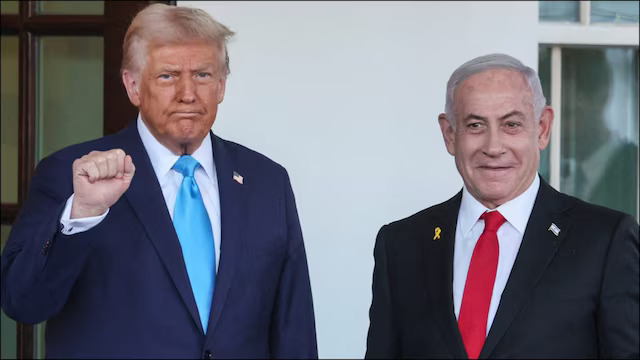
Prime Minister Benjamin Netanyahu’s visit to the White House was highly anticipated, given the ongoing conflict in Gaza and the broader Israeli-Palestinian crisis. The meeting between Trump and Netanyahu was expected to focus on security cooperation, military aid, and diplomatic strategies for the region.
Key Discussion Points:
- U.S.-Israel Military Cooperation: Netanyahu likely sought assurances of continued military and economic support, particularly in light of escalating violence in Gaza.
- The Abraham Accords: Both leaders discussed expanding the normalization agreements between Israel and Arab nations, which were initially brokered under Trump’s administration.
- Handling the Gaza Conflict: Netanyahu and Trump reportedly explored different options for stabilizing Gaza, though Trump’s remarks on U.S. control took center stage.
The visit was not without controversy. Many critics argue that Netanyahu’s hardline policies have exacerbated tensions in Gaza and that U.S. support should be contingent on Israel adopting a more balanced approach to Palestinian rights.
Protests Erupt Over Netanyahu’s White House Visit
As expected, Netanyahu’s visit sparked large-scale protests in Washington, D.C., and across the U.S. Pro-Palestinian activists, human rights organizations, and progressive lawmakers took to the streets to denounce both Netanyahu’s policies and Trump’s inflammatory remarks about U.S. control in Gaza.
Major Themes of the Protests:
- Opposition to Israeli Policies: Protesters condemned Israel’s military actions in Gaza, citing civilian casualties and alleged human rights violations.
- Resistance to U.S. Involvement: Many activists argued that the U.S. should not seek to control Gaza, warning against a neo-colonial approach to Middle Eastern politics.
- Calls for Ceasefire and Diplomacy: Demonstrators pushed for a renewed focus on peace talks and humanitarian aid rather than military solutions.
The protests reflect a growing shift in public opinion, particularly among younger Americans, who are increasingly critical of unconditional U.S. support for Israel.
International Reactions to Trump’s Comments
Trump’s remarks did not go unnoticed on the global stage. World leaders, diplomats, and international organizations responded with a mix of condemnation, skepticism, and concern.
Arab Nations’ Response:
- Saudi Arabia: The Saudi government strongly rejected the idea of U.S. control over Gaza, calling it a violation of Palestinian sovereignty.
- Egypt: Egypt, which has historically played a key role in mediating between Israel and Hamas, warned that such a move would escalate regional instability.
- United Arab Emirates: While the UAE has normalized ties with Israel, its leaders expressed reservations about a U.S. takeover of Gaza, emphasizing the need for a Palestinian-led solution.
European Union’s Stance:
The EU criticized Trump’s remarks, reaffirming its commitment to a two-state solution. European leaders argued that any long-term solution for Gaza should be based on diplomacy rather than foreign intervention.
United Nations’ Position:
The UN Secretary-General denounced the idea of U.S. control over Gaza, emphasizing that international law must be upheld and that the Palestinian people should have the right to self-determination.
Potential Consequences of U.S. Control Over Gaza
If Trump’s vision were to materialize, what would be the possible ramifications? Here are some potential outcomes:
1. Increased Regional Instability
A U.S. intervention in Gaza could provoke backlash from Palestinian groups, including Hamas, potentially leading to heightened violence. It could also strain relations with key regional allies like Jordan and Egypt.
2. Domestic Political Fallout
Trump’s comments could further polarize American politics. While some right-wing supporters might back the idea of assertive U.S. influence in the Middle East, many Democrats and progressive groups would vehemently oppose it.
3. Diplomatic Strain With Allies
Even traditional allies such as the UK, Germany, and France may distance themselves from U.S. policy if it takes a unilateral approach to Gaza. This could undermine broader diplomatic efforts in the region.
4. Economic and Military Costs
Any prolonged U.S. control over Gaza would require significant financial and military resources. Given the U.S.’s recent history with prolonged conflicts in Iraq and Afghanistan, many critics argue that such a venture would be both costly and unsustainable.
What Happens Next?
Despite the uproar over Trump’s remarks, it remains unclear whether his vision has any real chance of being implemented. Several factors will determine the future course of events:
- U.S. Presidential Elections: If Trump runs for and wins re-election, his administration could attempt to push forward this controversial policy. However, opposition from within the government and public resistance could be significant obstacles.
- Palestinian and Israeli Leadership Responses: How Palestinian leaders, including Hamas and the Palestinian Authority, react will be crucial. Similarly, Israel’s stance on U.S. involvement will play a key role.
- International Diplomatic Pressure: Global actors such as the UN, EU, and neighboring Arab states will likely continue to oppose any U.S. control over Gaza.
Conclusion
Trump’s prediction of long-term U.S. control in Gaza has triggered a firestorm of controversy, protests, and international condemnation. Netanyahu’s White House visit further fueled tensions, highlighting the deep divisions surrounding the Israeli-Palestinian conflict.
While Trump’s remarks may not lead to immediate policy changes, they reflect a broader trend of aggressive U.S. involvement in Middle Eastern affairs. Whether this vision ever comes to fruition remains to be seen, but one thing is certain: the path to peace in Gaza is more complex than ever.
As debates continue, the world watches closely to see how U.S. foreign policy in the region evolves and whether diplomatic solutions can prevail over military interventions.
read more latest news

