
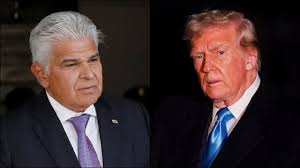
Panama Canal In a significant geopolitical development, Panama Canal has announced its decision not to renew its memorandum of understanding with China regarding the Belt and Road Initiative (BRI). This move comes in the wake of heightened pressure from the United States, with President Donald Trump issuing stern warnings about China’s growing influence over the Panama Canal. The situation underscores the intricate balance of power and the strategic importance of the canal in global trade.
Background: The Panama Canal Strategic Significance
The Panama Canal, completed by the United States in 1914, has long been a critical artery for international maritime trade, connecting the Atlantic and Pacific Oceans. In 1977, under the Torrijos-Carter Treaties, the U.S. agreed to transfer control of the canal to Panama Canal, a process completed on December 31, 1999. Since then, the canal has been managed by the Panama Canal Authority (ACP), becoming a significant source of national revenue and pride for Panama.
Panama’s Engagement with China’s Belt and Road Initiative
In 2017, Panama Canal became the first Latin American country to sign a memorandum of understanding with China to participate in the BRI, aiming to enhance infrastructure development and bilateral trade. This partnership led to increased Chinese investment in Panama Canal, including port developments and other infrastructure projects. However, this growing relationship raised concerns in Washington about China’s expanding influence in a region historically within the U.S. sphere of influence.
U.S. Concerns and President Trump’s Warnings
The U.S. has expressed apprehension over China’s involvement in the Panama Canal’s operations, suggesting it could compromise the canal’s neutrality and strategic importance. President Trump has been particularly vocal, alleging that China’s presence violates the canal’s neutrality treaty and poses a threat to U.S. interests. He has even hinted at the possibility of the U.S. reclaiming control over the canal if Panama does not address these concerns.
Secretary of State Marco Rubio’s Diplomatic Mission
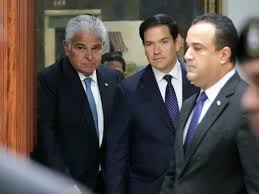
In a recent diplomatic effort, U.S. Secretary of State Marco Rubio visited Panama Canal to convey the U.S. administration’s concerns directly. During his meeting with Panamanian President José Raúl Mulino, Rubio emphasized that the current level of Chinese influence around the canal is “unacceptable” and urged Panama to take immediate action to reduce it. He warned that failure to do so might prompt the U.S. to take measures to protect its rights under the existing treaty.
Panama’s Response: A Strategic Withdrawal
In response to U.S. pressure, President Mulino announced that Panama Canal would not renew its agreement with China for the Belt and Road Initiative, which is set to expire in 2026. He clarified that while the canal’s sovereignty is non-negotiable, Panama is willing to address U.S. concerns and explore other areas of cooperation, including migration control and investments. Mulino also indicated the possibility of reviewing concessions granted to Chinese-affiliated companies operating ports adjacent to the canal.
Domestic Reactions and National Sentiment
The decision to distance Panama from China’s BRI has elicited mixed reactions domestically. While some Panamanians support the move as a reaffirmation of national sovereignty and a strategic alignment with the U.S., others view it as capitulating to external pressure. Protests have erupted in Panama Canal City, with demonstrators expressing opposition to U.S. intervention and asserting that the canal’s sovereignty should remain inviolate.
International Implications and Future Prospects
Panama’s withdrawal from the BRI marks a significant shift in its foreign policy and has broader implications for China’s influence in Latin America. It reflects the complex interplay between major powers vying for strategic advantage in critical global trade routes. As the situation evolves, Panama Canal will need to navigate its relationships carefully, balancing national interests with external pressures.
In conclusion, Panama’s decision to withdraw from its deal with China under U.S. pressure highlights the enduring strategic importance of the Panama Canal and the geopolitical tensions surrounding it. The developments underscore the challenges small nations face in maintaining sovereignty while managing relationships with global superpowers.
Panama Withdraws From China Deal As Trump Issues New Threat: ‘Something Very Powerful…’
Introduction
In a dramatic geopolitical shift, Panama has officially announced its decision to withdraw from its Belt and Road Initiative (BRI) agreement with China. This decision follows mounting pressure from the United States, with former President Donald Trump issuing strong warnings regarding China’s increasing influence in the region. Trump’s latest comments, hinting at “something very powerful,” have further escalated tensions between the U.S., Panama Canal, and China. The move not only signals a significant recalibration of Panama’s foreign policy but also underscores the intensifying competition between the U.S. and China for dominance in Latin America.
Historical Context: The Strategic Significance of the Panama Canal
The Panama Canal has long been a vital trade route, connecting the Atlantic and Pacific Oceans. Opened in 1914 and originally under U.S. control, the canal was transferred to Panama on December 31, 1999, under the Torrijos-Carter Treaties. Since then, it has remained a pillar of Panama’s economy, facilitating approximately 5% of global maritime trade.
The United States has historically viewed the canal as an essential strategic asset. Despite Panama’s sovereignty over the canal, Washington has kept a close watch on foreign investments and influence in the region. China’s deepening involvement in Panama’s infrastructure and trade agreements over the past decade has thus become a point of contention in U.S. foreign policy.
Panama and China: The Belt and Road Initiative Agreement
Panama became the first Latin American country to formally join China’s Belt and Road Initiative in 2017. The agreement aimed to enhance infrastructure, trade, and investment opportunities, leading to increased Chinese investments in Panama’s ports, energy sector, and logistics. The agreement brought billions of dollars in investment, including:
- Port Development: Chinese companies secured contracts to expand Panama’s port facilities.
- Infrastructure Projects: Major road and railway expansions were planned under Chinese financing.
- Economic Ties: Panama’s trade with China significantly increased, making China its second-largest trading partner after the United States.
Despite these economic benefits, concerns over China’s strategic influence and potential control over critical infrastructure fueled criticism, particularly from Washington.
U.S. Concerns and Diplomatic Pressure
The U.S. has long been wary of China’s growing presence in Latin America, viewing it as an encroachment on its traditional sphere of influence. The Belt and Road Initiative, which has led to increased Chinese investments in critical infrastructure worldwide, has raised alarms in Washington over potential national security threats.
Former President Donald Trump has been particularly vocal about these concerns, warning that Chinese involvement in Panama could compromise the neutrality of the canal. His latest comments, stating that “something very powerful” would be done to counter China’s influence, have fueled speculation about possible U.S. actions, including:
- Economic Sanctions: The U.S. could impose sanctions on Chinese companies operating in Panama.
- Military Presence: Increasing the U.S. naval presence near the canal to deter Chinese expansion.
- Diplomatic Engagement: Strengthening ties with Panama to ensure continued alignment with American interests.
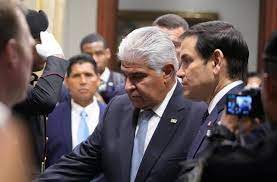
During a recent visit to Panama, U.S. Secretary of State Marco Rubio reinforced these concerns, urging Panama to reconsider its agreements with China. He stated that the current level of Chinese influence in the country was “unacceptable” and warned of consequences if Panama did not take corrective action.
Panama’s Decision to Withdraw
Facing mounting pressure from Washington and concerns over its long-term strategic partnerships, Panama’s government, led by President José Raúl Mulino, announced its decision to withdraw from the Belt and Road Initiative. While the official explanation cited the need to “reevaluate foreign investment strategies,” the underlying reasons clearly align with U.S. interests.
Key reasons for Panama’s withdrawal include:
- Pressure from the United States: Continued warnings from Washington about the risks of Chinese influence.
- Economic Considerations: The fear of losing access to U.S. financial support and trade incentives.
- National Security Concerns: The potential for increased foreign control over Panama’s critical infrastructure.
Panama has also signaled that it will review Chinese-affiliated contracts for port operations near the canal, a move likely to further strain relations with Beijing.
China’s Response and Future Implications
China has reacted with disappointment to Panama’s decision, calling it a “setback for mutual cooperation.” Chinese officials have warned that this move could impact Panama’s ability to attract foreign investment in the future. Additionally, Chinese businesses operating in Panama may face restrictions, further complicating economic ties.
Despite this setback, China’s influence in Latin America remains strong. Many regional nations continue to participate in the BRI, benefiting from Chinese infrastructure investments. However, Panama’s withdrawal could set a precedent for other nations reconsidering their ties with Beijing under U.S. pressure.
Domestic Reaction in Panama
Panama’s decision has sparked mixed reactions domestically. Supporters of the withdrawal argue that it protects national sovereignty and strengthens ties with the U.S., Panama’s most significant economic partner. Critics, however, see it as succumbing to U.S. pressure at the expense of economic opportunities.
Recent protests in Panama City have demonstrated public division on the issue, with some advocating for maintaining independence from both superpowers. Business leaders, meanwhile, have expressed concerns about how the decision may impact investment and trade relationships.
Trump’s Latest Threat: What Comes Next?
Donald Trump’s latest statement about “something very powerful” happening in response to China’s influence in Panama has left many speculating about possible U.S. actions. Some analysts predict:
- Stronger Military Posturing: An increased U.S. military presence in the region to ensure control over trade routes.
- Economic Countermeasures: Investment initiatives aimed at countering China’s influence in Latin America.
- Potential Canal Policy Revisions: Reviewing agreements to ensure Panama remains aligned with U.S. strategic interests.
As tensions between the U.S. and China continue to rise, Panama finds itself at the center of a global power struggle, with its decisions likely to have lasting geopolitical implications.
Conclusion
Panama’s withdrawal from its Belt and Road Initiative deal with China marks a significant turning point in Latin American geopolitics. The decision, heavily influenced by U.S. diplomatic pressure, underscores the ongoing struggle for influence between Washington and Beijing.
With Trump’s latest warnings hinting at potential U.S. actions, the situation remains highly fluid. As Panama recalibrates its foreign policy, the long-term impact of this decision will depend on how it navigates its relationships with both superpowers while maintaining its sovereignty over the critical Panama Canal.
In the coming months, global observers will be closely watching how this situation unfolds, as it could set a precedent for other nations reassessing their economic and strategic partnerships in an increasingly polarized world.
Read more latest News

