
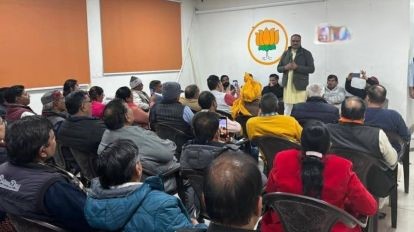
Why BJP Has Turned to UP Deputy CM Brajesh Pathak in Delhi Assembly Polls
The Bharatiya Janata Party (BJP) has strategically chosen Uttar Pradesh Deputy Chief Minister Brajesh Pathak to spearhead its efforts in the upcoming Delhi Assembly polls. This move reflects the party’s recognition of his political acumen, ability to connect with diverse demographics, and the increasing influence of Uttar Pradesh’s leadership in national politics. Below, we delve into the reasons behind this decision, its potential implications, and the broader political context.
1. The Strategic Importance of Delhi in BJP’s Agenda Brajesh Pathak
Delhi, though a Union Territory, holds significant political weight as the nation’s capital. With its 70-member Legislative Assembly, the city-state is a focal point for any party aspiring for a broader national influence.
Challenges for BJP in Delhi:
- The BJP has historically struggled to secure a strong foothold in Delhi Assembly elections. The Aam Aadmi Party (AAP), under Arvind Kejriwal, has dominated the political landscape since 2013.
- Despite its robust organization, BJP has faced criticism for its inability to address local issues such as water, education, and health as effectively as AAP.
BJP’s Delhi Mission:
- The 2025 Assembly elections present an opportunity for BJP to disrupt AAP’s dominance.
- The party’s focus is on presenting a strong leadership alternative and bridging gaps with the urban and migrant population.
2. Why Brajesh Pathak?
A Legal Background and Political Acumen Brajesh Pathak
Brajesh Pathak, a lawyer by profession, brings a unique combination of grassroots connection and administrative expertise. His journey from the Bahujan Samaj Party (BSP) to BJP reflects his adaptability and understanding of shifting political dynamics.
Caste Dynamics and Outreach:
- Pathak belongs to the Brahmin community, a significant vote bank in Delhi, especially among middle-class and upper-caste voters.
- His ability to bridge caste divides makes him an asset in urban constituencies with mixed demographics.
Administrative Success in Uttar Pradesh Brajesh Pathak:
- As Deputy CM of UP, Pathak has garnered praise for his focus on healthcare, law and order, and development initiatives.
- His work resonates with Delhi’s migrant population, particularly those from Uttar Pradesh, who form a substantial part of the electorate.
An Urban Face with Rural Connect Brajesh Pathak:
- Pathak’s appeal is not limited to a specific demographic. His familiarity with both urban and rural challenges positions him as a relatable leader for diverse voter bases in Delhi.
3. The Migrant Factor in Delhi Politics
Brajesh Pathak Delhi’s electorate is unique due to its diverse population, with a significant proportion comprising migrants from Uttar Pradesh and Bihar.
Migrant Contribution:
- Migrants are integral to Delhi’s economy, contributing as laborers, professionals, and small business owners.
- They play a decisive role in constituencies such as Burari, Sangam Vihar, and Seelampur.
Brajesh Pathak Role:
- As a prominent leader from Uttar Pradesh, Pathak is seen as a figure who can resonate with these voters, leveraging his roots and achievements in UP to address their concerns in Delhi.
4. Countering AAP’s Stronghold
The AAP has maintained a stronghold in Delhi through its focus on local governance and welfare schemes, including:
- Free electricity and water.
- Quality education through government schools.
- Affordable healthcare with Mohalla Clinics.
BJP’s Challenge Brajesh Pathak:
- The BJP needs to present a viable alternative to AAP’s local-centric approach.
- While the BJP has a strong national presence, it has struggled to align its narrative with the day-to-day concerns of Delhi’s residents.
Pathak as the Answer:
- His administrative experience in UP can be leveraged to showcase BJP’s commitment to addressing local issues.
- His credibility among marginalized communities could counter AAP’s appeal to similar demographics.
5. Strengthening BJP’s Brahmin-Voter Base
The Brahmin community has traditionally been a strong supporter of BJP, but in recent years, there have been murmurs of dissatisfaction due to perceived neglect.
Brahmin Influence in Delhi:
- Brahmins form a sizable portion of Delhi’s educated middle-class voters.
- Their support is crucial in constituencies like Karol Bagh and Rajinder Nagar.
Pathak’s Impact:
- As a prominent Brahmin leader, his involvement could reinforce BJP’s bond with this community.
- His outreach efforts could address grievances and rebuild trust.
6. Aligning Local Leadership with National Goals
The BJP’s central leadership, under Prime Minister Narendra Modi and Home Minister Amit Shah, has emphasized the need for state leaders to complement the party’s national vision.
Pathak’s Alignment with BJP Ideals:
- His track record reflects BJP’s core principles of development, governance, and nationalism.
- His ability to balance grassroots politics with urban challenges aligns with the party’s broader goals for Delhi.
Symbolic Leadership:
- By introducing a leader like Pathak, the BJP sends a message of inclusivity and administrative competence.
- It also reinforces the importance of Uttar Pradesh in shaping national and regional politics.
7. Pathak’s Challenges in Delhi
While Pathak’s appointment offers several advantages, it is not without challenges.
Overcoming AAP’s Popularity:
- AAP’s welfare schemes have created a loyal voter base that Pathak needs to penetrate.
- Convincing voters to shift allegiance will require innovative strategies and tangible promises.
Internal Party Dynamics:
- Delhi BJP has its own set of leaders and factions, which might resist an outsider’s leadership.
- Balancing these dynamics will be crucial for Pathak’s success.
Addressing Local Issues:
- Unlike Uttar Pradesh, Delhi’s issues revolve around urban challenges such as pollution, traffic, and housing.
- Pathak will need to demonstrate his understanding and solutions for these unique problems.
8. BJP’s Strategy Moving Forward
To maximize Pathak’s impact, the BJP is likely to adopt a multi-pronged approach:
- Focused Campaigns: Highlighting Pathak’s achievements in Uttar Pradesh and their relevance to Delhi.
- Community Outreach: Engaging with Brahmin and migrant communities through targeted events and initiatives.
- Collaborative Leadership: Ensuring seamless coordination between Pathak and Delhi BJP leaders.
- Local Manifesto: Developing a manifesto that addresses Delhi-specific issues while showcasing Pathak’s vision.
9. Conclusion
The BJP’s decision to involve Brajesh Pathak in the Delhi Assembly polls reflects a calculated move to combine administrative credibility with caste and community appeal. While the challenges are significant, Pathak’s leadership offers a fresh perspective and the potential to reshape BJP’s fortunes in Delhi. As the campaign unfolds, his role will be critical in determining whether BJP can break AAP’s stronghold and establish a new political narrative in the nation’s capital.
Read More latest News

