
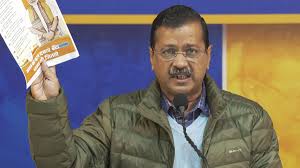
Arvind Kejriwal Releases AAP’s Middle-Class Manifesto, Raises 7 Demands for Budget 2025
Demands in Budget As the Union Budget 2025 looms, Delhi Chief Minister and Aam Aadmi Party (AAP) leader Arvind Kejriwal has unveiled a comprehensive Middle-Class Manifesto, urging the central government to prioritize the concerns of the middle-class population. The manifesto, which raises seven key demands, reflects AAP’s efforts to align with the aspirations of a demographic often described as the backbone of the Indian economy.
Kejriwal’s move is being seen as both a political strategy and an appeal to address systemic challenges faced by middle-income families. This article delves into the manifesto, its implications, and the larger conversation it seeks to spark about India’s middle class.
The Middle-Class Manifesto: Key Highlights
The manifesto emphasizes seven specific demands that AAP believes should be reflected in the upcoming Union Budget:
1. Tax Relief for the Middle Class
- Rationale: The middle class has long called for rationalized tax slabs and increased exemptions.
- Proposal: Kejriwal has proposed:
- Raising the income tax exemption limit to ₹5 lakh from the current ₹2.5 lakh.
- Increasing standard deductions for salaried individuals to ₹1 lakh.
2. Affordable Housing
- Focus: Addressing skyrocketing real estate prices and making housing accessible to middle-class families.
- Demand:
- Enhanced tax benefits on home loans.
- Incentives for affordable housing projects under the Pradhan Mantri Awas Yojana.
3. Lower GST Rates on Essentials
- Problem: Kejriwal pointed out that essential goods, including household items and appliances, attract high GST rates.
- Solution: Lower GST slabs for products such as:
- Packaged food and beverages.
- Basic consumer electronics like refrigerators and washing machines.
4. Educational Support
- Concern: Rising education costs have placed significant financial burdens on middle-class families.
- Suggestions:
- Tax exemptions on tuition fees.
- Enhanced government funding for quality public schools and higher education institutions.
5. Healthcare Subsidies
- Challenge: Despite schemes like Ayushman Bharat, many middle-class families struggle with healthcare costs.
- Demands:
- Subsidies for health insurance premiums.
- Increased allocation for public healthcare infrastructure in urban and semi-urban areas.
6. Employment Opportunities
- Context: The manifesto addresses unemployment and job insecurity, particularly in urban areas.
- Proposals:
- Skill development programs tailored to emerging industries like AI, renewable energy, and digital marketing.
- Employment-linked tax incentives for companies hiring from the middle-class demographic.
7. Better Public Infrastructure
- Call for Action: Improved urban infrastructure, including better roads, public transport, and waste management systems.
- Plan:
- Higher budgetary allocation for metro expansion and local transport systems.
- Focus on clean water supply and uninterrupted power for urban areas.
The Political Context
1. AAP’s Strategy
- Kejriwal’s move comes as the Aam Aadmi Party positions itself as a voice for urban and semi-urban middle-class families.
- The manifesto underlines AAP’s broader electoral strategy to expand beyond Delhi and Punjab, targeting urban voters across India.
2. Middle Class as a Key Voting Bloc
- The middle class, comprising over 300 million people, holds significant electoral weight.
- Historically, this demographic has been seen as supportive of reforms but also vocal about issues like inflation and unemployment.
Public Reactions
Support from Middle-Class Families
The manifesto has resonated with many middle-class families who feel neglected in policy discussions.
- Salaried Professionals: Praised the focus on tax relief and housing.
- Parents: Welcomed proposals related to education and healthcare.
Criticism and Skepticism
- Opposition: Critics, including BJP leaders, accused AAP of making unrealistic promises without detailing funding mechanisms.
- Economic Experts: Warned that some proposals, such as extensive tax cuts, could strain government revenues.
Economic Implications
Impact on Revenue
- Increasing the tax exemption limit and offering deductions could lead to a significant reduction in direct tax revenues.
- Lowering GST rates might impact indirect tax collections.
Stimulating Consumption
Proponents argue that these measures could boost disposable income, driving consumer spending and economic growth.
Balancing Act
- The challenge for the government will be to balance fiscal prudence with populist measures.
- Experts suggest phased implementation of tax reliefs and subsidies to mitigate revenue shortfalls.
Comparative Perspective
India’s Middle-Class Policies vs. Global Practices
- United States: Offers substantial tax credits for families and deductions for mortgage interest.
- Europe: Focuses on affordable public healthcare and education.
- India: While schemes like Ayushman Bharat and PMAY exist, middle-class families often fall through policy gaps due to income thresholds.
Expert Opinions
Economists
- Dr. Raghuram Rajan: “India’s middle class is pivotal for sustained economic growth. Addressing their concerns is critical, but fiscal discipline must not be overlooked.”
Policy Analysts
- Mihir Sharma: “The manifesto strikes the right chords, but execution will require collaboration between state and central governments.”
Potential Challenges
1. Implementation Feasibility
- Many of the proposals require cooperation between state and central governments.
- Budgetary constraints could delay or dilute key measures.
2. Populism vs. Pragmatism
- Critics have labeled the manifesto as populist, questioning its alignment with long-term economic goals.
What’s Next?
AAP’s Advocacy
Kejriwal has announced plans to:
- Hold public rallies across major cities to generate support for the manifesto.
- Submit a detailed proposal to the Finance Ministry ahead of Budget 2025.
Union Budget 2025
It remains to be seen how many of AAP’s demands find reflection in the budget. The government faces the challenge of addressing middle-class concerns while maintaining fiscal prudence.
Conclusion
Arvind Kejriwal’s Middle-Class Manifesto is a bold attempt to highlight the needs of a demographic often overshadowed by other voter bases. Whether or not the manifesto influences the Union Budget 2025, it has succeeded in sparking a national conversation about the middle class’s role in India’s economy and polity.
By addressing issues such as taxation, housing, and education, the manifesto underscores the importance of targeted policies for the middle class. As the budget unfolds, the nation will watch closely to see if these demands translate into action.
Read More Latest news

