
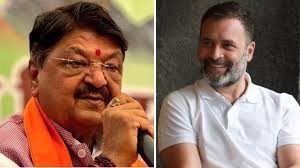
BJP leader and Union Minister Kailash Vijayvargiya, known for his sharp political rhetoric, sparked controversy on Sunday with his remarks targeting Congress leader Rahul Gandhi. Speaking at a public gathering, Vijayvargiya accused Rahul Gandhi’s ancestors of having “insulted” Dr. B.R. Ambedkar, the principal architect of the Indian Constitution and a towering figure in the fight for social justice.
Vijayvargiya’s demand was striking: he urged Rahul Gandhi to publicly apologize to Baba Saheb Ambedkar by performing sit-ups, calling it a symbolic gesture of repentance for the alleged historical wrongs committed by the Congress party.
This fiery statement has reignited debates about the Congress’s historical record on social justice, the BJP’s positioning as the champion of marginalized communities, and the role of Ambedkar’s legacy in contemporary Indian politics. Here’s an in-depth look at the context, reactions, and implications of Vijayvargiya’s remarks.
The Statement: What Did Vijayvargiya Say?
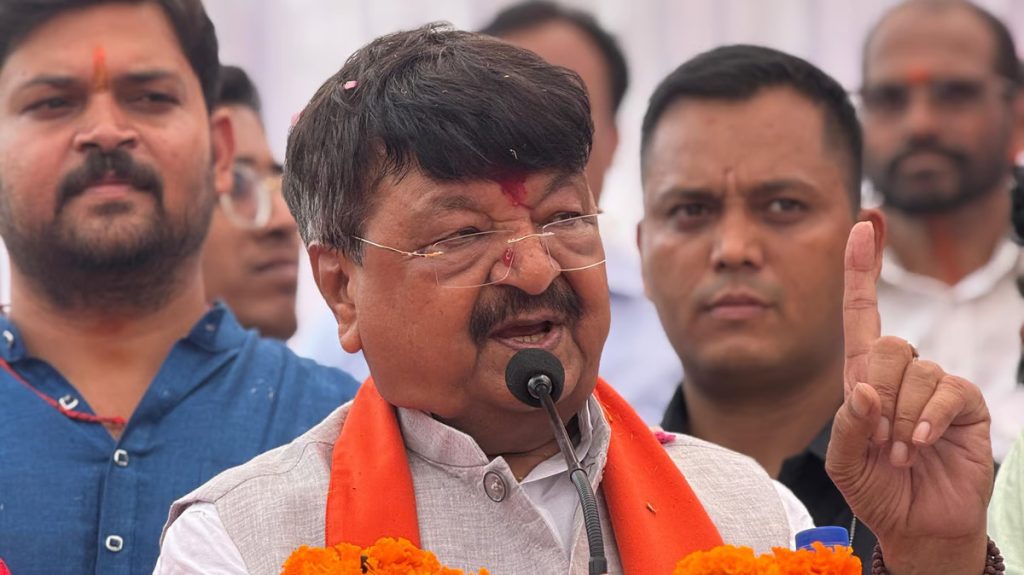
Speaking at a rally in Madhya Pradesh, Vijayvargiya lashed out at Rahul Gandhi, accusing his family of disrespecting Baba Saheb Ambedkar during India’s formative years. “The Congress party has a history of ignoring and sidelining Baba Saheb Ambedkar. Rahul Gandhi should atone for the sins of his ancestors by doing sit-ups in front of Baba Saheb’s statue,” he declared, drawing applause from the crowd.
Vijayvargiya’s comments referenced key historical events, including the reported opposition Ambedkar faced from Congress leaders during the drafting of the Constitution and his eventual resignation as Law Minister due to ideological differences with the party.
Historical Context: Ambedkar and the Congress
To understand Vijayvargiya’s accusations, it is essential to revisit the history of Ambedkar’s relationship with the Indian National Congress.
- Ambedkar’s Early Struggles:
Dr. B.R. Ambedkar emerged as a leading voice for the rights of marginalized communities, particularly Dalits, in colonial India. His advocacy for separate electorates for Dalits brought him into direct conflict with Mahatma Gandhi, who opposed the idea on the grounds of national unity. The 1932 Poona Pact, which replaced separate electorates with reserved seats for Dalits, was a compromise that left Ambedkar dissatisfied. - The Drafting of the Constitution:
As Chairman of the Drafting Committee of the Indian Constitution, Ambedkar played a pivotal role in shaping modern India’s legal and social framework. However, historians note that he faced resistance from some Congress leaders, who were skeptical of his progressive views on social justice and equality. - Resignation as Law Minister:
Ambedkar resigned as Law Minister in 1951, citing the Congress’s lack of commitment to enacting the Hindu Code Bill, which sought to reform Hindu personal laws to ensure gender equality. His resignation highlighted the ideological rift between him and the Congress leadership. - Ambedkar’s Conversion to Buddhism:
In 1956, Ambedkar converted to Buddhism along with millions of his followers, marking a significant moment in India’s social history. His decision was seen as a rejection of the caste-based discrimination prevalent in Hindu society, which he felt the Congress had failed to address adequately.
Vijayvargiya’s remarks draw upon this historical narrative, framing the Congress as a party that failed to honor Ambedkar’s legacy.
The BJP’s Strategy: Positioning as Ambedkar’s Custodian
Over the years, the BJP has sought to align itself with Ambedkar’s legacy, often accusing the Congress of neglecting his contributions. Key elements of this strategy include:
- Highlighting Historical Grievances:
The BJP frequently cites instances of Ambedkar’s marginalization by Congress leaders to position itself as a more inclusive and pro-Dalit party. - Symbolic Gestures:
The party has undertaken initiatives to honor Ambedkar’s memory, such as renaming institutions, celebrating his birth anniversary on a grand scale, and showcasing his writings and ideas in public discourse. - Legislative Focus:
BJP leaders often highlight their efforts to uplift marginalized communities through welfare schemes and reforms, presenting these as an extension of Ambedkar’s vision for social equality.
Vijayvargiya’s remarks are part of this broader strategy, aimed at consolidating Dalit support ahead of crucial state and national elections.
Congress’s Defense and Counter-arguments
The Congress party was quick to respond to Vijayvargiya’s remarks, dismissing them as politically motivated and factually incorrect. Party spokespersons highlighted the following points:
- Ambedkar’s Role in the Constitution:
Congress leaders have argued that Ambedkar’s appointment as Chairman of the Drafting Committee was a testament to the party’s respect for his intellect and vision. - Congress’s Legacy on Social Justice:
The party pointed to landmark legislations and policies enacted under its leadership, such as affirmative action for Scheduled Castes and Scheduled Tribes, as evidence of its commitment to Ambedkar’s ideals. - BJP’s Record:
Congress leaders also questioned the BJP’s sincerity in upholding Ambedkar’s legacy, citing instances of caste-based violence and the party’s alleged failure to adequately address issues affecting Dalit communities.
Political Reactions and Public Perception
Vijayvargiya’s remarks have elicited strong reactions across the political spectrum:
- BJP Leaders:
BJP leaders have rallied behind Vijayvargiya, reiterating the need for Rahul Gandhi to acknowledge and apologize for the Congress’s historical missteps. - Opposition Parties:
Several opposition leaders have condemned Vijayvargiya’s comments, accusing the BJP of using Ambedkar’s legacy as a political tool while failing to address contemporary issues of social justice. - Dalit Activists:
Reactions among Dalit activists have been mixed. While some see Vijayvargiya’s remarks as an attempt to highlight historical injustices, others view them as a diversion from pressing issues such as caste discrimination and economic inequality. - Public Opinion:
Among the general public, Vijayvargiya’s remarks have sparked debates about the role of historical accountability in modern politics and whether symbolic gestures like apologies hold meaningful value.
The Larger Debate: Historical Accountability in Politics
Vijayvargiya’s demand for Rahul Gandhi to apologize raises broader questions about the role of historical accountability in contemporary politics. Key points of discussion include:
- Can Individuals Be Held Accountable for Historical Events?
Critics argue that holding Rahul Gandhi accountable for decisions made by Congress leaders decades ago is unfair and detracts from current political issues. - Symbolism vs. Substance:
Symbolic gestures, such as apologies, can be powerful but are often viewed as insufficient substitutes for substantive policy changes. - Legacy Politics:
The debate underscores the growing trend of political parties leveraging historical figures and events to shape narratives and mobilize support.
Implications for Upcoming Elections
Vijayvargiya’s remarks come at a time when both the BJP and Congress are gearing up for key state and national elections. The focus on Ambedkar’s legacy reflects the importance of Dalit voters, who constitute a significant portion of the electorate.
For the BJP, emphasizing historical grievances serves to consolidate its appeal among Dalit communities. For the Congress, defending its legacy while addressing contemporary concerns will be crucial in countering the BJP’s narrative.
Conclusion: The Politics of Legacy and Reconciliation
Kailash Vijayvargiya’s demand for Rahul Gandhi to apologize to Baba Saheb Ambedkar has reignited debates about historical accountability, social justice, and the role of legacy in Indian politics. While the remarks have polarized opinions, they also highlight the enduring relevance of Ambedkar’s vision in shaping India’s socio-political landscape.
As political parties vie for the support of marginalized communities, the challenge will be to move beyond rhetoric and symbolism to address the structural inequalities that persist in Indian society. Only then can Ambedkar’s vision of a just and equitable India be truly realized.
Read more latest news

