
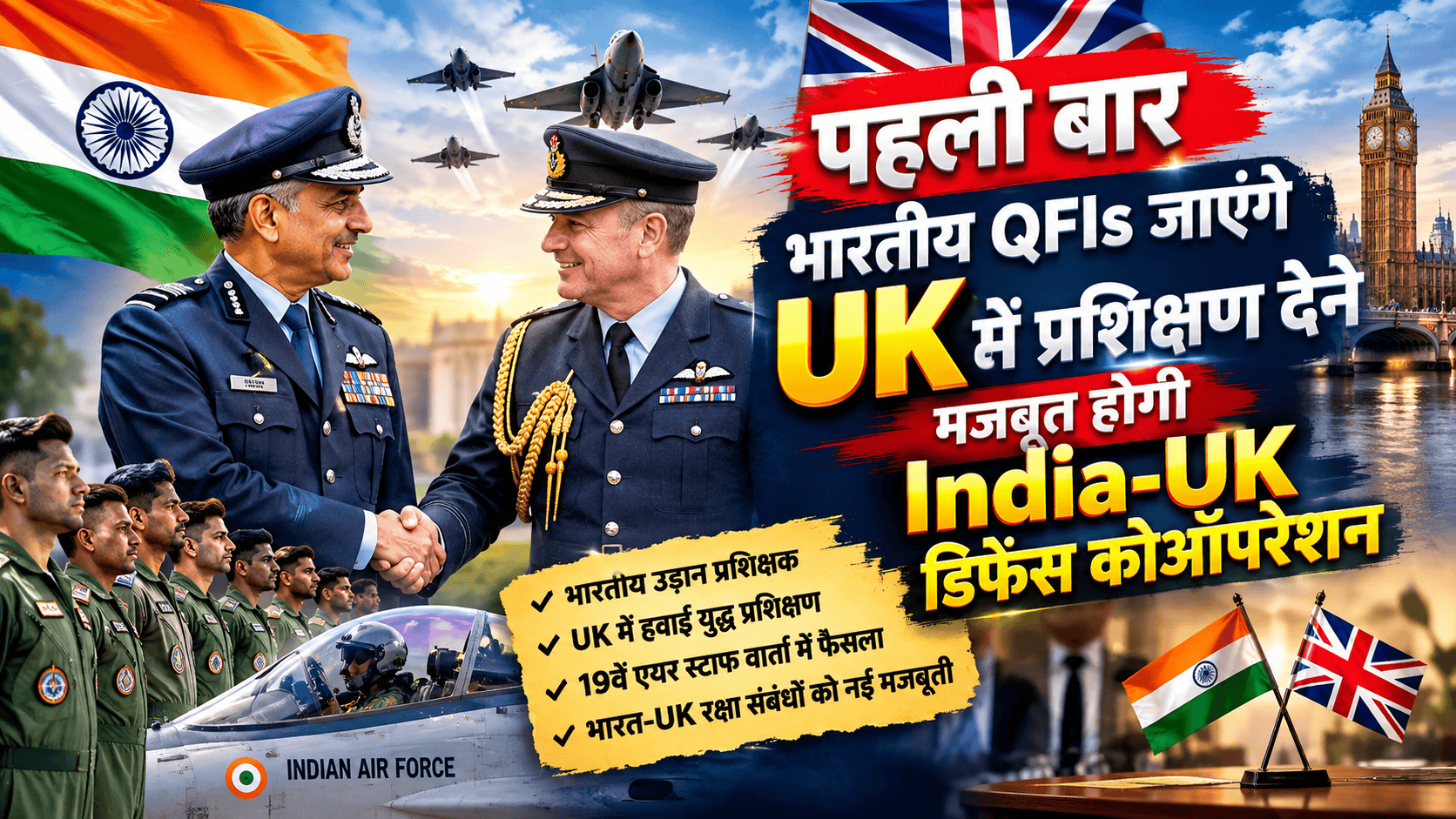
Historic Step in India-UK Defence Cooperation as Indian Flying Instructors Head to UK
A historic milestone has been achieved in India UK defence cooperation, with Indian Qualified Flying Instructors (QFIs) set to travel to the United Kingdom to impart training on the nuances of aerial combat. The move represents a significant development in the defence relationship between India and the UK and reflects growing confidence, professional exchanges and military cooperation between the two countries.
The landmark decision was taken during the 19th Air Staff Talks between India and the United Kingdom, held in New Delhi on February 12, 2026. The decision is being viewed as an important step in expanding defence training and strengthening operational understanding between the armed forces of the two nations.
Indian Flying Instructors to Train in the UK
Under this new initiative, Indian Qualified Flying Instructors will travel to the UK and share their expertise in aerial combat training. The deployment of Indian instructors represents a notable development because it places Indian military training expertise at the centre of an international defence exchange.
The initiative is expected to provide opportunities for professional interaction between Indian and British aviation personnel. Through such exchanges, instructors and military personnel can learn from each other’s experiences, training methodologies and approaches to aerial operations. This aspect of India UK defence cooperation could contribute to greater interoperability and mutual understanding between the two armed forces.
The decision also demonstrates that defence partnerships are increasingly moving beyond equipment purchases and traditional military exercises. Training, knowledge sharing and specialized professional exchanges are becoming important components of modern defence relationships.
19th Air Staff Talks in New Delhi
The announcement emerged from the 19th Air Staff Talks between India and the United Kingdom, which were held in New Delhi on February 12, 2026. The Air Staff Talks provide an important institutional platform for discussions between the defence establishments of both countries.
The latest decision highlights the expanding scope of India UK defence cooperation, particularly in the field of military aviation. Discussions at such meetings allow both sides to examine areas where their armed forces can cooperate more closely and develop long-term professional relationships.
The decision to send Indian QFIs to the UK is particularly significant because aerial combat training requires highly specialized knowledge, experience and instructional expertise. Sharing such expertise can help deepen military-to-military engagement while creating opportunities for both sides to understand different approaches to combat aviation training.
Why the Move Is Significant
The importance of this development lies in its professional and strategic dimensions. For India, sending qualified instructors to train personnel in the UK represents recognition of the capabilities and experience developed by the Indian armed forces. For Britain, the exchange provides an opportunity to benefit from India’s aviation training experience.


The initiative adds a new dimension to India UK defence cooperation because it involves the exchange of specialized human expertise rather than simply military hardware or technology. Such exchanges can build long-term relationships among defence personnel and create greater familiarity between the armed forces.
Military aviation is an area where training standards, operational procedures and tactical understanding are particularly important. By allowing instructors from one country to work directly with personnel from another, both sides can gain practical insights that may be difficult to obtain through formal discussions alone.
Strengthening Military Aviation Ties
India and the UK have maintained defence ties for decades, with cooperation covering military exercises, training, technology and professional exchanges. The latest initiative adds further momentum to India UK defence cooperation by focusing on aerial combat instruction.
Indian Qualified Flying Instructors bring specialized experience in preparing pilots for demanding flying environments. Their participation in training activities in the UK could create opportunities for direct interaction between Indian and British aviation professionals.
Such cooperation may also encourage future exchanges involving aviation training, operational doctrine and instructional techniques. While the current initiative is focused on QFIs, its broader significance could extend to other areas of military aviation cooperation.
Building Interoperability and Trust
Modern defence partnerships increasingly emphasize interoperability. Countries that cooperate closely must understand each other’s operational procedures, communication methods and training standards. Professional exchanges can play an important role in developing this understanding.
In this context, India UK defence cooperation through the deployment of Indian instructors can strengthen trust between military personnel. Direct interaction allows officers and instructors to develop professional relationships while exchanging experiences from their respective aviation environments.
The initiative also demonstrates the value of sustained defence dialogue. Rather than relying solely on high-level political engagements, military-to-military cooperation creates practical connections between personnel who may work together during future exercises or other defence activities.
A Broader Defence Partnership
The latest decision comes at a time when India and the UK are looking to strengthen their broader strategic relationship. Defence remains one of the important areas in which both countries can deepen engagement.
The QFI initiative gives India UK defence cooperation a practical and highly specialized dimension. It reflects an approach in which both nations can contribute expertise and learn from each other’s capabilities.
Such partnerships can also support wider objectives, including professional military education, operational readiness and improved understanding of emerging challenges in air warfare. However, the immediate significance remains the historic nature of Indian QFIs travelling to the UK to impart aerial combat training.
Role of the Indian Air Force
The Indian Air Force has developed extensive expertise in pilot training and aerial operations over several decades. Indian instructors play an important role in preparing pilots to operate advanced aircraft and respond to complex operational situations.
The participation of these instructors in the UK is therefore an important recognition of India’s growing role in international defence training exchanges. It also highlights how India UK defence cooperation can involve reciprocal knowledge sharing.
For Indian aviation professionals, the opportunity to work with British counterparts can provide exposure to different training environments and instructional practices. At the same time, British personnel can gain insights into Indian approaches to pilot preparation and aerial combat instruction India UK defence cooperation. .
Future Possibilities
The latest development could open the door to additional initiatives in military aviation. Once personnel from both countries gain experience through direct instructional exchanges, future cooperation could potentially expand into other areas of training and professional development.
The decision could therefore become an important foundation for further India UK defence cooperation. Regular exchanges involving instructors, pilots and military specialists could strengthen institutional relationships and create a deeper understanding between the two air forces.
At the same time, the success of such initiatives will depend on effective coordination, training requirements and the ability of both sides to translate professional exchanges into long-term cooperation India UK defence cooperation. .
Strategic Message
The decision to send Indian Qualified Flying Instructors to the UK also sends a broader message about the evolving nature of the bilateral defence relationship. India UK defence cooperation is increasingly based on shared expertise, professional engagement and practical military interaction.
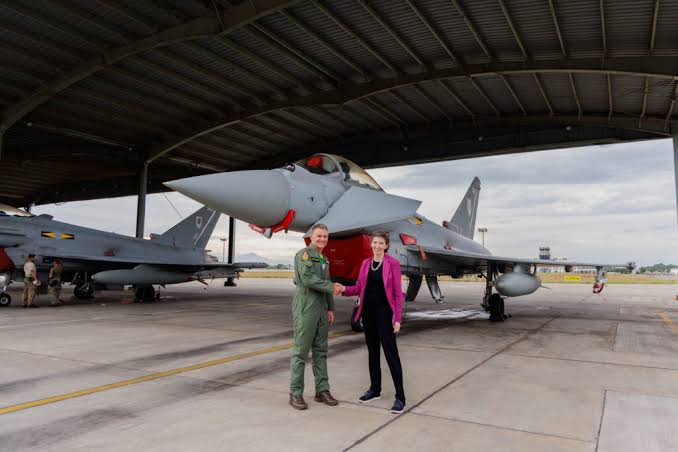
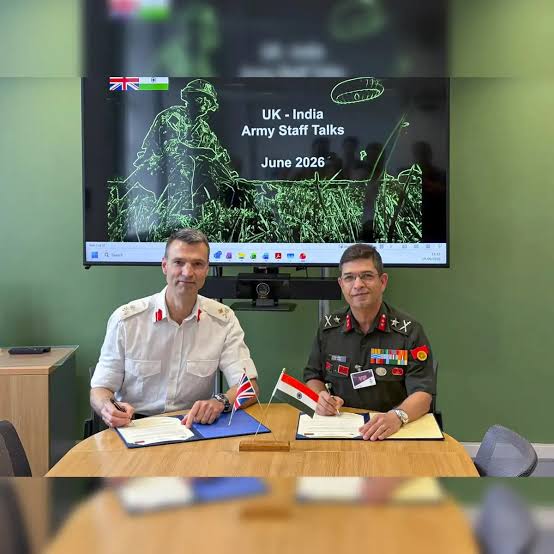

The initiative demonstrates that defence relationships are not only about acquiring platforms or signing agreements. Human expertise, training and institutional connections are equally important in building durable strategic partnerships.
For India and the UK, the QFI deployment provides an opportunity to strengthen their aviation relationship while supporting wider military-to-military engagement.
Conclusion
The historic decision announced during the 19th Air Staff Talks marks an important new chapter in India UK defence cooperation. For the first time, Indian Qualified Flying Instructors are set to travel to the UK to provide training focused on the nuances of aerial combat.
The move highlights India’s growing role in international military training exchanges and provides Britain with an opportunity to benefit from Indian aviation expertise. More importantly, India UK defence cooperation is gaining depth through direct professional interaction between the two countries’ military personnel.
As defence partnerships around the world increasingly focus on knowledge sharing, interoperability and specialized training, this initiative could serve as a strong foundation for deeper bilateral engagement. The decision taken on February 12, 2026, therefore stands as a notable milestone in the continuing evolution of defence relations between India and the United Kingdom.
Read more latest news

