
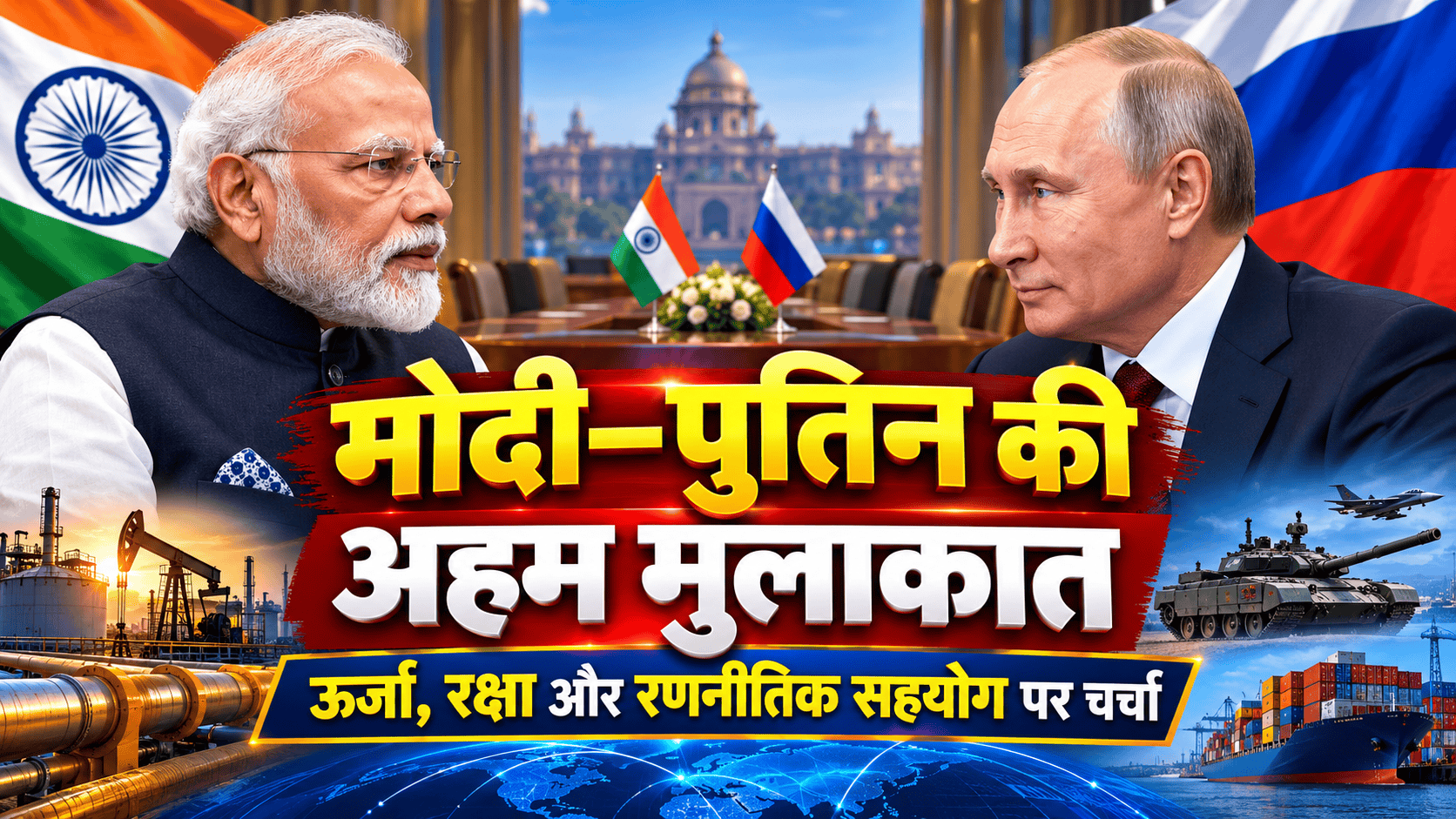
PM Modi Putin Meeting: Defence, Energy and Trade Set to Dominate Key India-Russia Talks
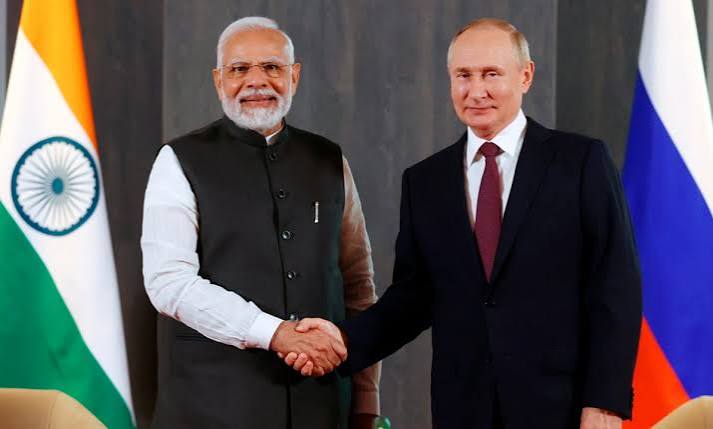
The PM Modi Putin Meeting scheduled for September 11, 2026, is emerging as one of the most closely watched diplomatic engagements surrounding the BRICS Summit in New Delhi. Prime Minister Narendra Modi and Russian President Vladimir Putin are expected to hold bilateral discussions as India hosts the major international gathering. The meeting comes at a crucial time when global geopolitical equations are changing rapidly and India is working to maintain strategic partnerships while protecting its economic and national interests.
The PM Modi Putin Meeting is expected to focus on several important areas, including defence cooperation, energy security, trade, nuclear power, emerging technologies and wider international developments. The two countries have maintained a Special and Privileged Strategic Partnership for decades, and recent discussions have demonstrated that cooperation continues across political, economic, defence, energy, space and other sectors.
Why the PM Modi Putin Meeting Matters
The significance of the PM Modi Putin Meeting goes beyond a routine bilateral discussion. India and Russia have traditionally maintained close relations, particularly in defence and energy. At the same time, the international environment has become increasingly complicated because of conflicts, sanctions, changing trade patterns and competition among major powers.
India has consistently emphasized strategic autonomy and has sought to maintain relations with multiple major powers. Russia remains an important partner for India, particularly in defence technology and energy. The upcoming meeting therefore provides an opportunity for both leaders to assess existing cooperation and explore new areas.
The PM Modi Putin Meeting may also allow the two leaders to discuss how India-Russia economic relations can expand despite international pressure and changing global trade conditions.
Defence Cooperation Likely to Be a Major Focus
Defence is expected to be one of the most important subjects during the PM Modi Putin Meeting. India and Russia have a long history of military and technical cooperation, ranging from fighter aircraft and missile systems to naval platforms and other defence equipment.
Recent reports indicate that the possible transfer of technology related to Russia’s fifth-generation Su-57 fighter aircraft could be discussed. India is also interested in strengthening domestic defence manufacturing and technology partnerships.
For New Delhi, cooperation with Moscow is not simply about purchasing military equipment. India has increasingly emphasized technology transfer, joint development, manufacturing and maintenance capabilities. This approach fits into India’s broader objective of developing a stronger domestic defence-industrial base.
The PM Modi Putin Meeting could therefore provide an important platform for discussing future defence cooperation, advanced aviation technology and long-term military partnerships.
Energy Security at the Centre
Energy is another major issue expected to dominate the PM Modi Putin Meeting. Russia has become an important source of energy for India, particularly crude oil. India, as one of the world’s largest energy-consuming economies, needs reliable and affordable supplies to support economic growth.
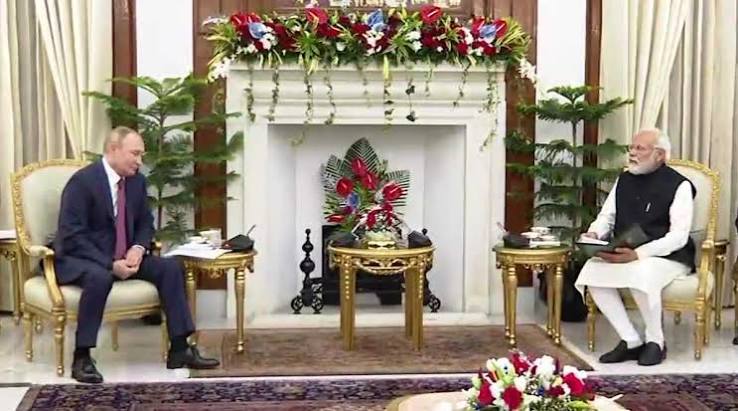
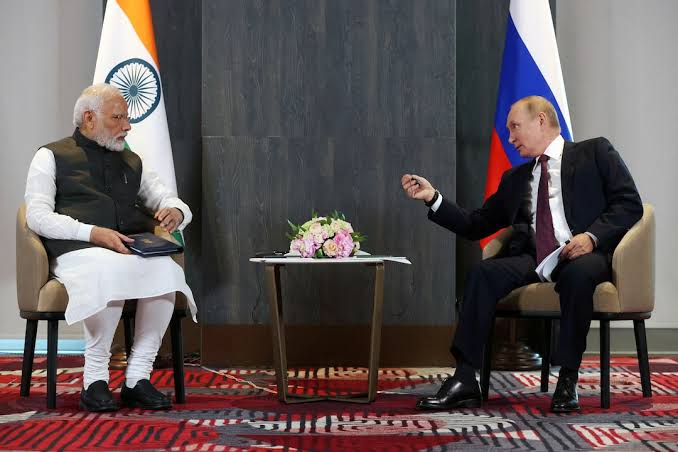
India-Russia cooperation in energy extends beyond crude oil. The two countries have also worked together in nuclear power and other areas of the energy sector. Official Indian documents have highlighted cooperation involving oil, LNG, LPG infrastructure and nuclear projects.
The PM Modi Putin Meeting comes at a time when international energy markets are facing considerable uncertainty. Questions surrounding sanctions, shipping routes, oil prices and global supply chains make energy security an important strategic consideration for India.
Both sides could explore ways to maintain stable energy supplies while expanding cooperation into nuclear energy, technology and other long-term projects.
Trade and Payment Mechanisms
Trade is another significant component of the PM Modi Putin Meeting. India and Russia have been working to improve bilateral trade and payment mechanisms, particularly amid difficulties created by Western sanctions.
Recent reporting from Reuters said that Russia and India have developed payment infrastructure using the rupee and rouble, with these national currencies facilitating a large majority of bilateral trade. The mechanism is intended to make transactions more efficient and reduce dependence on traditional international payment channels.
The PM Modi Putin Meeting could provide an opportunity to discuss further expansion of bilateral trade, investment and financial cooperation. Both governments are interested in increasing exports and reducing trade imbalances.
Potential areas of cooperation could include technology, pharmaceuticals, agriculture, energy, fertilizers, machinery and industrial products.
Nuclear Energy and New Technologies
Nuclear energy may also receive significant attention during the PM Modi Putin Meeting. Russia has played an important role in India’s civilian nuclear energy programme, particularly through cooperation at Kudankulam.
India is looking to expand its nuclear power capacity as it seeks reliable low-carbon electricity to support long-term economic growth. Russia’s experience and technological capabilities could make it an important partner in this area.
Reports ahead of the meeting have also highlighted possible discussions around emerging technologies and rare-earth minerals. Such sectors are increasingly important because countries are attempting to secure supply chains for advanced manufacturing, electronics, defence and clean-energy technologies.
Global Geopolitical Issues
The PM Modi Putin Meeting will take place against the backdrop of major international tensions. Conflicts in different regions have affected energy markets, transportation networks and global diplomacy.
India has repeatedly advocated dialogue and diplomacy as the preferred method for resolving international conflicts. During their August 31 meeting in Bishkek, Modi and Putin discussed regional and global issues, including developments in West Asia and the Black Sea region. Modi emphasized diplomacy and dialogue as the way forward.
These issues could once again feature in the September discussions.
India-Russia Strategic Partnership
The PM Modi Putin Meeting also carries symbolic importance for the broader India-Russia relationship. Despite major changes in the international system, both countries continue to describe their relationship as a strategic partnership.
The relationship has expanded beyond traditional defence cooperation into energy, space, trade, nuclear technology, transport and other areas. Both sides have repeatedly emphasized the resilience of their partnership despite geopolitical uncertainties.
For India, maintaining strong relations with Russia remains part of a broader foreign-policy strategy based on diversified partnerships. New Delhi simultaneously engages with the United States, Europe, Japan, the Gulf countries and other major global players.
What Could Come Out of the Meeting?
The PM Modi Putin Meeting could produce progress in several areas, although the exact outcome will depend on the discussions and agreements announced by both sides.
Possible outcomes could include greater defence-technology cooperation, progress on energy projects, stronger nuclear cooperation, improved trade mechanisms and discussions on advanced technologies.
However, it is important to distinguish between issues that are confirmed for discussion and proposals that are still being reported as possibilities. Some sensitive defence and strategic negotiations may remain confidential.
Conclusion
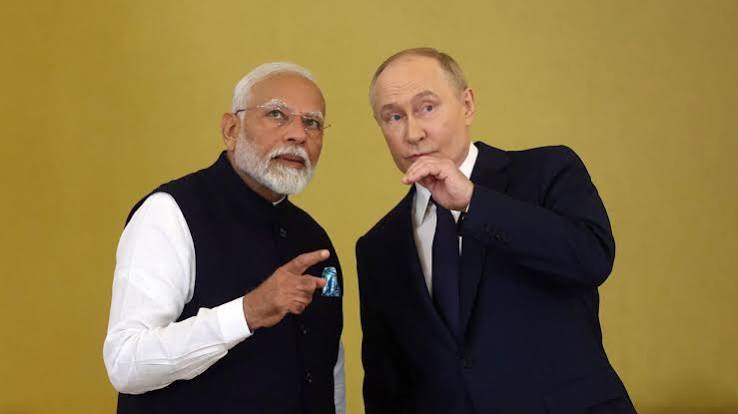
The PM Modi Putin Meeting on September 11 is set to be an important moment in India-Russia relations. Defence, energy, trade, nuclear cooperation and emerging technologies are expected to be among the key subjects, while global geopolitical developments will provide a broader backdrop to the talks.
For India, the priority will be to strengthen strategic autonomy, protect energy security and expand economic and technological cooperation. For Russia, deeper engagement with India remains strategically important at a time of changing global alliances and economic pressures.
The PM Modi Putin Meeting will therefore be watched closely not only in New Delhi and Moscow but also by countries around the world. Any significant announcement on defence technology, energy, trade or strategic cooperation could influence the future direction of the India-Russia partnership.
As the BRICS Summit brings major global leaders to New Delhi, the PM Modi Putin Meeting is expected to become one of the most important bilateral engagements on the diplomatic calendar. Its outcomes could provide a clearer picture of how India and Russia intend to navigate the increasingly complex geopolitical landscape while deepening their long-standing strategic partnership.
Read more latest news

