
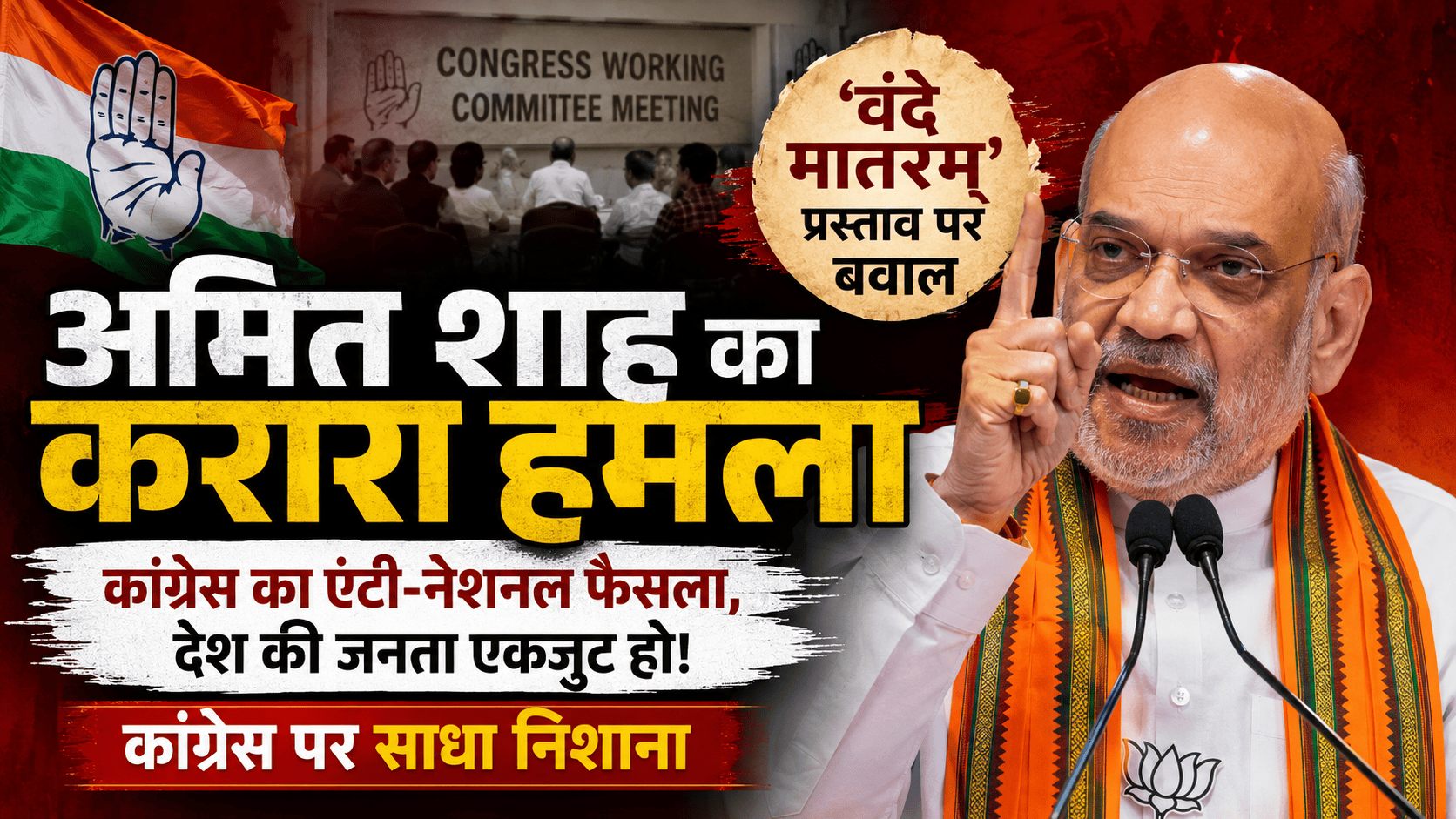
Amit Shah’s Scathing Attack: Vande Mataram Resolution Sparks Political Row
Amit Shah’s Scathing Attack: Vande Mataram Resolution Sparks Political Row
India’s political landscape witnessed a fresh controversy after the Congress Working Committee (CWC) passed a resolution concerning Vande Mataram. The resolution has triggered a sharp political exchange between the Congress and the Bharatiya Janata Party (BJP), with Union Home Minister Amit Shah launching a strong attack on the opposition party. Amit Shah’s scathing attack has once again brought questions of nationalism, political ideology and the legacy of India’s freedom movement to the centre of public debate.
According to the political argument surrounding the resolution, the Congress’s position on Vande Mataram has been portrayed by the BJP as an attempt to change the historical and cultural significance associated with the national song. Responding strongly, Amit Shah’s scathing attack described the Congress decision as anti-national and accused the party of pursuing what he called appeasement politics.
Why Vande Mataram Has Become a Political Flashpoint
Vande Mataram has occupied a unique place in India’s history. The song became an important source of inspiration during the freedom struggle and has remained deeply associated with India’s national movement. Over the decades, it has also become a subject of political and ideological discussion.
Against this historical background, the Congress Working Committee’s resolution has generated controversy. BJP leaders argue that any move that appears to question or dilute the importance of Vande Mataram could be viewed as disrespect toward India’s freedom struggle. Congress, on the other hand, has its own political and historical interpretation of the issue.
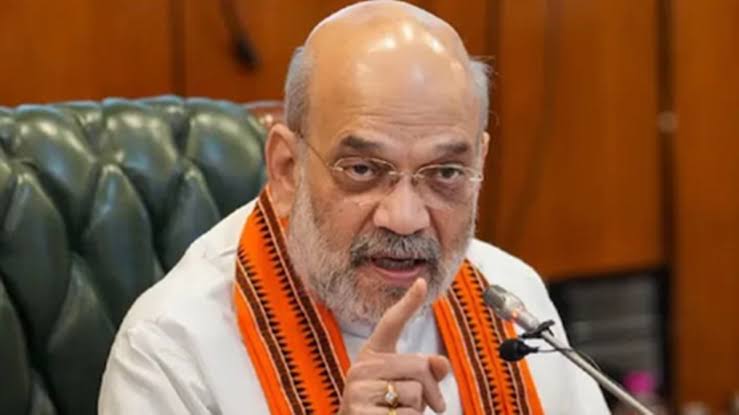
The controversy gained further momentum after Amit Shah’s scathing attack, in which the Home Minister accused the Congress of taking a decision that, according to him, was against national interests. His remarks have intensified the political debate and placed the Congress under pressure to explain its position.
Amit Shah Accuses Congress of Appeasement Politics
The central theme of Amit Shah’s scathing attack was the allegation that the Congress has repeatedly adopted politics aimed at appeasing particular sections of society. Shah argued that national symbols and issues connected with India’s cultural identity should not be compromised for electoral considerations.
The BJP has frequently used the issue of appeasement politics as a criticism of the Congress and other opposition parties. In this latest controversy, the party has attempted to connect the CWC resolution with that larger political narrative.
Amit Shah’s scathing attack also called upon citizens to remain united against what he characterized as divisive political decisions. His appeal reflects the BJP’s broader emphasis on nationalism and national unity as major themes in its political messaging.
Congress Faces Questions Over Its Resolution
The controversy puts the Congress in a position where it must explain the exact intention and implications of its resolution. Supporters of the party may argue that discussing the historical and political context of Vande Mataram does not amount to disrespecting the national song. Critics, however, believe that the timing and content of the resolution could create unnecessary political divisions.
Following Amit Shah’s scathing attack, the issue has moved beyond the CWC meeting and entered the wider political arena. Statements from leaders on both sides are likely to shape public perceptions of the controversy.
The Congress is expected to defend its position by highlighting its historical contribution to India’s independence movement and its own association with Vande Mataram. At the same time, the BJP is likely to continue presenting the issue as an example of what it describes as Congress’s appeasement-based politics.
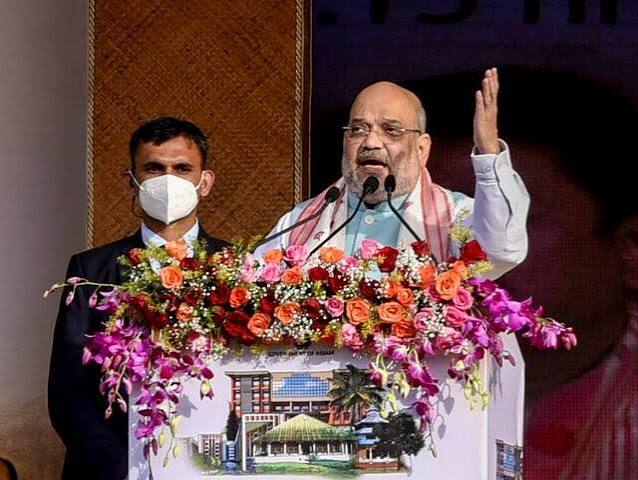
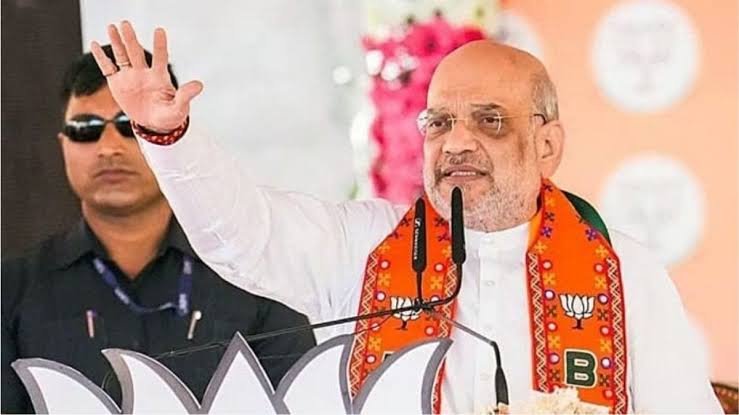
Nationalism at the Centre of Political Debate
The latest dispute demonstrates how questions related to national symbols can quickly become politically significant in India. Vande Mataram is not simply a song; it has a long association with the freedom struggle and the development of India’s national consciousness.
For the BJP, the controversy provides an opportunity to reinforce its nationalist narrative. Amit Shah’s scathing attack has placed the question of national identity directly into the political discussion, allowing the party to challenge the Congress on ideological grounds.
At the same time, the controversy raises a broader question: how should political parties discuss sensitive historical symbols without turning them into instruments of political polarization? This question is particularly important in a diverse country where national identity includes multiple cultural, linguistic and religious traditions.
BJP Sharpens Its Political Offensive
The BJP’s response indicates that it intends to make the issue politically significant. Amit Shah’s scathing attack has provided the party with a strong talking point against the Congress, particularly on the subjects of nationalism and appeasement.
The BJP’s argument is that national symbols should be treated with respect and should remain above short-term electoral politics. From this perspective, the party believes the Congress resolution represents a larger ideological problem.
Meanwhile, Amit Shah’s scathing attack has also encouraged BJP supporters and leaders to raise questions about the Congress’s historical and contemporary approach toward national issues. The dispute could therefore become part of a broader political campaign involving competing narratives about patriotism, secularism and national unity.
The Larger Political Implications
The significance of the controversy goes beyond the immediate disagreement over the CWC resolution. Amit Shah’s scathing attack has once again highlighted the ideological differences between the BJP and Congress.
The BJP generally places nationalism, cultural identity and national unity at the centre of its political narrative. Congress, meanwhile, emphasizes its interpretation of India’s pluralistic and constitutional traditions. When these competing visions intersect with a historically significant symbol such as Vande Mataram, political disagreements can become particularly intense.
The controversy also shows the importance of political communication. A resolution passed within a party organization can quickly become a national issue when interpreted through the lens of competing political narratives. Amit Shah’s scathing attack demonstrates how quickly such developments can become part of the broader electoral conversation.
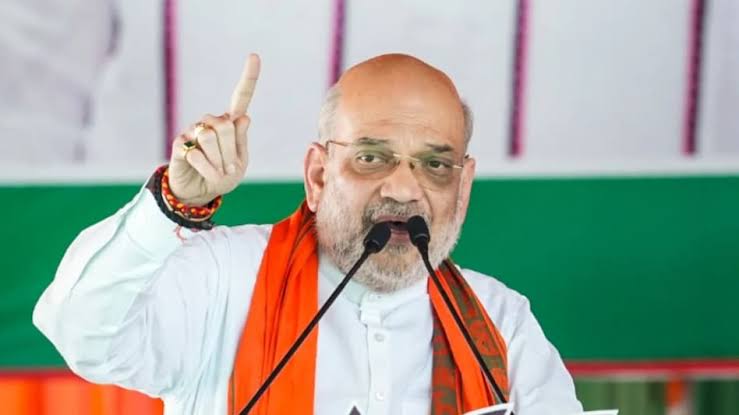
What Happens Next?
The political dispute is unlikely to disappear immediately. The Congress may provide further clarification regarding its resolution, while the BJP is expected to continue questioning the party’s intentions.
For the BJP, Amit Shah’s scathing attack offers an opportunity to frame the Congress as being disconnected from popular nationalist sentiment. For the Congress, the challenge will be to explain its position without allowing the BJP to define the entire debate.
As political parties prepare for future electoral battles, issues related to national identity and historical symbols are likely to remain important. Amit Shah’s scathing attack has ensured that Vande Mataram is now firmly back in the political spotlight.
Ultimately, the controversy will be judged not only through political statements but also through the wider public discussion about India’s history and national identity. Amit Shah’s scathing attack has intensified that conversation, while the Congress’s response will determine how the issue develops in the coming days.
The debate surrounding Vande Mataram also reminds us that India’s political discourse is deeply connected with its history. Amit Shah’s scathing attack may strengthen the BJP’s political narrative, but the controversy also gives voters an opportunity to examine the arguments presented by both sides.
As the political battle continues, Amit Shah’s scathing attack will remain a major talking point in the debate over nationalism, appeasement and the historical importance of Vande Mataram. The coming political responses from both the Congress and BJP will reveal whether the issue remains a short-term controversy or becomes a larger ideological confrontation.
Read more latest news

