
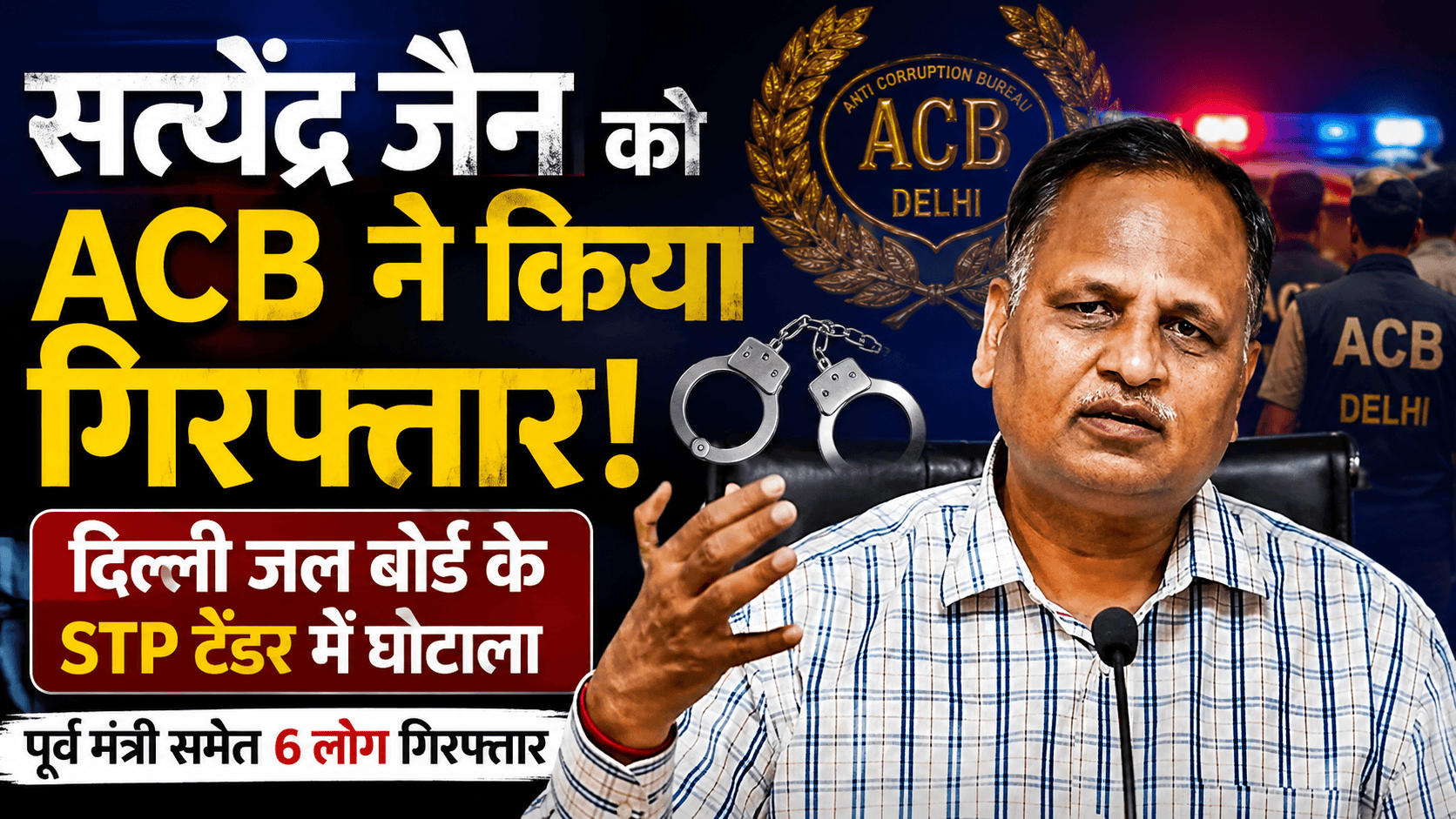
AAP leader Satyendar Jain arrested in Delhi Jal Board STP tender scam; major action by the ACB
AAP leader Satyendar Jain arrested, Delhi’s political landscape has witnessed a major development following the reported arrest of former Delhi minister and Aam Aadmi Party (AAP) leader Satyendar Jain in connection with alleged irregularities in a Delhi Jal Board sewage treatment plant (STP) tender. The Anti-Corruption Branch (ACB) has reportedly taken six accused into custody in the case, putting the spotlight once again on corruption allegations surrounding public projects and government contracts.
The development has triggered fresh political debate in the national capital. The case is particularly significant because it involves a former minister and allegations related to a public utility project. The investigation is expected to examine the tendering process, the role of officials and contractors, and whether rules and financial procedures were allegedly violated.
The phrase AAP leader Satyendar Jain arrested has rapidly become central to discussions surrounding the case. However, it is important to remember that an arrest is part of the investigative process and does not by itself establish guilt. The allegations will ultimately have to be tested through the legal process.
What is the Delhi Jal Board STP tender case?
The case revolves around alleged irregularities in the awarding and execution of a sewage treatment plant-related tender connected with the Delhi Jal Board. STPs play an important role in treating wastewater before it is released into the environment, making such projects an essential part of urban infrastructure.
According to the allegations, investigators are examining whether the tender process was conducted in accordance with established rules and whether there were financial or procedural irregularities. The ACB’s action has brought renewed attention to the way large public contracts are awarded and implemented.
The reported development that AAP leader Satyendar Jain arrested has also increased public interest in the details of the investigation. Investigators are expected to establish the sequence of decisions surrounding the tender and determine the alleged responsibilities of each person named in the case.
Six people reportedly taken into custody
The ACB’s reported action involves six accused, including the former minister. The arrests represent a significant step in the investigation because questioning the accused could help investigators establish how the alleged irregularities took place.
The authorities may examine documents, tender records, financial transactions, official communications and other evidence as part of the investigation. If investigators identify discrepancies, these could become important elements of the case before the court.
The news that AAP leader Satyendar Jain arrested has therefore generated considerable political attention. The involvement of multiple accused also raises questions about the alleged network of decision-making surrounding the tender.
Why Satyendar Jain’s arrest is politically significant
AAP leader Satyendar Jain arrested has previously held important responsibilities in the Delhi government and has been a prominent AAP figure. His arrest consequently carries political significance beyond the immediate legal proceedings.
For the opposition, the case provides another opportunity to raise questions about governance, transparency and accountability. At the same time, AAP is expected to respond by challenging the allegations and defending its position.
The political debate intensified after reports that AAP leader Satyendar Jain arrested emerged. Supporters and critics of the party are likely to interpret the development differently, leading to competing political narratives.
For the government and investigating agencies, the focus will remain on evidence and due legal procedure. For political parties, however, the case could become another major issue in the continuing contest over corruption and governance in Delhi.
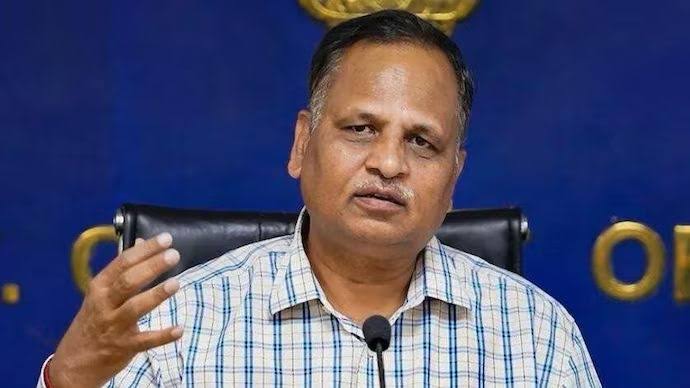
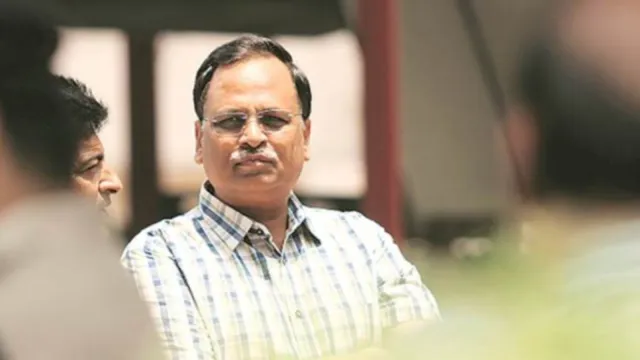
ACB investigation now under focus
The Anti-Corruption Branch will play a central role in determining the direction of the case. Investigators are expected to collect documentary and electronic evidence and question the accused and other individuals who may have knowledge of the tender process.
The investigation could examine whether the tender was awarded fairly, whether technical requirements were properly followed, and whether any person allegedly received an improper benefit.
The reported AAP leader Satyendar Jain arrested development has consequently shifted attention toward the next steps of the investigation. The evidence gathered by the agency will be important in determining how the case proceeds before the judiciary.
Corruption allegations become a major political issue
Corruption allegations have repeatedly played an important role in Delhi politics. Political parties frequently use such cases to question the credibility and administrative record of their opponents.
The STP tender controversy is likely to add another dimension to this political battle. The phrase AAP leader Satyendar Jain arrested is already being discussed in the broader context of allegations concerning government contracts.
However, political accusations and legal findings are not the same thing. The final determination of responsibility must come through the judicial process after the evidence is examined.
What happens next?
Following an arrest, investigators generally seek to question the accused and establish the facts surrounding the alleged offence. Depending on the legal proceedings, the accused may be produced before a court, which will determine issues such as custody and other legal matters.
The court process will therefore be crucial in the coming days. Investigators will need to substantiate their allegations with evidence, while the accused will have the opportunity to defend themselves according to law.
The fact that AAP leader Satyendar Jain arrested does not mean that the allegations have been legally proven. The principle of due process remains central to any criminal investigation.
Impact on AAP and Delhi politics
The development could put additional pressure on the Aam Aadmi Party. The party may face questions from political opponents regarding its former minister’s alleged involvement in the tender controversy.
At the same time, AAP is likely to argue that the allegations should be judged through evidence and the courts rather than political statements. The party’s response could shape the political narrative surrounding the case.
With AAP leader Satyendar Jain arrested, the controversy is likely to remain a major talking point in Delhi’s political circles. Opposition parties may intensify their attacks, while AAP leaders could seek to challenge the allegations and present their version of events.
Public projects and accountability
The case also highlights a broader issue: transparency in public infrastructure projects. Delhi’s growing population requires significant investment in sewage treatment, water management and other civic facilities.
Whenever allegations arise regarding public tenders, citizens naturally want to know whether public money has been used properly. Transparent tendering, independent oversight and strict accountability are essential for maintaining public confidence.
The reported AAP leader Satyendar Jain arrested case could therefore have implications beyond the individuals named in the investigation. It may also renew discussions about monitoring large government contracts.
Political battle likely to intensify
The arrest has added another layer to Delhi’s already competitive political environment. Allegations involving a former minister are likely to generate strong reactions from rival parties and political supporters.
As AAP leader Satyendar Jain arrested becomes a recurring headline, the political debate is expected to continue. Statements from AAP, opposition parties, the ACB and legal representatives will likely shape public understanding of the case.
Nevertheless, the investigation and court proceedings will ultimately determine what happened and whether the allegations can be substantiated.


Conclusion
The reported arrest of Satyendar Jain in the Delhi Jal Board STP tender case marks a significant development in Delhi politics and in the ongoing investigation into alleged corruption and tender irregularities. The ACB’s reported action against six accused has brought the issue into sharp focus.
The AAP leader Satyendar Jain arrested development will likely remain at the centre of political discussions as investigators proceed with the case. The authorities will now have to establish the allegations through evidence, while the accused will have the opportunity to present their defence.
For the public, the most important questions concern transparency, accountability and the proper use of public funds. For political parties, the case is likely to become another point of confrontation.
Ultimately, the legal process—not political rhetoric—will determine responsibility. Until the court reaches a conclusion, the allegations should be treated as allegations, and the accused are entitled to due process under the law.
Read more latest news

