
NDA Leaders Wave Tricolour at ‘Mangal Milan’: Modi, Amit Shah and Nitin Navin Join Weekly Parliamentary Gathering
parliamentary party meeting, NDA Leaders Wave Tricolour at ‘Mangal Milan’: Modi, Amit Shah and Nitin Navin Join Weekly Parliamentary Gathering
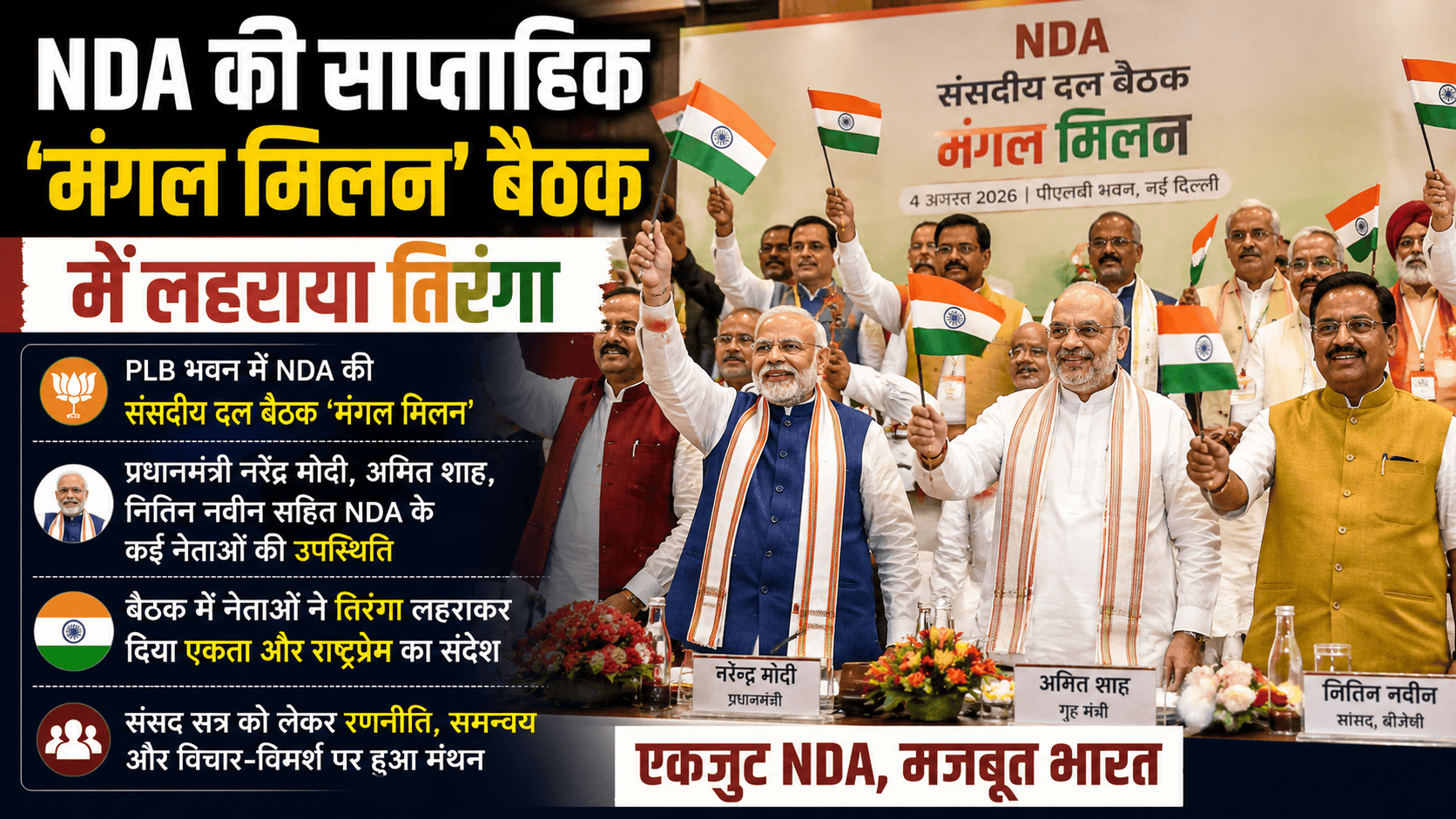
Prime Minister Narendra Modi, Union Home Minister Amit Shah, BJP leader Nitin Navin and other leaders of the National Democratic Alliance (NDA) were seen waving the Tricolour during the NDA’s weekly parliamentary party meeting, ‘Mangal Milan’, at the PLB building. The event combined political coordination with a visible expression of national pride, as senior leaders came together ahead of the day’s parliamentary business.
The parliamentary party meeting served as an important occasion for NDA leaders to interact, discuss the political and legislative agenda and demonstrate unity among the alliance partners. The waving of the national flag added a symbolic dimension to the gathering, highlighting the importance the alliance places on national identity and collective responsibility.
Tricolour Becomes a Symbolic Focus
The parliamentary party meeting attracted attention because of the participation of several prominent NDA leaders. Prime Minister Narendra Modi, Amit Shah, Nitin Navin and other leaders were pictured waving the Tricolour, creating a strong visual representation of unity.
The national flag has a special place in India’s democratic institutions. Its presence at a political gathering can underline the connection between elected representatives, constitutional responsibilities and the country’s broader national interests.
For the NDA, the parliamentary party meeting also provides a platform where members of the ruling alliance can come together before parliamentary proceedings. Such meetings are significant because they help leaders communicate priorities and maintain coordination among members.
Modi Leads the NDA Gathering
The parliamentary party meeting was attended by Prime Minister Narendra Modi, who remains the central political figure of the NDA government. His participation reflected the importance of the gathering for the ruling alliance.
Prime Minister Modi has frequently emphasized discipline, coordination and collective responsibility among members of his parliamentary team. A weekly gathering provides an opportunity for MPs and senior leaders to hear the government’s priorities and discuss matters connected with parliamentary functioning.
The visual of Modi waving the Tricolour alongside other leaders also gave the gathering a strong nationalistic tone. It presented the alliance as a united political group preparing to undertake its responsibilities inside Parliament.

Amit Shah and Senior Leaders Participate
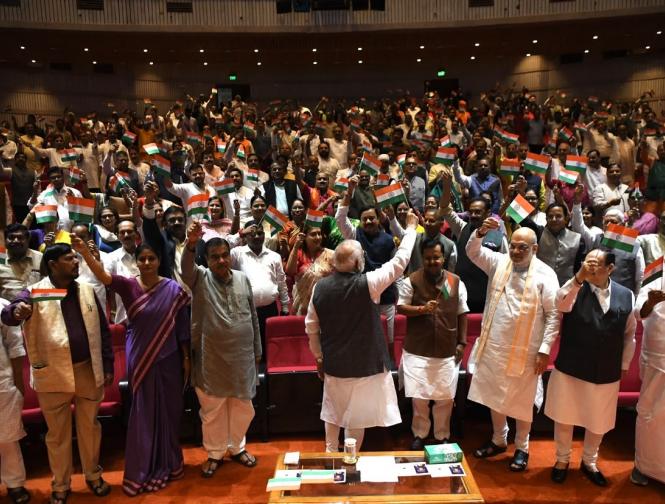
The parliamentary party meeting also saw the participation of Union Home Minister Amit Shah. As one of the BJP’s senior-most leaders, Shah plays an important role in the government’s political and legislative strategy.
His presence alongside Modi and other NDA leaders reinforced the message of coordination within the alliance. The gathering was not limited to the two senior leaders, as BJP leader Nitin Navin and other NDA representatives also joined the occasion.
Such participation is important for maintaining communication across the alliance. With multiple parties and leaders forming the NDA, regular interaction can help ensure that members remain informed about parliamentary priorities and political developments.
What Is ‘Mangal Milan’?
The gathering has been referred to as ‘Mangal Milan’, a gathering intended to bring NDA leaders together. The term itself conveys the idea of an auspicious meeting and togetherness.
The gathering at the PLB building provided an opportunity for leaders to meet in a collective setting before parliamentary activities. Beyond formal discussions, such meetings can also strengthen relationships among MPs and senior members of the alliance.
In a large political coalition, coordination becomes especially important. Different alliance partners may have their own regional priorities, but a common parliamentary strategy requires regular communication and consultation.
Focus on Parliamentary Coordination
The parliamentary party meeting is significant because Parliament remains the central forum for legislative debate and democratic accountability. The NDA has the responsibility of managing government business while responding to questions and concerns raised by opposition parties.
Regular meetings can help the ruling alliance prepare its members for discussions, bills, debates and other parliamentary matters. They can also provide an avenue for senior leaders to communicate political messages and maintain unity.
The parliamentary party meeting therefore has significance beyond the photographs and ceremonial waving of the national flag. It represents an organizational mechanism through which the alliance can coordinate its activities.
Nitin Navin Among NDA Leaders
BJP leader Nitin Navin was also present during the parliamentary party meeting. His participation alongside senior NDA figures highlighted the involvement of leaders from different levels of the alliance.
The presence of multiple leaders at the gathering demonstrated that the NDA’s parliamentary structure includes a broad group of representatives working together. Their participation is important for ensuring that political messages and parliamentary strategies are communicated across the wider group.
The parliamentary party meeting can also serve as an informal space for leaders to exchange views on developments taking place both inside and outside Parliament.
National Pride and Political Unity
The parliamentary party meeting became particularly noteworthy because leaders were seen waving the Tricolour together. The gesture brought national symbolism into the political gathering and emphasized a message of unity.
Political parties frequently use national symbols to communicate their commitment to the country and its democratic institutions. In this instance, the Tricolour provided a common visual point for NDA leaders from different political backgrounds.
The scene also underlined the alliance’s effort to project cohesion. In parliamentary politics, unity among ruling-party and alliance MPs is important because government legislation and policy decisions often depend on coordinated participation.
Importance Ahead of Parliamentary Proceedings
The parliamentary party meeting comes at a time when parliamentary proceedings can involve intense debate between the government and opposition. For the ruling alliance, maintaining coordination among MPs can be essential to ensuring that legislative business proceeds smoothly.
Meetings such as this allow leaders to discuss the day’s expected developments and prepare members for important issues. They can also help establish a common position on matters that may become politically contentious.
The parliamentary party meeting thus acts as a bridge between the government’s political leadership and its wider parliamentary team.
A Message of Collective Responsibility
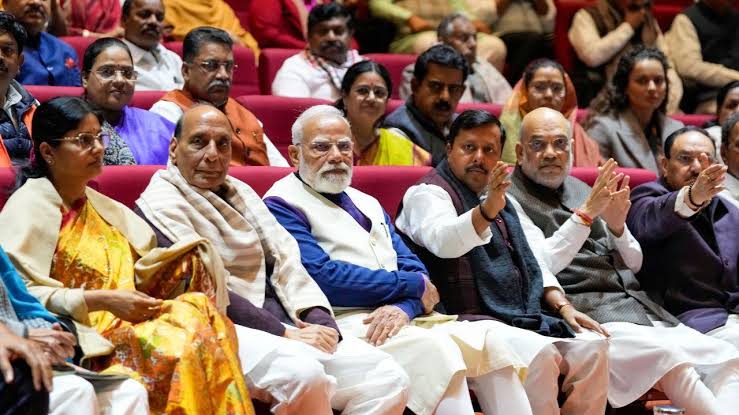
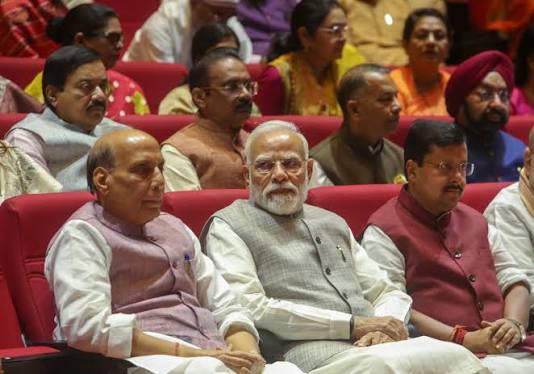
The parliamentary party meeting also carries a message of collective responsibility. Every MP associated with the ruling alliance represents constituents and participates in the country’s democratic process.
By gathering together, NDA leaders can emphasize that parliamentary work is a shared responsibility rather than the task of a few senior figures. The presence of Modi, Shah, Navin and other leaders reinforces that broader message.
The parliamentary party meeting also offers an opportunity for senior leaders to interact with colleagues and understand issues emerging from different regions and constituencies.
Conclusion
The parliamentary party meeting at the PLB building brought together Prime Minister Narendra Modi, Union Home Minister Amit Shah, BJP leader Nitin Navin and other NDA leaders for the alliance’s weekly ‘Mangal Milan’. Their appearance while waving the Tricolour created a striking image of political unity and national pride.
The parliamentary party meeting is important not only as a regular gathering of ruling alliance leaders but also as a platform for coordination before parliamentary proceedings. Such meetings can help leaders communicate priorities, maintain unity and prepare their members for legislative responsibilities.
The sight of NDA leaders waving the national flag added a symbolic dimension to the occasion. It connected the political gathering with themes of national service, democratic responsibility and collective commitment.
As Parliament continues to serve as the country’s principal forum for debate and lawmaking, the parliamentary party meeting remains an important part of the NDA’s internal coordination. The ‘Mangal Milan’ gathering at the PLB building therefore offered both a political and symbolic picture of the alliance preparing for its parliamentary responsibilities.
Read more latest news

