
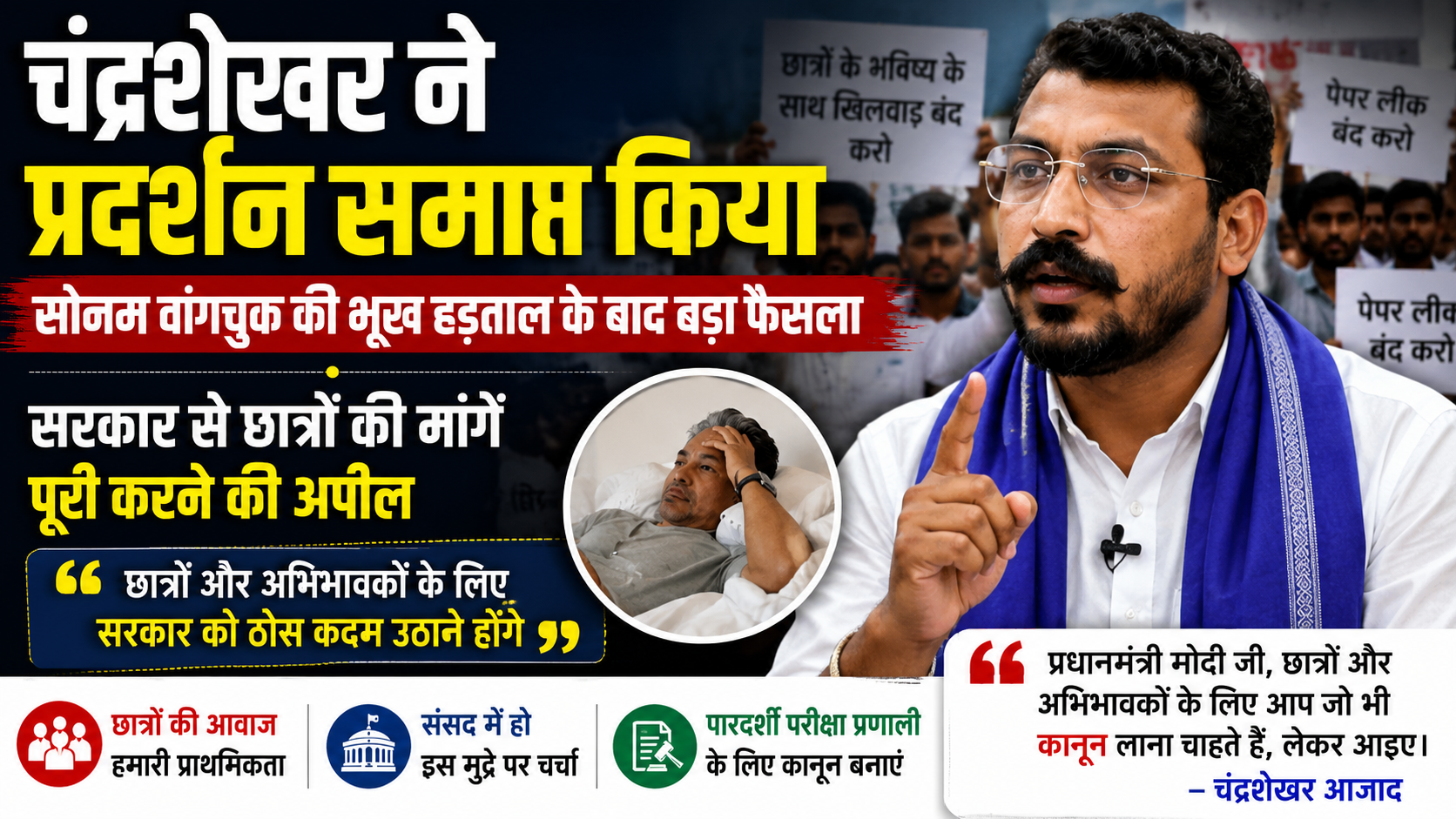
Chandrashekhar Ended the Protest After Sonam Wangchuk’s Hunger Strike, Urges Government to Fulfill Students’ Demands
Focus Keyword: Chandrashekhar ended the protest
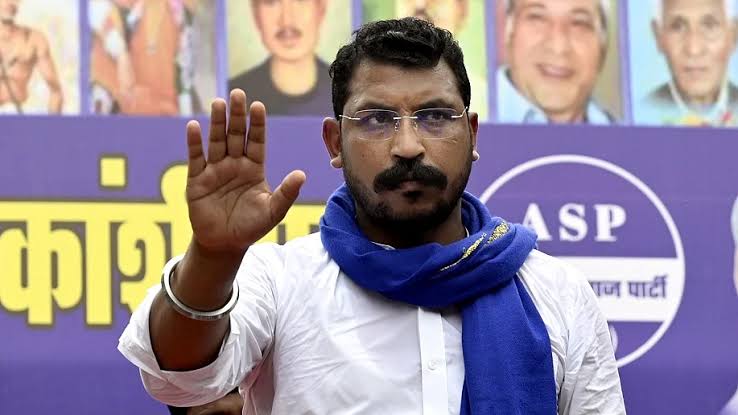
The nationwide movement demanding greater accountability and transparency in India’s examination system witnessed another significant development as Chandrashekhar ended the protest following the conclusion of social activist Sonam Wangchuk’s 26-day hunger strike. Nagina MP and Azad Samaj Party (Kanshi Ram) chief Chandrashekhar Azad announced the decision through a video message, stating that the struggle for students’ rights would continue through democratic and constitutional means.
In his appeal, Chandrashekhar urged the central government to honor its assurances and take concrete steps to address the concerns raised by students and parents across the country. While Chandrashekhar ended the protest, he emphasized that ending the agitation should not be interpreted as the end of the movement. Instead, he described it as the beginning of a new phase focused on policy reforms and parliamentary action.
Chandrashekhar Ends Protest After Wangchuk’s Decision
The decision came shortly after Sonam Wangchuk concluded his hunger strike after receiving assurances from the central government and Members of Parliament from different political parties. Inspired by this development, Chandrashekhar ended the protest and expressed hope that the government would now act on the promises made to students.
His announcement was welcomed by supporters who believed that constructive dialogue would now replace prolonged demonstrations. Many viewed the move as an opportunity for democratic institutions to resolve issues through discussion and legislation.
Video Message to the Nation
After Chandrashekhar ended the protest, he released a video addressing students, parents, and the central government. In the message, he thanked everyone who supported the movement and maintained that the campaign had always been peaceful and focused on protecting the future of India’s youth.
He said that students deserve a fair, transparent, and accountable examination system. According to him, every deserving candidate should have equal opportunities without being affected by irregularities or controversies surrounding examinations.
Appeal to Prime Minister Narendra Modi
One of the key highlights of the video was Chandrashekhar Azad’s direct appeal to Prime Minister Narendra Modi. After Chandrashekhar ended the protest, he requested the Prime Minister to proceed with any legislation necessary to strengthen the examination system and ensure justice for students.
Addressing the concerns of students and parents, Chandrashekhar stated that meaningful reforms should be implemented without unnecessary delay. He emphasized that young people are looking toward the government with hope and expect decisive action.
Students’ Demands Remain the Priority
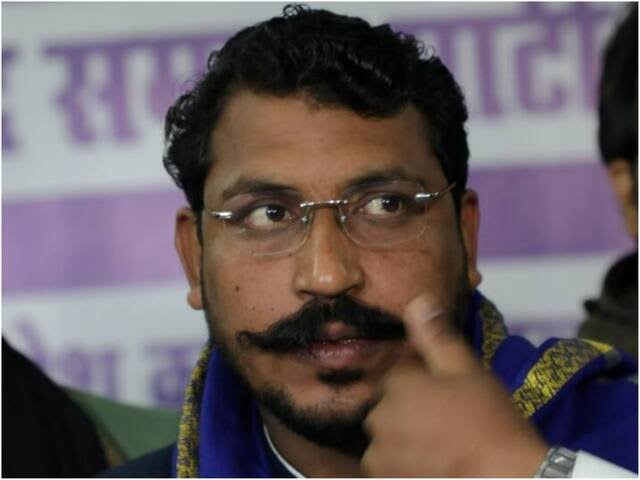
Although Chandrashekhar ended the protest, he clarified that the demands of students remain unchanged. According to him, the movement sought transparency, accountability, and fairness rather than political confrontation.
Students have repeatedly raised concerns regarding examination security, paper leak allegations, delays in recruitment, and institutional accountability. Chandrashekhar argued that these concerns deserve serious attention because they directly affect the future of millions of young Indians.
Peaceful Democratic Movement
Throughout the protest, Chandrashekhar maintained that peaceful democratic methods should remain the foundation of public movements. When Chandrashekhar ended the protest, he thanked citizens for supporting constitutional values and maintaining discipline during the demonstrations.
He noted that democracy becomes stronger when governments and citizens engage in constructive dialogue instead of confrontation.
Government Assurances Raise Expectations
The assurances reportedly provided by the central government and Members of Parliament encouraged many protesters to suspend their demonstrations. Consequently, Chandrashekhar ended the protest with the expectation that these commitments would soon be reflected in concrete policy measures.
Supporters now hope that Parliament will discuss examination reforms, accountability mechanisms, and stronger safeguards against irregularities.
Why Examination Reforms Matter
India’s examination system plays a crucial role in admissions, recruitment, and career opportunities for millions of students every year. Even minor irregularities can have long-term consequences for deserving candidates.
After Chandrashekhar ended the protest, education experts once again highlighted the importance of:
- Stronger digital security for examinations.
- Faster investigation of paper leak allegations.
- Transparent recruitment processes.
- Independent oversight mechanisms.
- Strict legal action against those responsible for examination malpractice.
These reforms are considered essential for restoring public confidence in competitive examinations.
Support from Students and Parents
The movement received support from students, parents, teachers, and civil society organizations across the country. Many appreciated Chandrashekhar’s decision to conclude the protest peacefully.
As Chandrashekhar ended the protest, supporters expressed hope that the government would fulfill its commitments instead of allowing the issue to fade from public attention.
Parents emphasized that educational reforms are necessary not only for current students but also for future generations.
Parliament Expected to Discuss the Issue
One of the most significant outcomes of the recent developments is the expectation that examination accountability will be discussed in Parliament.
Because Chandrashekhar ended the protest after receiving assurances regarding parliamentary discussion, public attention has now shifted toward legislative action.
Observers believe that Parliament provides the most appropriate platform for discussing reforms that affect students nationwide.
Political Significance
The conclusion of the protests has also highlighted the possibility of consensus across political lines on education-related issues.
While Chandrashekhar ended the protest, he reiterated that protecting students’ interests should remain above political differences.
Many analysts believe that educational reforms require cooperation among the government, opposition parties, experts, and educational institutions.
What Students Expect Now
Students are now waiting for concrete action rather than promises.
Following the announcement that Chandrashekhar ended the protest, student groups stated that they expect:
- Transparent examination procedures.
- Stronger protection against paper leaks.
- Timely recruitment examinations.
- Fair evaluation systems.
- Improved grievance redressal mechanisms.
These expectations reflect broader demands for institutional accountability.

The Road Ahead
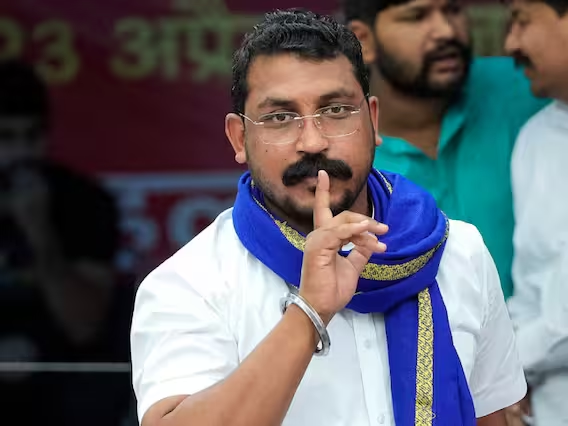
The end of the protest marks a transition from demonstrations to dialogue. Since Chandrashekhar ended the protest, responsibility now rests with policymakers and Parliament to consider reforms that address the concerns raised during the movement.
Education experts believe that stronger laws, better technology, and independent oversight could significantly improve the credibility of India’s examination system.
Conclusion
The announcement that Chandrashekhar ended the protest following Sonam Wangchuk‘s hunger strike represents another important development in the national conversation on educational reforms. Through his video message, Chandrashekhar Azad appealed to the government to fulfill the demands of students and parents while urging Prime Minister Narendra Modi to introduce the necessary legislation for examination reforms.
Although Chandrashekhar ended the protest, he made it clear that the movement for transparency, accountability, and fairness is far from over. The coming parliamentary discussions and government decisions will determine whether the assurances given to students result in meaningful reforms. For millions of young Indians preparing for competitive examinations, these developments offer hope that their concerns will receive serious attention and that India’s examination system will become more transparent, credible, and accountable in the future.

