
RBI Monetary Policy Committee Keeps Repo Rate Unchanged at 5.25%: What It Means for India’s Economy, Borrowers, and Investors
Introduction
The latest decision of the RBI Monetary Policy Committee has attracted considerable attention from economists, financial institutions, investors, businesses, and common borrowers. Since the repo rate directly influences borrowing costs, savings returns, investment decisions, and overall economic activity, every policy announcement from the central bank carries substantial importance.
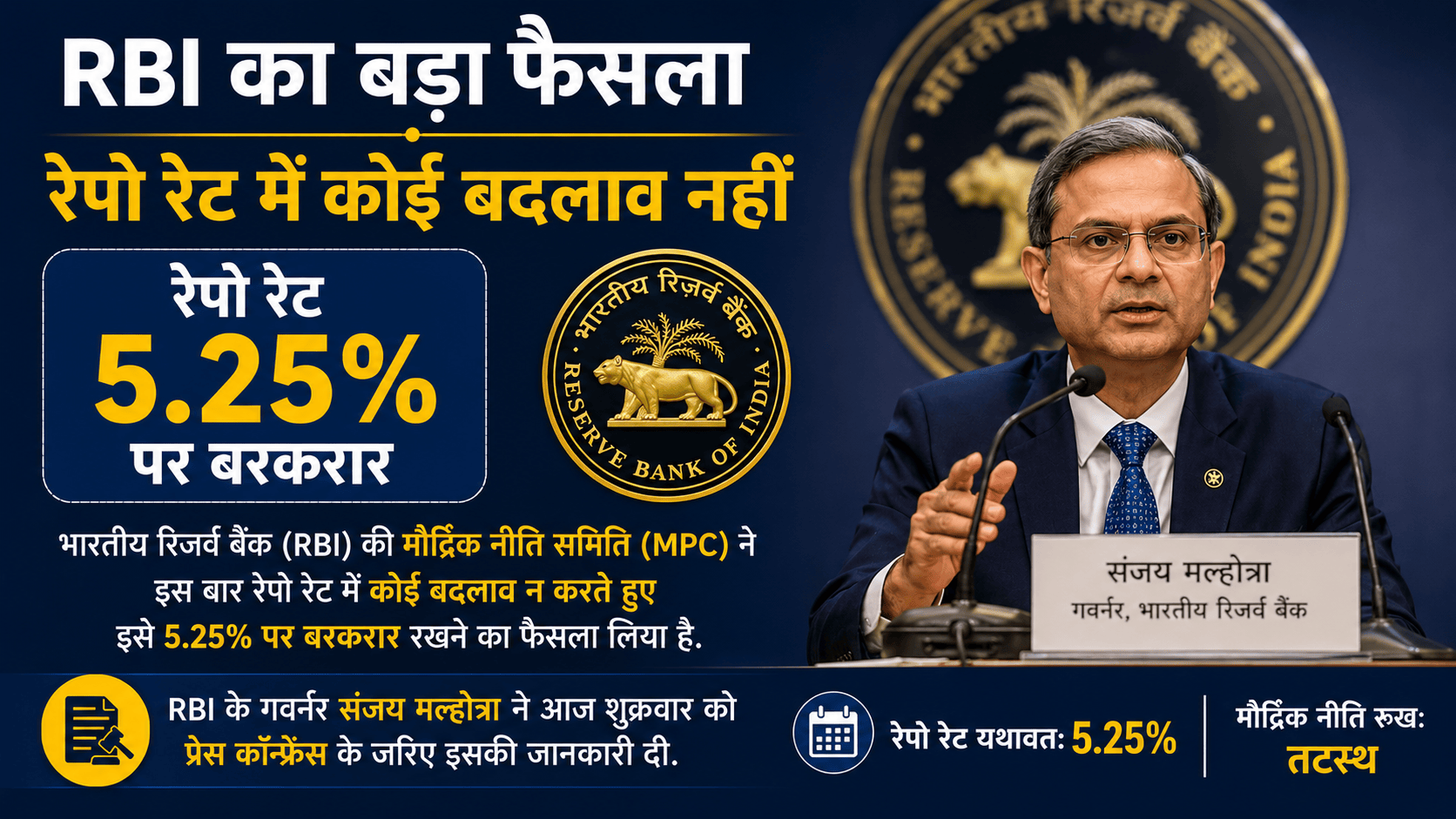
The Reserve Bank of India (RBI) has once again taken a cautious and balanced approach toward monetary policy. In a significant announcement made on Friday, RBI Governor Sanjay Malhotra stated that the RBI Monetary Policy Committee has decided to keep the repo rate unchanged at 5.25%. The decision comes at a time when India is witnessing stable economic growth, moderating inflation, and uncertainties in the global economic environment.
The reasons behind the decision of the RBI Monetary Policy Committee, the current state of the Indian economy, the impact on borrowers and investors, and what lies ahead for monetary policy in India.
RBI Monetary Policy Committee Maintains Status Quo
In its latest policy meeting, the RBI Monetary Policy Committee unanimously decided to keep the repo rate unchanged at 5.25%. RBI Governor Sanjay Malhotra announced the decision during a press conference, emphasizing the need to maintain a careful balance between controlling inflation and supporting economic growth.
The decision of the RBI Monetary Policy Committee reflects confidence in the current trajectory of the Indian economy. While inflation has moderated compared to previous years, global uncertainties continue to pose risks. Therefore, the committee preferred to maintain policy stability rather than make sudden adjustments.
The RBI Monetary Policy Committee noted that domestic economic indicators remain largely positive, with consumption demand, industrial activity, and investment showing resilience despite external challenges.
Understanding the Repo Rate
Before analyzing the implications of the decision, it is important to understand what the repo rate means.
The repo rate is the interest rate at which commercial banks borrow funds from the Reserve Bank of India. When the repo rate is increased, borrowing becomes more expensive, which helps reduce inflation. Conversely, when the repo rate is lowered, borrowing becomes cheaper, encouraging spending and investment.
Since the repo rate serves as a benchmark for lending rates across the banking sector, any change made by the RBI Monetary Policy Committee directly affects home loans, personal loans, automobile loans, business financing, and other credit products.
By keeping the repo rate unchanged at 5.25%, the RBI Monetary Policy Committee has signaled policy continuity and stability.
Why Did the RBI Monetary Policy Committee Keep Rates Unchanged?
Several factors influenced the decision of the RBI Monetary Policy Committee.

1. Inflation Remains Under Control
One of the primary responsibilities of the RBI Monetary Policy Committee is maintaining price stability. Recent inflation data suggests that consumer price inflation has remained within manageable levels.
Food inflation has shown signs of moderation, while fuel prices have remained relatively stable. As a result, inflationary pressures are not currently severe enough to warrant a rate hike.
The RBI Monetary Policy Committee believes that maintaining the current policy stance will help sustain inflation within the target range while supporting economic momentum.
2. Strong Economic Growth
India continues to be one of the fastest-growing major economies in the world. Manufacturing activity, services sector expansion, infrastructure development, and government spending have contributed positively to growth.
The RBI Monetary Policy Committee observed that economic activity remains robust despite global challenges. Keeping the repo rate unchanged allows businesses and consumers to continue accessing credit at existing rates.
3. Global Economic Uncertainty
Global financial markets continue to face uncertainties due to geopolitical tensions, fluctuating commodity prices, and changing monetary policies in advanced economies.
The RBI Monetary Policy Committee considered these external risks while making its decision. Maintaining the current repo rate provides flexibility to respond to future developments if necessary.
4. Financial Stability Considerations
Financial stability remains a key concern for central banks worldwide. Sudden changes in interest rates can affect financial markets, banking institutions, and investor confidence.
The RBI Monetary Policy Committee emphasized the importance of maintaining stability in the financial system. By keeping rates unchanged, policymakers aim to ensure smooth functioning of credit markets.
Governor Sanjay Malhotra’s Key Remarks
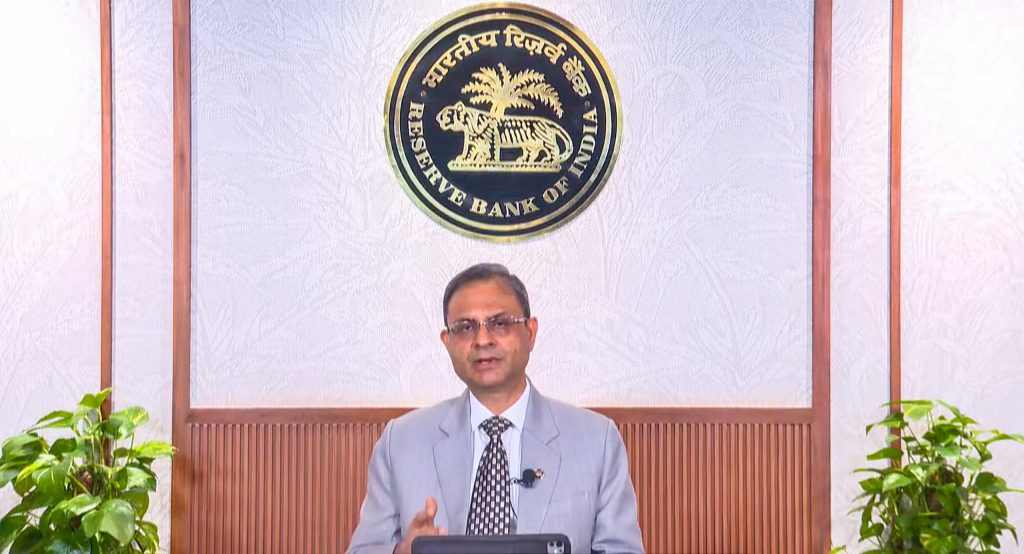
During the press conference, RBI Governor Sanjay Malhotra highlighted several important aspects of the economy and monetary policy outlook.
According to the Governor, the Indian economy continues to demonstrate resilience amid global challenges. He emphasized that inflation remains manageable and growth prospects remain encouraging.
The Governor also stated that the RBI Monetary Policy Committee remains committed to achieving durable price stability while supporting economic growth. He stressed that future policy decisions would remain data-driven and responsive to evolving economic conditions.
The RBI Monetary Policy Committee will continue monitoring inflation trends, global developments, and domestic demand indicators before making future adjustments.

Impact on Home Loan Borrowers
One of the most immediate effects of the RBI Monetary Policy Committee’s decision will be felt by home loan borrowers.
Since the repo rate remains unchanged at 5.25%, banks are unlikely to increase lending rates in the near term. Existing borrowers with floating-rate loans can expect their Equated Monthly Installments (EMIs) to remain stable.
For prospective homebuyers, the decision of the RBI Monetary Policy Committee provides certainty regarding borrowing costs. Stable interest rates may encourage more individuals to enter the housing market.
Real estate developers are also expected to benefit from continued affordability in home financing.
Impact on Personal Loans and Auto Loans
The decision by the RBI Monetary Policy Committee will also affect personal and automobile loans.
Since lending rates are expected to remain stable, consumers planning to purchase vehicles or take personal loans may find financing conditions favorable.
Stable borrowing costs often support consumer spending, which in turn contributes to economic growth. The RBI Monetary Policy Committee appears focused on maintaining this balance between inflation control and demand support.
Impact on Businesses
Businesses across sectors closely monitor decisions of the RBI Monetary Policy Committee because interest rates directly influence financing costs.
A stable repo rate means that corporate borrowing costs are unlikely to increase significantly. This provides businesses with greater confidence when making investment decisions.
Industries such as manufacturing, infrastructure, real estate, and small and medium enterprises (SMEs) are particularly sensitive to interest rate movements.
The RBI Monetary Policy Committee’s decision is expected to support business expansion plans and investment activity.
Impact on Investors
Investors also pay close attention to announcements by the RBI Monetary Policy Committee.
Stock Market
Generally, stable interest rates are viewed positively by equity markets because they support corporate profitability and economic growth.
The decision by the RBI Monetary Policy Committee may boost investor confidence, especially in interest-sensitive sectors such as banking, real estate, automobiles, and consumer goods.
Bond Market
Bond investors monitor interest rate movements closely because bond prices and interest rates share an inverse relationship.
Since the RBI Monetary Policy Committee maintained the repo rate, bond markets may experience relatively stable conditions in the short term.
Fixed Deposits
For depositors, the unchanged repo rate suggests that fixed deposit rates are unlikely to witness major changes immediately. Savers can continue earning returns at prevailing levels.
India’s Inflation Outlook
Inflation remains one of the most important considerations for the RBI Monetary Policy Committee.
Recent data indicates that inflationary pressures have eased compared to earlier periods. Improved supply chains, stable commodity prices, and effective policy measures have contributed to this trend.
However, risks remain. Weather conditions, global oil prices, geopolitical developments, and food supply disruptions could affect future inflation.
The RBI Monetary Policy Committee acknowledged these uncertainties and reiterated its commitment to closely monitoring price trends.
India’s Growth Prospects
The growth outlook for India remains encouraging.
Government infrastructure spending, rising private investment, expanding digitalization, and strong domestic consumption continue to support economic activity.
The RBI Monetary Policy Committee expects these factors to contribute positively to growth while maintaining macroeconomic stability.
International organizations have also projected strong growth prospects for India compared to many advanced and emerging economies.
Challenges Ahead
Despite positive indicators, several challenges remain.
Global Geopolitical Risks
Conflicts and geopolitical tensions can disrupt supply chains and increase commodity prices.
Oil Price Volatility
India remains heavily dependent on energy imports. Sharp increases in crude oil prices could impact inflation and economic stability.
External Monetary Policy Developments
Policy decisions by major central banks such as the US Federal Reserve can influence global capital flows and exchange rates.
The RBI Monetary Policy Committee will need to carefully navigate these external risks while maintaining domestic stability.
What Can We Expect Next?
The future direction of monetary policy will depend on incoming economic data.
If inflation remains under control and growth stays strong, the RBI Monetary Policy Committee may continue maintaining policy stability.
However, if inflation rises unexpectedly or external shocks emerge, policymakers may reassess their stance.
Similarly, if economic growth slows significantly, the RBI Monetary Policy Committee could consider policy measures aimed at supporting economic activity.
For now, the committee appears comfortable with maintaining the current rate environment.
Expert Reactions
Economists broadly view the decision of the RBI Monetary Policy Committee as prudent and balanced.
Many analysts believe that keeping the repo rate unchanged allows policymakers to observe the impact of previous decisions while preserving flexibility for future action.
Financial experts have noted that the move supports market stability and provides certainty to borrowers and investors.
Industry leaders have also welcomed the decision, stating that stable interest rates help businesses plan investments more effectively.
Conclusion
The decision by the RBI Monetary Policy Committee to keep the repo rate unchanged at 5.25% reflects a cautious yet confident approach toward managing India’s economy. RBI Governor Sanjay Malhotra emphasized the importance of balancing inflation control with growth support, and the committee’s latest move aligns with that objective.
For borrowers, stable interest rates mean predictable loan repayments. For businesses, it ensures continued access to reasonably priced credit. For investors, it provides clarity and stability in financial markets.
As India continues its growth journey amid global uncertainties, the RBI Monetary Policy Committee remains at the center of economic policymaking. Its decisions will continue to influence inflation, investment, employment, and overall economic development.
The latest announcement signals confidence in the resilience of the Indian economy while preserving the flexibility needed to respond to future challenges. With inflation under control and growth prospects remaining positive, the RBI Monetary Policy Committee has chosen stability as the preferred course, a decision likely to shape India’s economic landscape in the months ahead.
Read more latest news

