
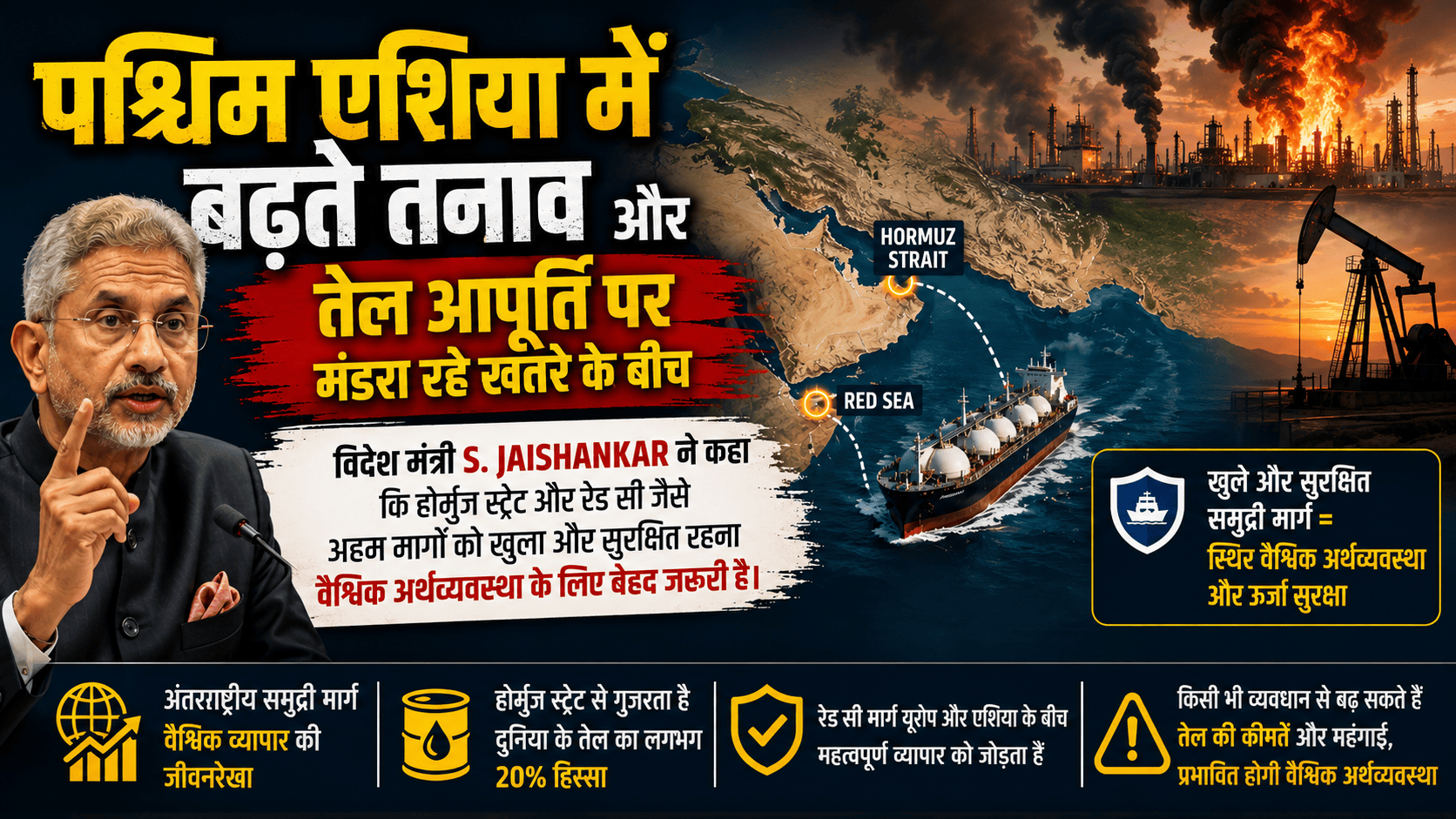
Rising Tensions in West Asia: India Raises Concern Over Global Oil Supply and Maritime Security
The world is currently witnessing rising tensions in West Asia, a region that plays a crucial role in global energy production, maritime trade, and international diplomacy. As conflicts continue to escalate between regional powers and global stakeholders, countries across the world are becoming increasingly worried about disruptions to oil supplies and international shipping routes. India, one of the world’s fastest-growing economies and a major importer of crude oil, has openly expressed concern regarding the security of key sea lanes such as the Strait of Hormuz and the Red Sea.
India’s External Affairs Minister, S. Jaishankar, emphasized that uninterrupted maritime trade is essential for the stability of the global economy. According to him, diplomacy and dialogue remain the best ways to resolve conflicts and avoid a larger international crisis. The rising tensions in West Asia are no longer limited to regional politics; they now directly affect energy markets, inflation, transportation costs, and economic growth worldwide.
Why West Asia Matters to the Global Economy
West Asia is one of the most strategically important regions in the world. It is home to some of the largest oil-producing nations, including Saudi Arabia, Iran, United Arab Emirates, and Iraq. A significant portion of the world’s oil exports passes through critical maritime routes located in this region rising tensions in West Asia.
The current rising tensions in West Asia have increased fears of supply disruptions. Any conflict that affects oil transportation can immediately impact global fuel prices. Nations that rely heavily on imported energy, such as India, are especially vulnerable.
Apart from oil, West Asia is also vital for international trade. The Red Sea and the Strait of Hormuz are among the busiest shipping routes globally. These sea lanes connect Asia, Europe, and Africa, making them essential for global commerce rising tensions in West Asia.
India Concern Over Maritime Security
India has repeatedly highlighted the importance of maintaining secure and open sea routes. Speaking on the issue, S. Jaishankar noted that disruptions in maritime trade could create serious economic consequences for the entire world.

The rising tensions in West Asia have made maritime security a major international concern. Cargo ships, oil tankers, and commercial vessels traveling through the region face increasing risks. Attacks on ships, military confrontations, and geopolitical rivalries have already created uncertainty in international trade networks.
India depends heavily on sea routes for its energy imports. Nearly 80 percent of India’s crude oil requirements are met through imports, much of which comes from West Asian countries. If shipping lanes become unsafe or blocked, India could face rising fuel costs, inflation, and supply shortages.
Importance of the Strait of Hormuz
The Strait of Hormuz is one of the most important waterways in the world. Located between Iran and Oman, this narrow passage connects the Persian Gulf with the Arabian Sea.
Nearly one-fifth of the world’s oil passes through the Strait of Hormuz every day. Because of the rising tensions in West Asia, global markets closely monitor developments around this strategic route. Any military conflict or blockade in the area could lead to a sharp increase in oil prices.
India has consistently advocated for freedom of navigation in the Strait of Hormuz. The Indian government believes that international cooperation is essential to ensure that trade and energy supplies continue without interruption.
Red Sea Crisis and Global Shipping
The Red Sea has also emerged as a major area of concern. This route connects the Mediterranean Sea to the Indian Ocean through the Suez Canal, making it a crucial path for global shipping.
The ongoing rising tensions in West Asia have led to attacks on commercial vessels in the Red Sea region. Shipping companies have started rerouting ships to avoid dangerous zones, resulting in higher transportation costs and delays in deliveries.
These disruptions affect not only oil supplies but also food products, electronics, machinery, and consumer goods. As shipping expenses rise, prices of products around the world also increase, contributing to inflation.
India has called for international efforts to secure the Red Sea and maintain the safety of commercial vessels. The Indian Navy has also increased monitoring activities in the region to protect Indian ships and sailors.
Impact on Global Oil Prices

One of the biggest consequences of the rising tensions in West Asia is volatility in global oil prices. Whenever geopolitical instability increases in major oil-producing regions, markets react immediately.
Oil prices influence almost every sector of the economy, including transportation, manufacturing, aviation, agriculture, and logistics. Higher fuel prices can slow economic growth and increase inflation across countries.
For India, rising oil prices create additional economic pressure. Increased import costs affect government spending, trade balances, and consumer prices. Petrol and diesel prices directly impact transportation expenses, which then influence the cost of essential goods.
Global investors also become cautious during periods of instability. Financial markets often experience fluctuations due to uncertainty related to conflicts and energy supply disruptions.
Diplomacy as the Best Solution
India has maintained a balanced diplomatic approach amid the rising tensions in West Asia. Instead of supporting military escalation, India has emphasized dialogue, negotiation, and peaceful resolution of disputes.
According to S. Jaishankar, diplomacy remains the most effective way to prevent regional conflicts from turning into a global crisis. India believes that all parties involved should avoid actions that increase instability.
India’s foreign policy has traditionally focused on strategic balance and constructive engagement with all countries in the region. This approach allows India to maintain strong relations with multiple nations despite geopolitical rivalries.
The government has also stressed the importance of respecting international law and ensuring the safety of civilian shipping operations.
India’s Energy Dependence on West Asia
India’s growing economy requires a steady supply of energy. West Asian countries remain India’s largest suppliers of crude oil and natural gas. Because of the rising tensions in West Asia, energy security has become a top priority for Indian policymakers.
India imports crude oil from countries such as Saudi Arabia, Iraq, and United Arab Emirates. Any disruption in these supplies could significantly impact India’s economy.
To reduce risks, India has been diversifying its energy sources and increasing investments in renewable energy. However, fossil fuels still remain essential for industrial growth and transportation.
Strategic petroleum reserves are another important part of India’s energy security strategy. These reserves help the country manage temporary disruptions in global supply chains.
Role of the International Community
The current rising tensions in West Asia require collective international action. Major global powers, including the United States, China, and European nations, are closely monitoring the situation.
International organizations such as the United Nations are also encouraging diplomatic engagement to prevent further escalation.
Global cooperation is necessary to ensure maritime security, stabilize energy markets, and avoid humanitarian crises. Many countries depend on uninterrupted trade routes for economic stability.
India has supported multilateral cooperation and peaceful conflict resolution. The country believes that military confrontations only increase uncertainty and economic risks.
Economic Impact on Developing Countries
Developing nations are among the hardest hit by the rising tensions in West Asia. Higher oil prices and shipping costs place additional burdens on economies already struggling with inflation and debt.
Countries that rely heavily on imported fuel face increased pressure on government budgets. Rising transportation costs also affect food prices and essential commodities.
For low-income populations, inflation reduces purchasing power and creates economic hardship. This is why many governments are calling for immediate de-escalation and diplomatic solutions.
India has warned that prolonged instability in West Asia could negatively impact global economic recovery and trade growth.
India’s Strategic Role in the Region
India has emerged as an important diplomatic player in global affairs. Amid the rising tensions in West Asia, India is maintaining communication with all major stakeholders.
India’s strategic interests in the region include energy security, trade partnerships, and the welfare of millions of Indian expatriates living in West Asian countries.
The Indian government has consistently focused on ensuring the safety of Indian citizens abroad during periods of regional instability. Evacuation plans and diplomatic coordination remain key priorities.
India’s balanced foreign policy allows it to maintain strong economic and political ties with multiple countries across West Asia.
Threat to Global Trade Routes
The rising tensions in West Asia are not just about oil; they also threaten global supply chains. International shipping routes passing through the region are essential for transporting goods between continents.
If conflicts intensify, shipping companies may continue rerouting vessels through longer and more expensive paths. This can increase delivery times and operational costs for businesses worldwide.
The impact is visible across sectors such as electronics, automobiles, agriculture, and manufacturing. Higher shipping costs eventually affect consumers through increased product prices.
Global trade depends heavily on secure maritime corridors. Therefore, ensuring the safety of sea lanes has become a top international priority.
Military Escalation and Regional Risks
One of the biggest fears surrounding the rising tensions in West Asia is the possibility of a wider military conflict. Escalation between regional and global powers could destabilize the entire region.
Military confrontations can damage infrastructure, disrupt oil production, and create humanitarian crises. They can also increase refugee movements and geopolitical instability.
India has consistently urged restraint and peaceful negotiations to prevent further escalation. The country believes that diplomacy is essential for long-term stability.
Experts warn that even limited conflicts in strategically important areas can have massive global consequences.
Importance of Dialogue and Negotiation
Diplomatic engagement is becoming increasingly important as the rising tensions in West Asia continue to affect international relations. Countries around the world are encouraging negotiations to reduce hostility.
Dialogue helps build trust, avoid misunderstandings, and create pathways for peaceful solutions. Without diplomacy, the risk of accidental escalation becomes much higher.
India has positioned itself as a strong supporter of international dialogue and cooperative security frameworks. The government believes that sustainable peace can only be achieved through communication and mutual understanding.
Future Outlook
The future of the region remains uncertain due to the ongoing rising tensions in West Asia. Much depends on the willingness of regional and global powers to prioritize diplomacy over confrontation.
Energy markets, shipping companies, and governments are closely monitoring developments. Investors are also watching the situation carefully because instability in West Asia can influence global economic growth.
India is expected to continue advocating for peace, maritime security, and uninterrupted trade. The country’s diplomatic approach reflects its broader commitment to stability and international cooperation.
If tensions are reduced through dialogue, global markets may stabilize, and economic uncertainty could decrease. However, continued conflicts could create long-term challenges for energy security and global trade.
Conclusion
The rising tensions in West Asia have become a major international concern with far-reaching consequences for energy security, maritime trade, and the global economy. India has clearly stated that secure sea lanes such as the Strait of Hormuz and the Red Sea are essential for maintaining global stability.
Through statements by S. Jaishankar, India has emphasized the importance of diplomacy, dialogue, and peaceful engagement. The country believes that military escalation will only increase economic uncertainty and global instability.
As the world continues to deal with the effects of the rising tensions in West Asia, international cooperation will remain crucial. Open shipping routes, stable energy supplies, and constructive diplomacy are necessary to protect the interests of all nations.
The coming months will be critical in determining whether the region moves toward peace and stability or deeper geopolitical conflict. For the global economy, ensuring secure maritime trade and uninterrupted oil supplies will remain one of the highest priorities.
read more latest news

