
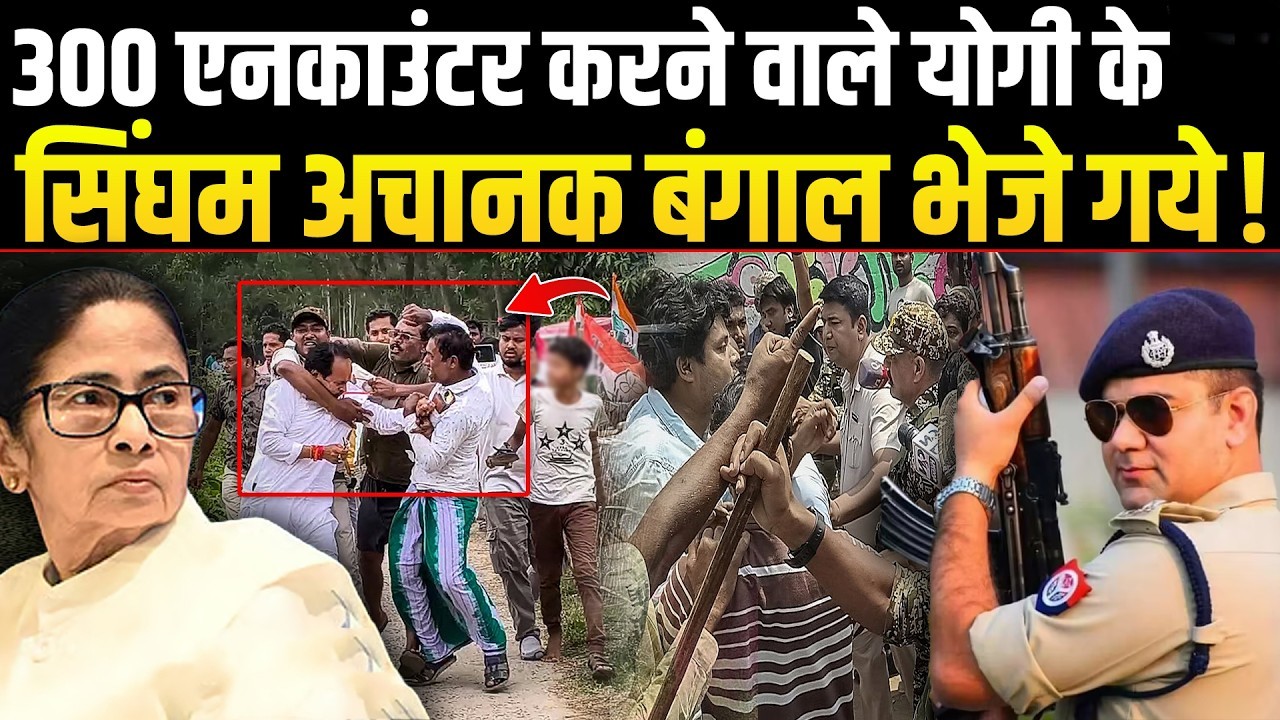
Election Duty, Power, and Accountability: The Ajay Pal Sharma in Bengal Controversy Explained
Introduction
One such incident involves Ajay Pal Sharma in Bengal, whose actions during election duty have sparked debate, scrutiny, and political tension.
Elections in India are often described as the largest democratic exercise in the world. From the plains of West Bengal to the mountains of the north, millions of officials are deployed to ensure free and fair voting. However, controversies sometimes arise that test the strength of institutions and the neutrality of enforcement agencies.
This blog explores the full story—what happened, who the key players are, and why this incident matters for democracy.
Background Political Climate in West Bengal
West Bengal has long been known for its politically charged atmosphere. The dominance of the All India Trinamool Congress (TMC), led by Mamata Banerjee, has shaped the state’s political landscape over the past decade. Elections in the state are often intense, with accusations of violence, intimidation, and misuse of power frequently surfacing.
In such an environment, election officials carry immense responsibility. Their role is not just administrative but also deeply tied to maintaining democratic integrity.
This is where Ajay Pal Sharma in Bengal enters the picture.
Who is Ajay Pal Sharma?
Ajay Pal Sharma is known as a strict and disciplined officer with a reputation for taking decisive action. His assignment to election duty in West Bengal was seen as part of broader efforts to ensure neutrality and law enforcement during the electoral process.
However, what unfolded during his duty turned him into a central figure in a political controversy.
The story of Ajay Pal Sharma in Bengal is not just about one officer—it reflects larger questions about authority, accountability, and political influence.

The Complaint Against Jahangir
During the election period, allegations surfaced against Jahangir, a candidate from the Falta Assembly constituency representing the TMC. Complaints suggested that he was threatening local residents and possibly influencing voters.
Such accusations are serious in the context of elections. Any attempt to intimidate voters directly challenges democratic principles.
When these complaints reached authorities, Ajay Pal Sharma in Bengal was tasked with investigating the matter.
The Investigation Begins
Responding to the complaints, Ajay Pal Sharma proceeded to the Falta constituency to verify the allegations. His approach was procedural—visit the location, assess the situation, and take necessary action.
However, the situation became complicated upon his arrival.
Initially, Jahangir’s residence appeared to be inaccessible. This raised suspicions and questions. Why was the house unavailable? Was it an attempt to avoid scrutiny?
For Ajay Pal Sharma in Bengal, this was the first sign that the situation might not be straightforward.
Discovery of Police Deployment
After further inspection and a subsequent search, a surprising discovery was made. A total of 14 personnel from the West Bengal Police were found deployed at Jahangir’s residence.
This raised immediate questions:
- Why was such a large number of police personnel assigned to a candidate’s residence?
- Was this deployment justified?
- Could this indicate misuse of state machinery?
The findings by Ajay Pal Sharma in Bengal quickly became the focal point of the controversy.
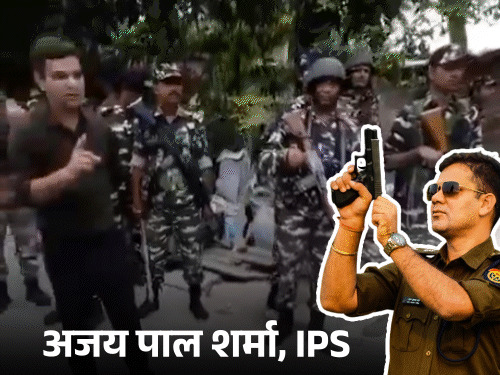
Questions of Power and Influence
The presence of 14 police officers at the residence of a political candidate during elections is unusual. While candidates may receive security based on threat perception, the scale and timing of this deployment raised eyebrows.
Critics argued that this could reflect political favoritism or misuse of administrative resources. Supporters, however, claimed it might have been a legitimate security measure.
For Ajay Pal Sharma in Bengal, the challenge was to separate facts from assumptions and present an unbiased report.
Political Reactions
The incident triggered strong reactions across the political spectrum.
Opposition parties accused the ruling party of misusing police resources to protect its candidates and suppress dissent. They pointed to the findings of Ajay Pal Sharma in Bengal as evidence of systemic bias.
On the other hand, the ruling party defended its position, arguing that security arrangements are often made based on intelligence inputs and cannot be judged superficially.
The controversy quickly escalated, turning Ajay Pal Sharma in Bengal into a headline issue.
Role of Election Authorities
The Election Commission of India plays a crucial role in ensuring free and fair elections. Incidents like this test its effectiveness and independence.
Following the report involving Ajay Pal Sharma in Bengal, questions were raised about whether the Election Commission would take action.
Would there be an inquiry? Would accountability be fixed? These questions became central to the public discourse.
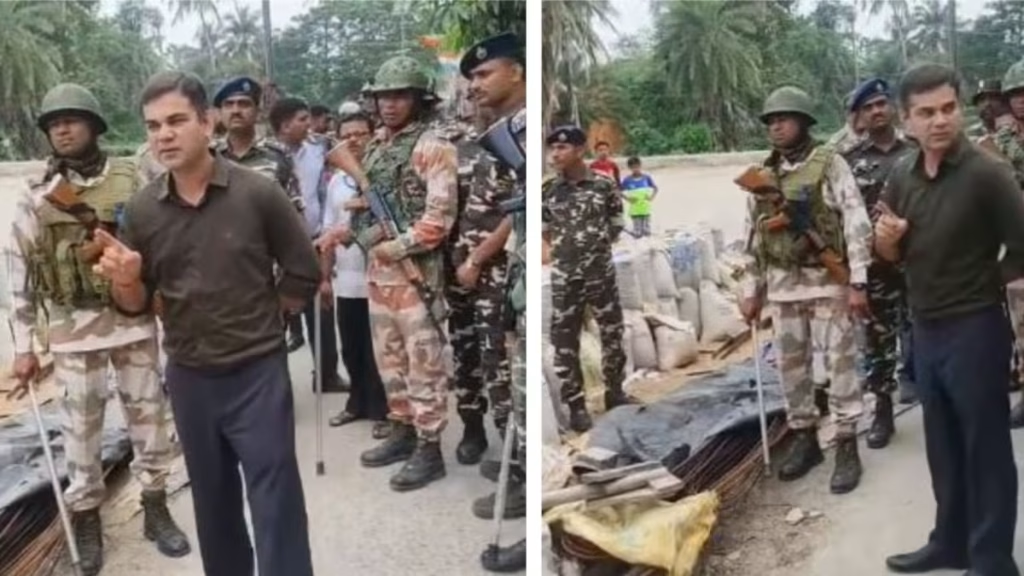
Law Enforcement Neutrality
One of the most important aspects of any election is the neutrality of law enforcement agencies. Police forces are expected to act impartially, without political influence.
The discovery made by Ajay Pal Sharma in Bengal brought this issue into sharp focus.
If police personnel are seen as favoring one political side, it can undermine public trust in the electoral process.
Media Coverage and Public Perception
The incident quickly gained traction in the media. News channels, social media platforms, and political commentators debated the implications.
For many, Ajay Pal Sharma in Bengal became a symbol of accountability—an officer willing to investigate powerful individuals.
For others, the incident highlighted systemic issues that go beyond one individual or one constituency.
Public perception played a significant role in shaping the narrative.
Legal and Ethical Dimensions
From a legal standpoint, the deployment of police personnel must follow established protocols. Any deviation can lead to questions of misuse of authority.
Ethically, the situation is even more complex. Elections are not just about legality—they are about fairness and trust.
The actions of Ajay Pal Sharma in Bengal brought these dimensions into focus, prompting discussions about both legal compliance and ethical governance.
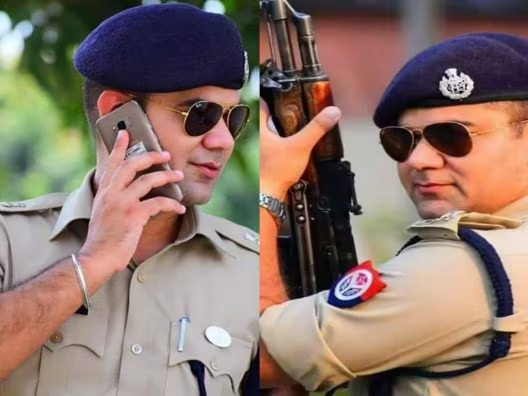
Broader Implications for Democracy
This incident is not isolated. It reflects broader challenges faced by democratic systems:
- Ensuring neutrality of state machinery
- Preventing misuse of power
- Protecting voter rights
The case of Ajay Pal Sharma in Bengal serves as a reminder that democracy requires constant vigilance.
The Importance of Accountability
Accountability is the cornerstone of any democratic system. Whether it is a political candidate, a police officer, or an election official, everyone must be answerable for their actions.
The findings of Ajay Pal Sharma in Bengal highlight the need for transparency and accountability at all levels.
Without accountability, public trust can erode quickly.
Challenges Faced by Election Officers
Election officers often work under immense pressure. They must navigate complex political environments while maintaining neutrality.
The experience of Ajay Pal Sharma in Bengal illustrates these challenges:
- Dealing with powerful political figures
- Managing sensitive information
- Ensuring personal safety
Their role is both critical and demanding.
Public Trust and Democratic Integrity
Public trust is essential for the success of any election. When incidents like this occur, they can shake confidence in the system.
However, they can also reinforce trust—if handled transparently and fairly.
The actions of Ajay Pal Sharma in Bengal demonstrate how accountability can strengthen democratic integrity.
Lessons Learned
Several lessons emerge from this incident:
- Transparency is crucial
- Institutions must act independently
- Accountability should be enforced consistently
The story of Ajay Pal Sharma in Bengal offers valuable insights for policymakers, administrators, and citizens alike.
The Way Forward
To prevent similar controversies in the future, several steps can be taken:
- Strengthening oversight mechanisms
- Ensuring clear guidelines for security deployment
- Enhancing training for election officials
The experience of Ajay Pal Sharma in Bengal can serve as a case study for improving electoral processes.
Conclusion
The incident involving Ajay Pal Sharma and the investigation into allegations against a political candidate in West Bengal is more than just a news story. It is a reflection of the challenges faced by democratic institutions in ensuring fairness and accountability.
Ajay Pal Sharma in Bengal has become a focal point for discussions about power, responsibility, and the rule of law. His actions highlight the importance of vigilance and integrity in public service.
As India continues to conduct elections on an unprecedented scale, incidents like this serve as reminders that democracy is not just about voting—it is about ensuring that every vote counts, free from fear and influence.
Final Thoughts
The story of Ajay Pal Sharma in Bengal underscores a fundamental truth: democracy thrives on accountability. When individuals and institutions uphold their responsibilities, the system becomes stronger.
Whether this incident leads to concrete reforms remains to be seen. But one thing is certain—it has sparked an important conversation that cannot be ignored.
Read More latest news

