
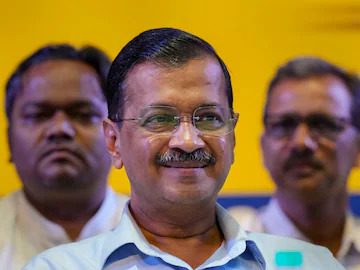
Kejriwal Gets Support
Kejriwal Gets Support In the lead-up to the Delhi Assembly elections scheduled for February 5, 2025, the political landscape is witnessing significant realignments within the Indian National Developmental Inclusive Alliance (INDIA). Arvind Kejriwal, leader of the Aam Aadmi Party (AAP), has secured the backing of two prominent alliance members—the Trinamool Congress (TMC) and the Samajwadi Party (SP)—as he confronts both the Bharatiya Janata Party (BJP) and the Indian National Congress (INC) in the electoral arena.
Support from TMC and SP
Kejriwal Gets Support Mamata Banerjee, Chief Minister of West Bengal and leader of the TMC, along with Akhilesh Yadav, leader of the SP, have publicly endorsed Kejriwal’s leadership in Delhi. This support underscores a strategic alignment within the INDIA bloc, aiming to consolidate anti-BJP votes in the capital.
AAP’s Position and Strategy
Kejriwal Gets Support The AAP, under Kejriwal’s leadership, has been in power in Delhi since 2013, focusing on governance models centered around education, healthcare, and public services. Facing its most formidable electoral challenge to date, the party is emphasizing its track record over the past decade and outlining plans for the next five years.
Congress’s Stance
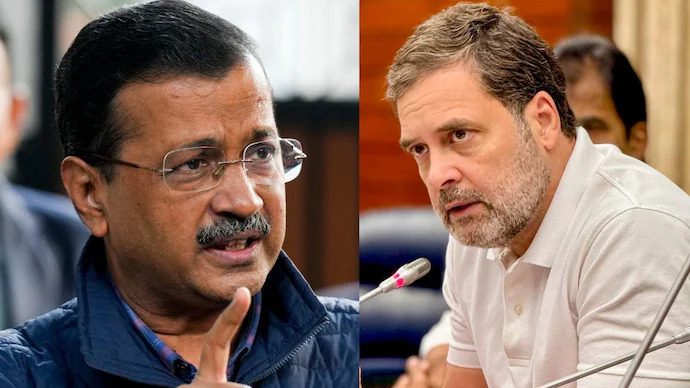
Kejriwal Gets Support Despite being part of the INDIA alliance at the national level, the Congress party has decided to contest all 70 seats in the Delhi Assembly independently, leading to a complex dynamic within the alliance. Kejriwal has accused the Congress and BJP of covert collaboration, suggesting that their actions are detrimental to the alliance’s objectives.
BJP’s Campaign
Kejriwal Gets Support The BJP, which has not held power in Delhi since 1998, is striving to regain control by focusing on national issues and leveraging the popularity of Prime Minister Narendra Modi. The party has announced candidates for 29 seats and is expected to release more names as the election approaches.
Implications for the INDIA Alliance
Kejriwal Gets Support The differing strategies among INDIA bloc members in Delhi highlight the challenges of maintaining unity across diverse regional landscapes. While collaboration is evident in some states, the decision of parties like the Congress to contest independently in Delhi raises questions about the alliance’s cohesion and effectiveness in countering the BJP on a national scale.
Conclusion
Kejriwal Gets Support As the Delhi Assembly elections approach, the support from TMC and SP bolsters Kejriwal’s position, yet the lack of a unified front within the INDIA alliance presents both opportunities and challenges. The electoral outcomes in Delhi will not only determine the city’s governance but also serve as a barometer for the alliance’s future strategies and its ability to present a cohesive alternative to the BJP at the national level.
Kejriwal Gets Support For a visual overview of the INDIA bloc allies backing AAP over Congress in Delhi, you may find the following video informative:
Kejriwal Gets Support Delhi’s 2025 assembly elections come at a crucial juncture for national politics. The Aam Aadmi Party (AAP), led by Chief Minister Arvind Kejriwal, has been in power for over a decade. Known for its pro-people governance model focused on education, healthcare, and public services, the party faces a significant challenge from both the BJP and Congress.
Kejriwal Gets Support Recent developments within the INDIA bloc—a coalition of opposition parties aiming to challenge the BJP—have added a new dimension to the contest. Kejriwal’s ability to secure support from two heavyweight allies, the Trinamool Congress (TMC) and the Samajwadi Party (SP), has strengthened AAP’s position. However, the Congress’s decision to contest all 70 seats independently highlights fractures within the bloc.
AAP’s Strategy and Challenges
Governance as a Core Message
Kejriwal Gets Support Kejriwal’s campaign heavily emphasizes the party’s track record, which includes:
- Education: Transforming Delhi’s government schools into models of excellence.
- Healthcare: Establishing Mohalla Clinics, which provide free primary healthcare services to millions.
- Public Services: Subsidized electricity and water for Delhi residents.
In 2025, AAP is promising to expand its governance model with new initiatives in housing, women’s safety, and employment generation.
Dealing with Anti-Incumbency
Kejriwal Gets Support After 10 years in power, AAP is also battling anti-incumbency sentiments. Issues like pollution, alleged irregularities in liquor policies, and criticism over delays in infrastructure projects have given the opposition ammunition.
Targeting Congress and BJP
Kejriwal Gets Support Kejriwal has consistently criticized both Congress and BJP, accusing them of working against the INDIA bloc’s mission. His rhetoric has painted the two parties as “two sides of the same coin,” alleging covert alliances to undermine AAP.
The Role of INDIA Bloc Allies
Support from TMC
Kejriwal Gets Support Mamata Banerjee, the TMC leader and Chief Minister of West Bengal, has openly endorsed Kejriwal. Her support comes as no surprise given the TMC’s long-standing rivalry with the Congress in Bengal. By backing AAP, Banerjee seeks to solidify the INDIA bloc’s narrative of unity against the BJP while keeping Congress in check.
- Impact on AAP’s Campaign: The TMC’s endorsement provides AAP with moral support and potentially financial backing for its campaign.
- National Implications: This move highlights the complex dynamics within the INDIA bloc, as parties prioritize regional interests over uniform strategies.
Support from SP
Kejriwal Gets Support Akhilesh Yadav, the SP leader, has also thrown his weight behind Kejriwal. With no direct stakes in Delhi, the SP’s support symbolizes solidarity within the INDIA bloc.
- Strategic Importance: The SP’s endorsement resonates with migrant voters from Uttar Pradesh living in Delhi, a significant demographic that AAP aims to win over.
- Broader Alliance Narrative: Yadav’s backing signals a commitment to INDIA bloc unity, even as Congress pursues its independent path in Delhi.
Congress’s Independent Campaign
Decision to Go Solo
Kejriwal Gets Support The Congress’s announcement to contest all 70 seats in Delhi independently has raised eyebrows. Despite being a part of the INDIA bloc at the national level, Congress has chosen to prioritize its organizational revival in Delhi over alliance cohesion.
- Historical Context: Once dominant in Delhi politics, the Congress lost its base to AAP after 2013. The party sees the 2025 elections as an opportunity to regain lost ground.
- Criticism from AAP: Kejriwal has slammed Congress for “betraying the alliance,” accusing the party of indirectly helping the BJP by splitting the anti-BJP vote.
Congress’s Campaign Themes
The Congress is focusing on issues like:
- Alleged corruption in AAP’s policies.
- The need for experienced governance.
- Reviving its connection with Delhi’s traditional vote banks, including minority communities.
BJP’s Strategy
The BJP has not held power in Delhi since 1998 but remains a formidable force. Its campaign in 2025 is centered on national issues and the popularity of Prime Minister Narendra Modi.
Key Campaign Points
- Nationalism and Development: Highlighting Modi’s vision of a “New India” and linking it to Delhi’s aspirations.
- Targeting AAP’s Policies: Criticizing AAP for alleged corruption, mishandling pollution issues, and failing to deliver on infrastructure promises.
- Caste and Community Outreach: The BJP is reaching out to various communities, including Purvanchali voters and minorities, to widen its appeal.
Challenges for BJP
Despite its aggressive campaign, the BJP faces hurdles, including:
- AAP’s stronghold over Delhi’s urban electorate.
- Fragmentation of opposition votes, which could potentially benefit AAP in multi-cornered contests.
Analysis of INDIA Bloc Dynamics
A Test of Unity
The Delhi elections serve as a litmus test for the INDIA bloc’s ability to function cohesively. While the bloc’s stated objective is to challenge the BJP, the Congress’s independent campaign raises questions about its long-term viability.
Regional vs. National Priorities
The decision by TMC and SP to support AAP demonstrates the bloc’s regional complexity. Parties like Congress prioritize their revival in key states over bloc-wide coordination, complicating efforts to present a unified front.
Potential Outcomes
- AAP’s victory would strengthen its leadership within the INDIA bloc, giving Kejriwal a stronger voice in national opposition politics.
- A BJP resurgence in Delhi could bolster Modi’s image and weaken the opposition narrative.
- A Congress revival, though unlikely, could disrupt AAP’s dominance and create new power dynamics within the INDIA bloc.
Voter Sentiments and Ground Realities
Key Issues for Delhi Voters
- Governance and Public Services: AAP’s focus on education and healthcare continues to resonate with voters.
- Pollution and Infrastructure: These remain significant concerns, with voters demanding long-term solutions.
- Employment and Economy: Rising inflation and unemployment are critical issues that could influence voting patterns.
Demographic Considerations
- Migrant Voters: Both AAP and BJP are targeting Delhi’s sizable migrant population, particularly Purvanchalis from UP and Bihar.
- Women and Youth: AAP is focusing on women-centric policies and youth employment, while BJP is leveraging its national image to appeal to first-time voters.
Electoral Scenarios and Predictions
Scenario 1: AAP Retains Power
If AAP secures a third consecutive term, it would cement its position as a dominant force in Delhi and a key player in national opposition politics.
Scenario 2: BJP Makes Significant Gains
A strong BJP performance could weaken AAP’s narrative of invincibility and embolden the party ahead of the 2026 general elections.
Scenario 3: Congress Resurgence
A revival of Congress, though challenging, would add a new dimension to Delhi’s politics and complicate opposition dynamics within the INDIA bloc.
Scenario 4: Fragmented Mandate
A hung assembly could lead to post-poll alliances, testing the INDIA bloc’s unity and BJP’s adaptability.
Conclusion: A Battle for Delhi and Beyond
The 2025 Delhi elections are more than a local contest—they are a microcosm of India’s evolving political dynamics. With AAP receiving critical support from TMC and SP, Kejriwal enters the race as a strong contender. However, challenges from BJP and Congress, coupled with intra-bloc tensions, make this election a high-stakes affair.
The results will have implications far beyond Delhi, shaping the narrative for the 2026 general elections and determining the INDIA bloc’s trajectory as a united opposition front against the BJP. Whether AAP’s governance model continues to resonate or voters opt for a new direction remains to be seen.
Read more Latest News

