
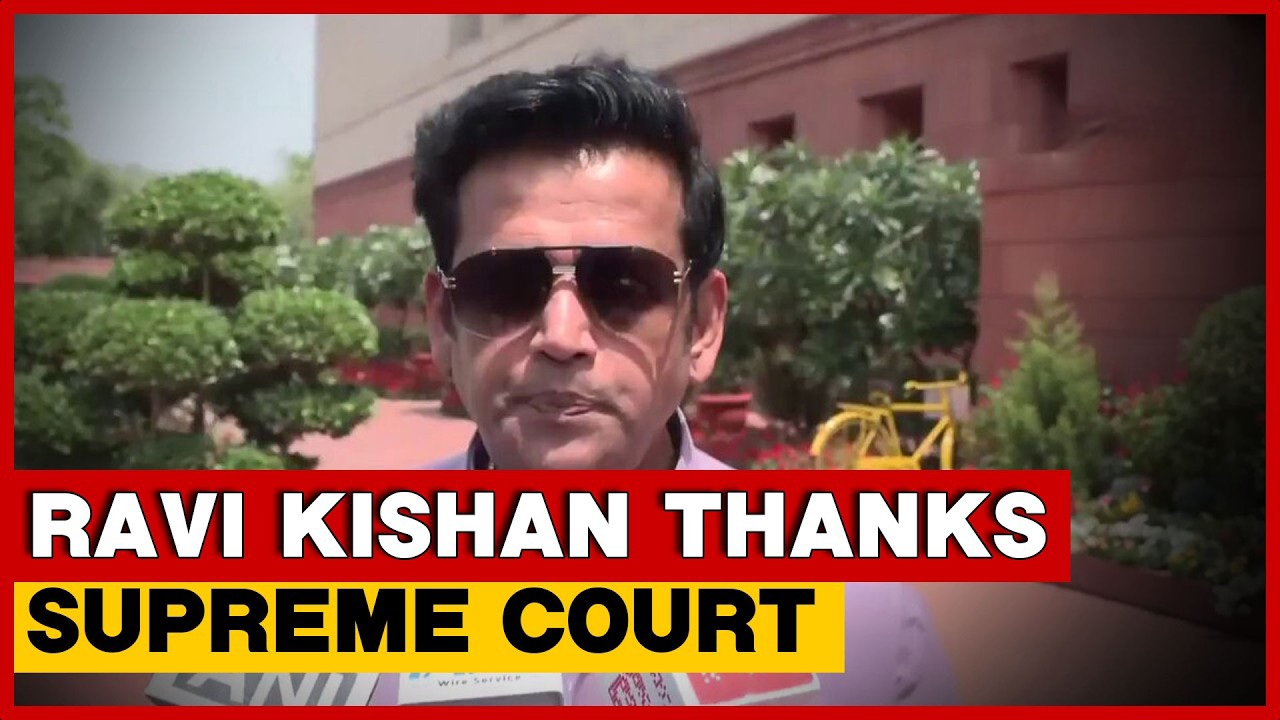
Ravi Kishan Raises Security Concerns: A Deep Look Into Political Safety and Ground Realities in India
Ravi Kishan said In the dynamic and often intense landscape of Indian politics, security for political leaders remains a matter of serious concern. Recently, Ravi Kishan made a candid and striking statement that has sparked widespread discussion across political and public circles. Ravi Kishan said, “I thank the Honorable Supreme Court from the bottom of my heart, because even in the last election, in the last two elections, whenever I was going for campaigning, I was not provided security there. We were given a security guard, he was a thin man, we had to provide him security.”
This statement has not only drawn attention to his personal experiences but has also opened up a broader debate on the adequacy of security provided to political leaders, especially during elections.
The Context Behind the Statement
Election campaigns in India are massive undertakings, involving extensive travel, public rallies, and direct interactions with large crowds. Politicians often visit remote and densely populated areas, where maintaining security becomes challenging. In such a high-risk environment, the expectation is that adequate security arrangements are made for all candidates.
However, Ravi Kishan said that his experience was far from ideal. His remarks suggest that despite being a prominent public figure, he had to face situations where security arrangements were insufficient.
The fact that he mentioned this issue in connection with gratitude toward the Supreme Court indicates that there may have been some form of judicial intervention or awareness that prompted him to speak openly about it.
The Reality of Political Campaigning
Campaigning in India is not just about speeches and promises—it involves navigating unpredictable environments. From enthusiastic supporters to potential threats, politicians encounter a wide spectrum of situations.
Ravi Kishan said that during his campaign tours, he often felt vulnerable due to inadequate protection. This raises a critical question: are all candidates treated equally when it comes to security?
While high-profile leaders often receive extensive security cover, many others reportedly struggle with minimal arrangements. This disparity can create unsafe conditions and affect the fairness of the electoral process.
Security Challenges Faced by Politicians
India’s vast geography and diverse population make security planning a complex task. Political rallies can attract thousands of people, making crowd control a major challenge.
Ravi Kishan said that even the security personnel assigned to him appeared underprepared and physically unfit for the demanding role. His statement about having to “provide security” to the guard himself highlights the seriousness of the situation.
Such scenarios can lead to dangerous outcomes, not just for politicians but also for the public attending these events.
The Role of the Supreme Court
India’s judiciary has often played a crucial role in ensuring fairness and safety in the electoral process. By acknowledging the Supreme Court, Ravi Kishan said that he feels grateful for its role in addressing systemic issues.
The Supreme Court has, in the past, issued guidelines related to election conduct, candidate safety, and administrative responsibilities. While it is unclear what specific aspect prompted his gratitude, his statement suggests that judicial oversight remains essential.
Public Reaction and Political Implications
Statements like these tend to resonate strongly with the public. Many people see them as a reflection of the ground realities faced by leaders.
Ravi Kishan said something that many politicians might hesitate to admit openly. His candidness has been appreciated by supporters, while critics have used it to question the effectiveness of existing systems.
This issue also has political implications, as it brings attention to how resources are allocated during elections.

Inequality in Security Arrangements
One of the key takeaways from his statement is the apparent inequality in security provisions. Not all candidates receive the same level of protection, which can influence their ability to campaign freely.
Ravi Kishan said that his experience during two consecutive elections was similar, indicating that the problem is not isolated but systemic.
This raises concerns about whether smaller parties or less influential candidates are at a disadvantage when it comes to safety.
The Human Side of Politics
Often, politicians are seen as powerful individuals, but statements like these remind us of their vulnerability.
Ravi Kishan said something deeply human—he felt unsafe and unsupported during critical moments of his political journey. This perspective helps bridge the gap between leaders and citizens, showing that they too face challenges.
Need for Reforms
The concerns raised by Ravi Kishan highlight the urgent need for reforms in the way security is managed during elections.
Ravi Kishan said that the situation was such that he had to take responsibility for his own safety, which should ideally not be the case.
Authorities need to ensure that every candidate, regardless of their status, is provided with adequate protection.
Administrative Responsibility
The responsibility of providing security lies with local administration and law enforcement agencies. Proper planning, resource allocation, and training are essential to ensure safety.
Ravi Kishan said that the security guard assigned to him was not capable of handling potential threats. This points to a lack of proper assessment and preparation.
Improving training standards and ensuring physical fitness of security personnel can make a significant difference.
Media Coverage and Awareness
Media plays a crucial role in bringing such issues to light. After Ravi Kishan said this, it quickly gained attention and became a topic of discussion.
This kind of coverage helps in creating awareness and puts pressure on authorities to take action.

Voices from the Ground
Many local leaders and candidates have echoed similar concerns in the past. While not all of them receive national attention, their experiences indicate that the problem is widespread.
Ravi Kishan said what many others might have experienced but not expressed publicly.
Impact on Democracy
Security is a fundamental requirement for a free and fair election. If candidates feel unsafe, it can affect their ability to campaign effectively.
Ravi Kishan said that he faced such challenges repeatedly, which raises questions about the overall robustness of the system.
Ensuring safety is not just about protecting individuals—it is about safeguarding democracy itself.
Moving Forward
The issues raised need to be addressed through policy changes and better implementation.
Ravi Kishan said something that should serve as a wake-up call for authorities. It is important to learn from such experiences and take corrective measures.
Strengthening the System
To prevent similar situations in the future, the following steps can be considered:
- Standardized security protocols for all candidates
- Better training for security personnel
- Use of technology for crowd management
- Regular audits of security arrangements
Ravi Kishan said that he had to deal with inadequate security, and such incidents should not be repeated.
Conclusion
The statement made by Ravi Kishan has sparked an important conversation about political security in India. Ravi Kishan said something that goes beyond personal experience—it highlights a systemic issue that needs immediate attention.
His words serve as a reminder that even those in positions of power can face vulnerabilities. Addressing these concerns is essential for ensuring a safe and fair democratic process.
As India continues to evolve politically, it is crucial to prioritize the safety of those who participate in shaping its future. The hope is that statements like these will lead to meaningful changes and stronger systems in the years to come.
Read more latest news

