Will Relations Between India and Bangladesh Improve After the 2024 Crisis?
relations India Bangladesh The year 2024 marked a dramatic turning point in South Asian politics. The sudden collapse of the government led by Sheikh Hasina sent shockwaves across the region. For India, the political instability in Dhaka was not merely an internal matter of a neighboring country—it was a strategic development with deep diplomatic, economic, and security implications.
Now, with Tarique Rahman appointed as the new Prime Minister and India announcing that it will soon restore all visa services in Bangladesh, many are asking a crucial question: Will relations between India and Bangladesh improve after the 2024 crisis?
The coming months will determine the future of relations India-Bangladesh, which have historically oscillated between cooperation and caution.
The 2024 Political Crisis A Watershed Moment
The collapse of Sheikh Hasina’s government created political uncertainty in Bangladesh. For over a decade, Hasina’s leadership had shaped a relatively stable chapter in relations India Bangladesh. Under her tenure, cross-border connectivity improved, security cooperation deepened, and trade volumes expanded significantly.
However, domestic unrest, opposition mobilization, and political realignment ultimately led to a governmental transition. The appointment of Tarique Rahman introduced both uncertainty and opportunity.

For New Delhi, stability in Dhaka is critical. Any turbulence directly affects border security, migration patterns, and economic ties. The crisis briefly strained relations India Bangladesh, as policymakers in New Delhi adopted a cautious “wait-and-watch” approach.
India Decision to Restore Visa Services
One of the first major signals of normalization came when India announced the restoration of full visa services in Bangladesh. During the political unrest, visa operations were partially suspended due to security concerns and administrative uncertainty.
Restoring visa services is more than a bureaucratic decision—it is a diplomatic gesture. It signals India’s readiness to rebuild trust and maintain open channels of communication.
This step is expected to positively influence relations India Bangladesh, particularly in areas such as:
- Medical tourism
- Education exchanges
- Business travel
- Family visits across borders
For thousands of Bangladeshi citizens who travel to India annually for healthcare and higher education, this move is a relief. Diplomatically, it reinforces India’s intention to strengthen relations India Bangladesh despite political changes in Dhaka.
A Historical Overview of Bilateral Ties
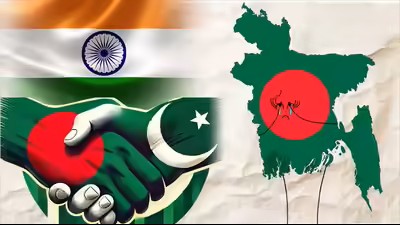
To understand the future, one must revisit the past. India played a decisive role in Bangladesh’s Liberation War in 1971. Since then, relations India-Bangladesh have evolved through multiple phases.
Phase 1: Post-1971 Solidarity
Immediately after independence, ties were warm and cooperative.
Phase 2: Periods of Strain
Political transitions in Bangladesh sometimes led to cooling ties, particularly over issues such as border management and river water sharing.
Phase 3: Strategic Partnership Under Hasina
Under Sheikh Hasina, relations India-Bangladesh entered a period of unprecedented collaboration. Key milestones included:
- The 2015 Land Boundary Agreement
- Enhanced security coordination
- Infrastructure connectivity projects
- Energy cooperation
The 2024 crisis temporarily disrupted this trajectory. However, history suggests that relations India Bangladesh are resilient and capable of recovery.
The Role of Tarique Rahman
The leadership of Tarique Rahman introduces a new variable into the equation. Known for his distinct political positioning, Rahman’s approach to foreign policy will shape the direction of relations India Bangladesh in the coming years.
Observers note that Rahman has expressed interest in economic growth and regional integration. If this vision translates into policy, relations India-Bangladesh could witness renewed momentum.
However, skepticism remains. Political rhetoric during opposition years does not always translate into pragmatic governance. The true test will lie in policy continuity—particularly in security cooperation and economic agreements.
Economic Interdependence: A Strong Foundation
Economic ties form the backbone of relations India Bangladesh. Bangladesh is one of India’s largest trading partners in South Asia. Bilateral trade has grown exponentially over the past decade.
Key areas of cooperation include:
- Textiles and garments
- Pharmaceuticals
- Energy supply
- Infrastructure development
Indian investments in Bangladesh’s power and transport sectors have strengthened mutual dependency. This economic interdependence acts as a stabilizing factor for relations India Bangladesh, regardless of political changes.
Connectivity and Infrastructure
Connectivity projects symbolize trust and long-term partnership. Rail links like the Maitree Express and cross-border bus services have improved mobility.
Energy pipelines and power grid interconnections further deepen integration. These initiatives ensure that relations India-Bangladesh are not merely political—they are structural and institutional.
If the new Bangladeshi government continues these projects, it will reinforce stability in relations India Bangladesh.

Security and Border Management
Border security is a sensitive aspect of bilateral ties. Cooperation on counter-terrorism and anti-smuggling operations significantly improved in the past decade.
The 4,000-kilometer border requires constant coordination. Effective collaboration ensures that relations India Bangladesh remain stable even amid domestic political transitions.
If both governments prioritize security dialogue, relations India Bangladesh can avoid past misunderstandings.
Water Sharing and River Diplomacy
Water-sharing agreements, particularly concerning the Teesta River, have long influenced relations India Bangladesh. Although progress has been slow, dialogue has continued.
The new administration in Dhaka may push for renewed negotiations. India’s response will be critical in shaping public perception in Bangladesh and strengthening relations India Bangladesh.
Regional and Global Context
South Asia’s geopolitical landscape is evolving. China’s expanding influence in the region adds another layer to bilateral calculations.
For India, maintaining strong relations India Bangladesh is strategically essential to counterbalance external influence. For Bangladesh, balanced diplomacy ensures economic opportunities from multiple partners.
The 2024 crisis momentarily disrupted equilibrium, but the restoration of visa services signals India’s proactive approach to repairing relations India Bangladesh.

People-to-People Ties: The Emotional Connect
Cultural affinity and linguistic connections bind the two nations deeply. Festivals, cinema, literature, and family connections strengthen relations India Bangladesh beyond official diplomacy.
The reopening of visa services revitalizes these human connections. Strong people-to-people ties often act as a cushion during political turbulence, sustaining relations India Bangladesh at the grassroots level.
Challenges Ahead
Despite positive signals, challenges remain:
- Political polarization in Bangladesh
- Border incidents
- Trade imbalances
- Water-sharing disputes
Addressing these issues transparently will determine whether relations India Bangladesh truly improve after the crisis.
Signs of Optimism
Recent diplomatic communications indicate cautious optimism. High-level engagements are expected in the coming months.
India’s swift move to normalize visa operations demonstrates confidence in the new government. Such gestures reinforce the idea that relations India Bangladesh are built on long-term interests rather than individual leaders.
The Road Ahead
Looking forward, the trajectory of relations India Bangladesh will depend on:
- Policy continuity under Tarique Rahman
- Sustained economic collaboration
- Constructive dialogue on contentious issues
- Regional strategic alignment
If both nations prioritize mutual benefit over political differences, relations India Bangladesh could emerge stronger than before.
Conclusion: A Relationship Tested, Not Broken
The 2024 crisis was a test of resilience. While the collapse of Sheikh Hasina’s government introduced uncertainty, it did not sever bilateral foundations.
With India restoring visa services and the new Bangladeshi leadership signaling openness, there is genuine potential for improvement.
Ultimately, the future of relations India Bangladesh will not depend solely on political leadership but on shared economic interests, cultural bonds, and strategic imperatives.
The coming years will reveal whether this period becomes a temporary disruption or the beginning of a renewed chapter. What remains clear is that relations India Bangladesh are too significant—economically, strategically, and culturally—to falter permanently.
Read More latest news