
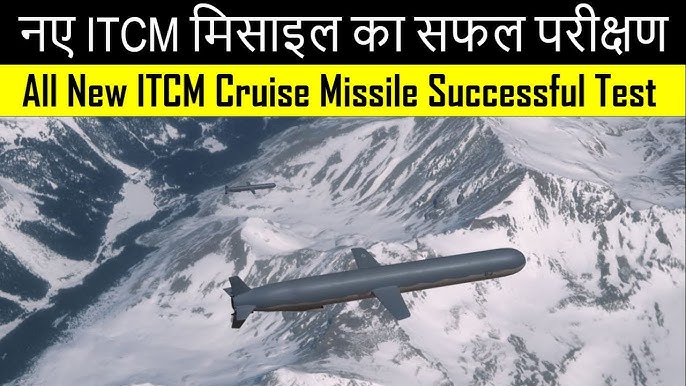
India’s New ITCM Missile: DRDO and Navy Gear Up for a BrahMos-like Test by Year-End
Introduction
New ITCM Missile, India is steadily marching forward in its quest for defense self-reliance. One of the most anticipated developments in 2025 is the testing of the Indigenous Technology Cruise Missile (IT-CM), a next-generation cruise missile being developed jointly by the Defence Research and Development Organisation (DRDO) and the Indian Navy. According to defense sources, the missile will undergo a crucial flight test before the end of this year.
The ITCM is being described as a potential game-changer for India’s missile arsenal, with capabilities similar to the BrahMos supersonic cruise missile. Its success will mark another milestone in India’s efforts to indigenize advanced weaponry, reduce foreign dependency, and prepare for modern warfare challenges.
This blog explores the IT-CM program in depth — its features, significance, comparisons with BrahMos, strategic implications, and what it means for India’s defense and global standing.
The ITCM Project: An Overview
The Indigenous Technology Cruise Missile (IT-CM) is a long-range cruise missile program launched by DRDO to enhance India’s offensive strike capabilities. It is being developed as part of India’s wider mission of Atmanirbhar Bharat (self-reliant India) in defense technologies.
Key Features (as reported so far):
- Range: Estimated to be between 800 km to 1,000 km.
- Propulsion: Powered by India’s indigenously developed small turbofan engine Manik (STFE).
- Speed: Expected to operate at subsonic speeds, with possible upgrades for higher speeds in later versions.
- Guidance System: Likely to feature advanced navigation technologies including INS/GPS and terrain-following radar.
- Launch Platforms: Designed to be launched from land, sea, and possibly submarines in the future.
If successful, IT-CM would place India in an elite group of nations that have developed indigenous cruise missile technology with advanced propulsion systems.
Why ITCM is Being Compared to BrahMos
The BrahMos missile, developed jointly with Russia, is one of India’s proudest defense achievements. With a range of 450–500 km (being extended to 800 km), it is a supersonic cruise missile known for its accuracy, versatility, and speed (Mach 2.8–3.0).
Similarities with BrahMos:
- Both are cruise missiles meant for precision strikes.
- Both can be launched from multiple platforms (land and naval).
- Both are designed for high survivability against enemy defenses.
Differences:
- BrahMos is supersonic; ITCM is expected to be subsonic in the first version.
- BrahMos is a joint venture with Russia, whereas IT-CM is 100% indigenous.
- BrahMos has already been inducted into all three services; ITCM is still under development.
Thus, ITCM is not a competitor to BrahMos but rather a complementary system that will expand India’s missile strike options.
Indigenous Technology: The Manik Turbofan Engine
One of the highlights of IT-CM is its indigenous propulsion system. The Manik small turbofan engine, designed and developed in India, is expected to power the missile.
Why this is significant:
- India will no longer depend on Russian or Western engines for cruise missiles.
- It gives India flexibility to improve and upgrade the missile independently.
- It reduces long-term costs and boosts local defense manufacturing.
If ITCM’s engine proves successful, it will pave the way for future missile systems and even UAVs powered by the same technology.
DRDO and Indian Navy’s Role
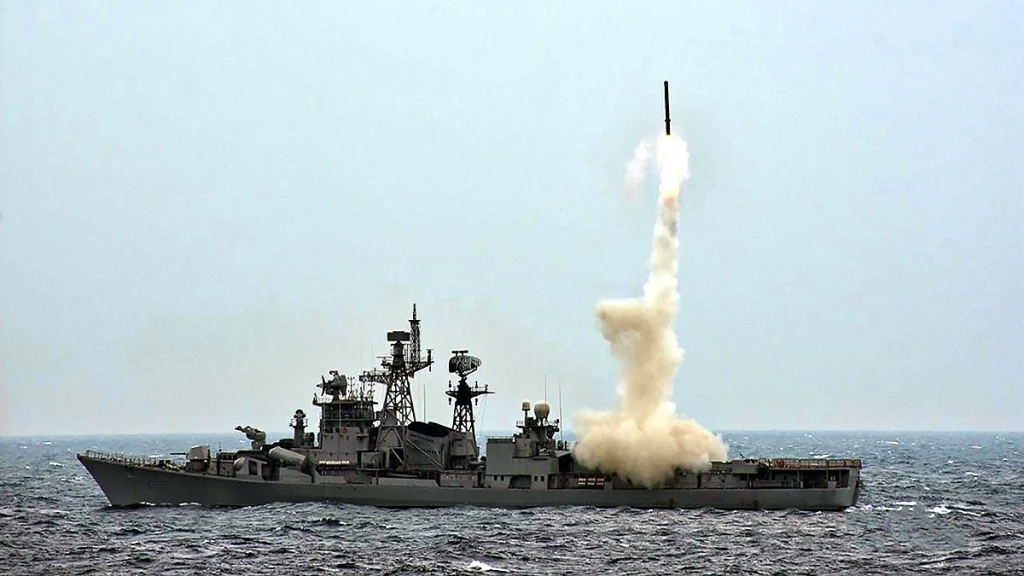
The ITCM project is a joint initiative between DRDO’s Aeronautical Development Establishment (ADE) and the Indian Navy.
- DRDO is responsible for design, development, and testing.
- Indian Navy is the primary stakeholder for deployment, as it will strengthen India’s maritime strike capabilities.
- Other services (Army and Air Force) may adopt IT-CM in later stages depending on mission requirements.
By integrating ITCM into naval warfare strategies, India will significantly enhance its ability to dominate in the Indian Ocean Region (IOR).
Strategic Importance of ITCM
1. Strengthening Deterrence Against Adversaries
With two nuclear-armed neighbors — Pakistan and China — India faces complex security challenges. A long-range cruise missile like ITCM gives India the ability to launch precise strikes on strategic assets deep inside enemy territory without crossing borders.
2. Complementing Existing Arsenal
India already has BrahMos, Agni ballistic missiles, and Prithvi systems. The addition of IT-CM adds another dimension — a long-range, precision-guided cruise missile with flexible launch options.
3. Boosting Indigenous Capabilities
Developing ITCM indigenously reduces dependency on foreign suppliers, especially critical in times of war when imports may be restricted.
4. Strengthening Maritime Dominance
The Indian Navy’s focus is on countering China’s growing presence in the Indian Ocean. ITCM will provide additional strike power to Indian warships, enhancing blue-water capabilities.
ITCM and India’s Defense Ecosystem
The missile fits into India’s larger defense modernization plans, which include:
- Increasing reliance on indigenous systems under Make in India.
- Building a layered missile defense network.
- Developing advanced technologies like hypersonic missiles (with Russia’s help in BrahMos-II).
- Expanding India’s export potential for defense equipment.
If ITCM is successful, it could also become an export product in the future, much like BrahMos, which has already been sold to the Philippines.
Challenges in ITCM Development
Like any indigenous defense project, ITCM faces hurdles:
- Propulsion Reliability – The Manik engine must prove its reliability over multiple tests.
- Accuracy and Guidance Systems – Cruise missiles rely on precise navigation; errors can reduce effectiveness.
- Funding and Time Delays – Defense projects often face delays and cost overruns.
- Comparison with BrahMos – Expectations are high, and comparisons may overshadow ITCM’s true potential as a complementary system.
Global Context: How ITCM Positions India
Globally, cruise missiles are an essential part of modern warfare. The US has the Tomahawk, Russia has Kalibr, and China has the CJ-10. With ITCM, India enters this elite group with a fully indigenous system.
This strengthens India’s image as a defense innovator and opens possibilities for collaborations with friendly nations.
Looking Ahead: The Roadmap
- 2025: Planned test of ITCM by DRDO and Navy.
- Post-Test: Multiple rounds of trials to validate performance.
- 2026–27: Possible induction into the Indian Navy and later expansion to other services.
- Upgrades: Potential for supersonic or hypersonic variants in the future.
The ITCM program is not just about one missile — it is about building the foundation for future indigenous missile technologies.
Conclusion
The upcoming test of the Indigenous Technology Cruise Missile (ITCM) marks a crucial step in India’s journey toward defense self-reliance. With capabilities comparable to the world’s best, ITCM will not replace BrahMos but will complement it, offering India a broader set of strategic tools.
For the Indian Navy, ITCM could prove to be a decisive weapon in the Indo-Pacific theater. For DRDO, it is proof of India’s growing technological confidence. And for the nation, it is a moment of pride, symbolizing India’s determination to safeguard its sovereignty with indigenous power.
As the year progresses, all eyes will be on DRDO and the Indian Navy to see if ITCM delivers on its promise. If successful, India will not only add another feather to its defense cap but also take a bold step towards a future of self-reliant, cutting-edge military technology.
Read more latest news

