
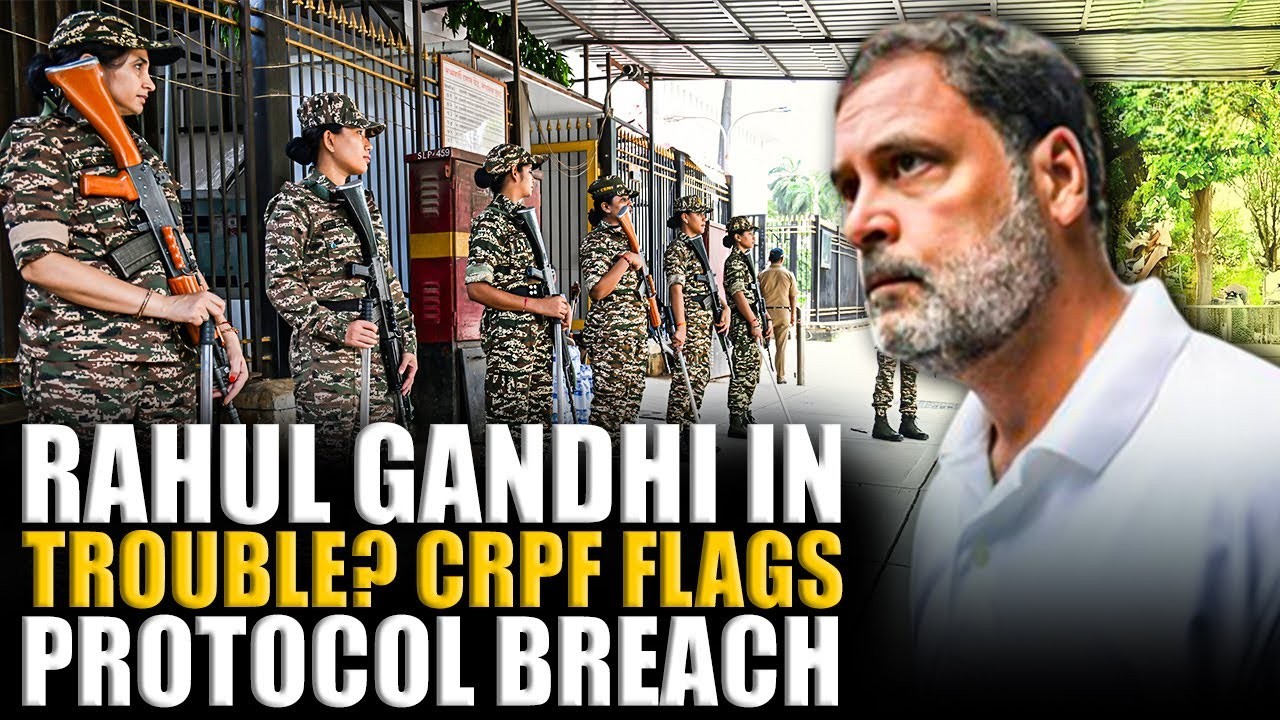
What is the Yellow Book, Whose Rules Rahul Gandhi is in the News for Not Following?
Introduction
In Indian politics, Yellow Book controversies rarely stay limited to the Lok Sabha or television debates—they often spill into public discourse, grabbing headlines for days. The most recent name making the rounds is Rahul Gandhi, leader of the Congress party and one of the most prominent figures of the opposition. This time, however, the issue is not his speeches, campaigns, or sharp attacks on the government—it is about something called the “Yellow Book.”
According to reports, Rahul Gandhi has been accused of not following the rules laid down in the Yellow Book, sparking debates in political circles, media discussions, and social media chatter. But what exactly is this Yellow Book? Why is it important? And why does non-compliance with its rules matter in a democratic setup like India?
This blog takes you deep into the subject, explaining the origins, purpose, and functioning of the Yellow Book, analyzing why Rahul Gandhi’s alleged violation has become news, and reflecting on its implications for governance, parliamentary conduct, and political accountability.
What is the Yellow Book?
The “Yellow Book” is not a fictional creation or a random government document. In the context of Indian parliamentary democracy, the term refers to the Parliamentary Procedure and Conduct Guidelines, a set of detailed rules, conventions, and instructions that guide Members of Parliament (MPs) on how to conduct themselves inside and outside the House.
It is colloquially called the “Yellow Book” because of its distinctive cover design when first published decades ago. Over time, the phrase became shorthand for the rulebook of parliamentary conduct, much like how the “blue book” is associated with diplomatic protocols.
Key Features of the Yellow Book:
- Guidelines for MPs’ Conduct – It outlines how MPs should behave during debates, speeches, and interactions.
- Ethical Standards – MPs are expected to maintain dignity, avoid unparliamentary language, and respect the Chair’s authority.
- Attendance and Discipline – The book prescribes attendance norms, voting responsibilities, and rules for committee participation.
- Use of Parliamentary Privileges – MPs enjoy privileges, but the Yellow Book clarifies the boundaries of those privileges.
- Travel and Foreign Visits – Rules about MPs’ official and personal foreign trips, permissions required, and disclosures to be made.
- Conflict of Interest – MPs must declare business interests or financial involvements that may clash with their duties.
Historical Background of the Yellow Book
The roots of the Yellow Book go back to the early years after India’s independence. When the first Lok Sabha convened in 1952, there was a need to establish norms for smooth parliamentary functioning. The Rules Committee of Parliament worked on detailed procedures, combining Westminster traditions with India’s unique democratic needs.
- 1950s – The first set of parliamentary conduct guidelines were prepared.
- 1960s–70s – These were compiled, revised, and reissued, gaining the nickname “Yellow Book.”
- 1990s onwards – As politics grew more aggressive and coalition governments became common, the Yellow Book became more frequently cited.
- 21st century – With the rise of live television coverage and social media, adherence to parliamentary norms became not just a constitutional matter but also a public image issue.
Thus, the Yellow Book is not just a technical manual—it is a moral compass for MPs, shaping how democracy is practiced in India’s most important institution.
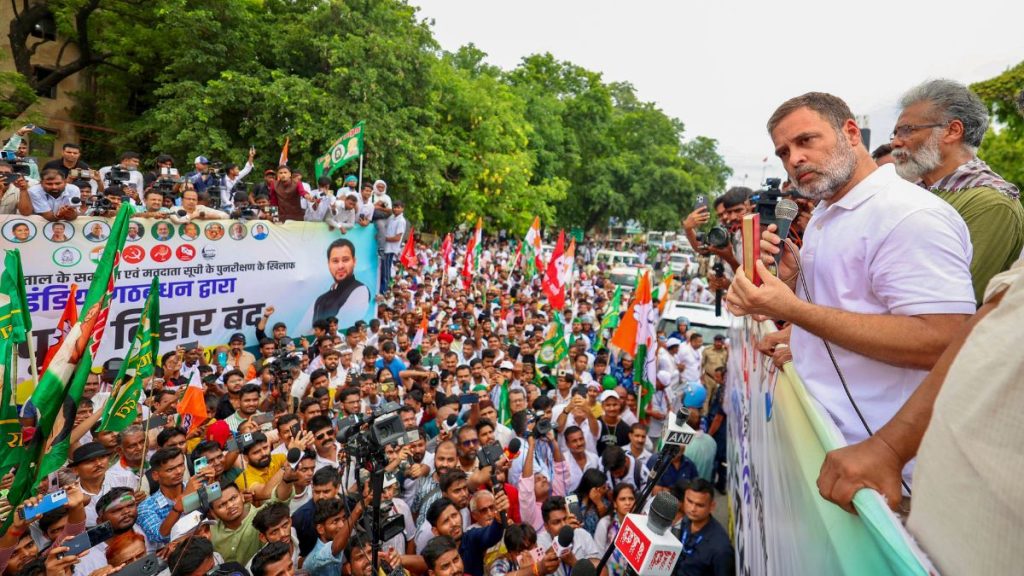
Rahul Gandhi and the Yellow Book Controversy
Now to the burning question: why is Rahul Gandhi in the news over this Yellow Book?
According to parliamentary insiders and media reports, Rahul Gandhi has been accused of violating certain guidelines of the Yellow Book. While details vary depending on political interpretation, the core issues revolve around:
- Parliamentary Decorum – His speeches in Lok Sabha often include sharp personal attacks, which ruling party members claim cross the limits of acceptable language.
- Foreign Visits and Statements – Rahul Gandhi’s remarks during foreign trips, particularly when he criticizes the government abroad, are being flagged as going against the Yellow Book norms. MPs are expected to uphold India’s dignity outside the country, irrespective of political disagreements.
- Disclosure Norms – Some critics allege that Rahul Gandhi has not been transparent about certain details of his international interactions and meetings.
- Defiance of the Chair – At times, Rahul Gandhi has continued speaking even after being asked to stop by the Speaker, which is considered a breach of parliamentary conduct.
These incidents have led to the charge that he is not following the Yellow Book, a phrase now being used in political debates to question his seriousness about parliamentary responsibilities.
Political Reactions
BJP’s Stand
The ruling BJP has been quick to seize upon the issue. Party leaders argue that Rahul Gandhi’s behavior is not just about personal style—it is about undermining parliamentary dignity. They claim that if a senior opposition leader disregards the Yellow Book, it sets a dangerous precedent.
Congress’s Defense
The Congress, on the other hand, insists that the Yellow Book is being selectively invoked to target Rahul Gandhi. According to the party, raising issues of governance, corruption, or democracy—even if strongly worded—cannot be equated with misconduct. They argue that dissent and criticism are part of democratic duty, not violations.
Neutral Observers
Political analysts note that both sides are exaggerating their positions. While Rahul Gandhi’s fiery style does test the limits of decorum, the ruling party also tends to use procedural rules to corner the opposition. The real question, they argue, is whether the Yellow Book is being used as a genuine guide or a political weapon.

The Broader Debate: Rulebook vs. Democracy
The controversy raises a fundamental question: should strict rule-following override the spirit of democracy?
- On one hand, rules like those in the Yellow Book are essential. Without them, parliamentary sessions could descend into chaos, making legislation impossible.
- On the other hand, excessive rigidity could stifle free speech and reduce Parliament to a controlled space where dissent is silenced.
Rahul Gandhi’s case falls exactly at this crossroads. His supporters see him as pushing boundaries to hold the government accountable. His critics see him as crossing lines that threaten democratic order.
Why the Yellow Book Matters
- Maintains Order in a Diverse House – With 543 Lok Sabha MPs and 245 Rajya Sabha MPs, India’s Parliament is a mini-India. Rules prevent chaos.
- Protects Minority Voices – Ironically, while it restricts speech, it also protects the opposition’s right to be heard, ensuring the majority cannot bulldoze debates.
- Public Accountability – Since parliamentary proceedings are broadcast live, MPs’ conduct directly shapes public trust in democracy.
- Sets Global Standards – India is the world’s largest democracy. Adherence to its parliamentary norms is watched by the global community.
Examples of Past Controversies Involving the Yellow Book
Rahul Gandhi is not the first leader to face allegations of disregarding parliamentary rules.
- Indira Gandhi (1970s) – Accused of misusing parliamentary privileges during the Emergency.
- Lalu Prasad Yadav (1990s) – Frequently pulled up for unruly behavior in the House.
- Arun Jaitley vs. Opposition (2016) – Heated debates during demonetization often touched on violations of conduct.
- Suspensions of MPs (2020s) – Several MPs have been suspended for storming into the Well of the House, tearing papers, or displaying placards—acts explicitly prohibited under the Yellow Book.
Thus, the Yellow Book has been at the heart of political battles for decades, and Rahul Gandhi is only the latest figure caught in its web.
The Symbolism of “Yellow”
Why yellow? The choice of color has an interesting backstory. In parliamentary tradition, colors are often used to distinguish manuals. The Indian parliamentary conduct guidelines were bound in yellow in the early editions, making them stand out from budget documents (often white/blue) and legal texts (green/red). Over time, “Yellow Book” became synonymous with parliamentary conduct rules, even if newer editions are printed differently.
Public Perception: Is Rahul Gandhi Right or Wrong?
Among the public, opinions are sharply divided:
- Supporters’ View – They argue that Rahul Gandhi’s bluntness is refreshing in an era of scripted politics. If his truth-telling breaks a few rules, so be it.
- Critics’ View – They believe a potential Prime Ministerial candidate should show greater respect for institutional norms. After all, rules exist to maintain order.
- Neutral Citizens – Many Indians are simply frustrated by constant disruptions in Parliament, whether by Rahul Gandhi or any other MP, as it wastes taxpayer money and delays important laws.
Implications for the Future
- Stricter Enforcement – If controversies continue, expect more MPs to face disciplinary actions.
- Revised Guidelines – There may be a push to modernize the Yellow Book to account for social media, live telecasts, and globalized politics.
- Impact on Rahul Gandhi’s Image – For his supporters, he looks fearless; for his detractors, reckless. This duality may shape his future as a national leader.
- Parliamentary Reform Debate – The controversy may reignite the discussion on how to balance discipline with democratic freedom.
Conclusion
The Yellow Book is not just a dry set of rules—it is the backbone of India’s parliamentary democracy. It ensures that amidst heated debates, ideological clashes, and political rivalries, the House remains a dignified forum for the people’s representatives.
Rahul Gandhi’s alleged violations of the Yellow Book have opened up a wider conversation: is he a leader challenging outdated norms, or a politician disregarding rules for political gain? The answer depends on one’s political standpoint. But what is undeniable is that the Yellow Book controversy has once again highlighted the delicate balance between rules and democracy, between order and freedom, between tradition and change.
As India moves forward, this debate will remain central to how its Parliament functions—and how leaders like Rahul Gandhi are judged in the court of public opinion.
Read more latest news

