
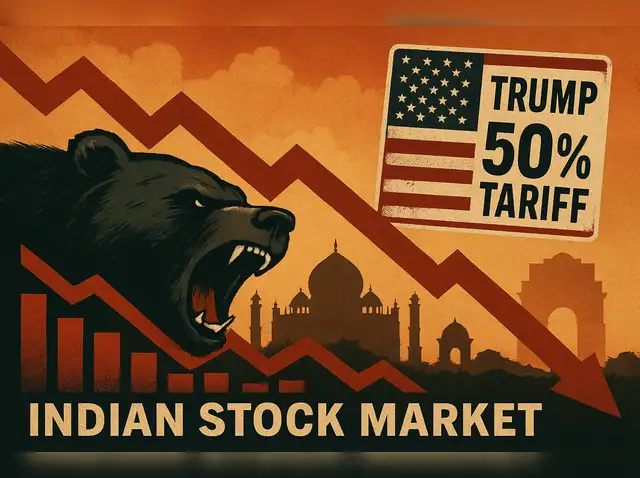
Trump’s Tariff Attack Shakes Indian Stock Market: Sensex Crashes 700 Points, Nifty Falls Over 200.
Introduction
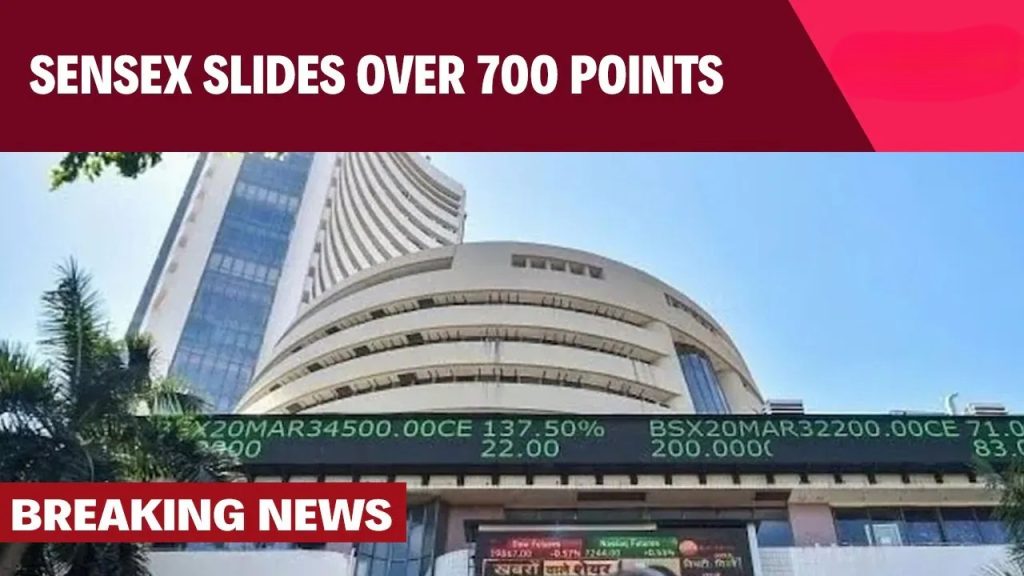
Stock Market The global economy has always been sensitive to policy announcements from the United States, particularly those concerning trade. In a fresh blow to international markets, Donald Trump’s latest tariff attack has sent shockwaves through the financial world. The immediate casualty was the Indian stock market, where the BSE Sensex plunged by nearly 700 points, while the Nifty 50 tanked over 200 points in a single trading session.
This sharp fall is not just about numbers—it reflects investor sentiment, market volatility, and the uncertainty surrounding global trade relations. Trump’s tariffs, aimed at protecting American industries, have once again ignited fears of a trade war escalation, and India’s markets, deeply interconnected with global flows, bore the brunt of this economic tremor.
In this detailed blog, we will analyze:
- The details of Trump’s tariff move.
- The immediate impact on the Sensex and Nifty.
- How various sectors of the Indian economy were affected.
- Expert opinions and investor reactions.
- Historical patterns of global tariff impacts on Indian markets.
- The road ahead for India amid tariff uncertainties.
What Triggered the Market Crash? – Trump’s Tariff Announcement
Donald Trump, known for his aggressive trade policies, announced fresh tariffs on imports from multiple countries, including China and India. The announcement came as part of his broader strategy to reduce the U.S. trade deficit and protect domestic manufacturers.
The tariffs—ranging from 25% to 50% on certain goods—sparked fears of a retaliatory trade war. Global markets reacted instantly:
- Asian markets tumbled.
- European indices opened in the red.
- U.S. futures signaled volatility.
For India, which exports IT services, pharmaceuticals, textiles, steel, and chemicals to the U.S., this announcement spelled trouble. The fear of declining exports, shrinking margins, and weakened investor sentiment translated into panic selling on Dalal Street.
Market Reaction – Sensex and Nifty Take a Beating
Sensex Performance
- The BSE Sensex opened 450 points lower and continued its downward trajectory.
- By afternoon, selling intensified, and the index touched an intraday low of 700 points, wiping out billions in market capitalization.
- Heavyweights like Reliance, TCS, Infosys, and HDFC Bank contributed significantly to the fall.
Nifty Performance
- The Nifty 50 fell over 200 points, breaking crucial support levels.
- Key sectors such as IT, banking, pharma, and metals dragged the index down.
- Market analysts warned that if panic continued, Nifty could face further downside pressure in the coming sessions.
Investor Sentiment
- FIIs (Foreign Institutional Investors) turned net sellers, pulling out money amid global uncertainty.
- DIIs (Domestic Institutional Investors) tried to cushion the fall but failed to offset the sell-off.
- Retail investors, already grappling with volatility, saw erosion in their portfolios, leading to panic exits.
Sectoral Impact – Who Got Hurt the Most?
1. Information Technology (IT)
- U.S. is the largest market for Indian IT services.
- Tariffs and trade tensions increase business uncertainty.
- Stocks like Infosys, TCS, and Wipro fell between 2–3%.
2. Pharmaceuticals
- The U.S. is a major destination for Indian generic drugs.
- Investors feared stricter U.S. trade policies could impact approvals and exports.
- Sun Pharma, Dr. Reddy’s, and Cipla witnessed selling pressure.
3. Metals and Steel
- Trump’s tariffs on steel imports directly impacted Indian companies.
- Tata Steel, JSW Steel, and Hindalco fell sharply.
4. Banking and Financials
- Banking stocks corrected due to overall market sentiment.
- HDFC, ICICI Bank, and SBI dragged indices down.
5. Automobile Sector
- Automakers fear rising input costs and reduced export competitiveness.
- Maruti Suzuki and Tata Motors registered notable declines.
Historical Context – Trump and Tariffs
This is not the first time Trump’s tariff policies rattled global markets. During his first presidency, similar tariff announcements against China and other nations triggered trade wars, leading to volatility in stock markets worldwide.
- 2018: Trump imposed tariffs on $50 billion worth of Chinese imports → global markets tumbled.
- 2019: Threats of tariffs on Mexico → Sensex fell by over 500 points.
- 2025 (current): Tariffs ranging up to 50% reignite fears of protectionism.
Indian markets, with their strong integration in global trade, have consistently reacted negatively to Trump’s tariff shocks.
Expert Opinions – Decoding the Fall
Market Analysts:
- Analysts from major brokerages said the correction was “a knee-jerk reaction” but warned of continued volatility.
- Many recommended a cautious approach and advised investors to stay defensive in sectors like FMCG and utilities.
Economists:
- Economists pointed out that India’s exports to the U.S. might face immediate headwinds.
- However, they also highlighted opportunities for India to diversify trade partnerships with Europe and Southeast Asia.
Government Sources:
- Indian officials downplayed panic, stating that India is resilient and negotiations with the U.S. are expected.
- The Commerce Ministry is reportedly preparing a strategy to protect exporters.
Global Ripple Effect – Beyond India
The tariff announcement not only hurt Indian indices but also had a domino effect:
- Asia: Nikkei (Japan) and Hang Seng (Hong Kong) fell sharply.
- Europe: London’s FTSE and Germany’s DAX opened lower.
- U.S.: Futures signaled volatility, with Dow Jones expected to correct.
This underlines how Trump’s policies impact global investor confidence, with India being one of the first to feel the shock.
Investor Stories – Fear vs. Opportunity
For retail investors, the sudden fall was unsettling:
- Small investors reported portfolio losses of 3–5% in a single day.
- Mutual fund investors saw NAV erosion across equity funds.
However, seasoned investors viewed this as an opportunity:
- “Every Trump tariff creates a buying opportunity,” said one veteran trader.
- Value investors pointed out that quality stocks at discounted prices could deliver strong returns in the long run.
Long-Term Implications for India
While short-term volatility is inevitable, the long-term picture depends on multiple factors:
- Trade Negotiations – If India can secure exemptions or favorable terms, the impact may be softened.
- Export Diversification – Shifting focus from U.S. to European, African, and Asian markets could reduce risks.
- Strengthening Domestic Demand – Boosting local consumption can help absorb shocks from export declines.
- Government Policies – Fiscal measures and stimulus packages can cushion exporters and safeguard industries.
How Should Investors React?
- Avoid Panic Selling – Market corrections are temporary, fundamentals matter in the long run.
- Stay Defensive – FMCG, healthcare, utilities are less exposed to tariffs.
- Use Volatility Wisely – For long-term investors, corrections offer entry points.
- Diversify Portfolios – Avoid over-dependence on IT, pharma, and metals.
- Track Global Cues – Stay informed on U.S.–India trade developments.
Political Angle – Trump vs. Modi Diplomacy
The tariff announcement also carries political undertones.
- Trump’s tariff nationalism caters to American voters but strains relations with allies.
- PM Modi, who has emphasized Atmanirbhar Bharat (self-reliant India), may use this moment to push for reduced dependency on U.S. trade.
- Diplomatic talks between India and the U.S. are expected, where India will defend the interests of its farmers, exporters, and industries.
Conclusion – A Crash, But Not the End
The fall of Sensex by 700 points and Nifty by over 200 points was indeed sharp, but it was not unprecedented. Trump’s tariff shocks have repeatedly unsettled markets, but recovery often follows once dust settles.
For India, the challenge lies in navigating global uncertainties while strengthening domestic resilience. For investors, it is a reminder that global politics can hit portfolios overnight—but also that opportunities often emerge from crises.
As the world watches Trump’s tariff war unfold, one thing is clear: the Indian stock market is deeply tied to global geopolitics. Today’s fall is a wake-up call for policymakers, investors, and businesses to prepare for an era where economics and politics are inseparably intertwined.
Read more latest news

