
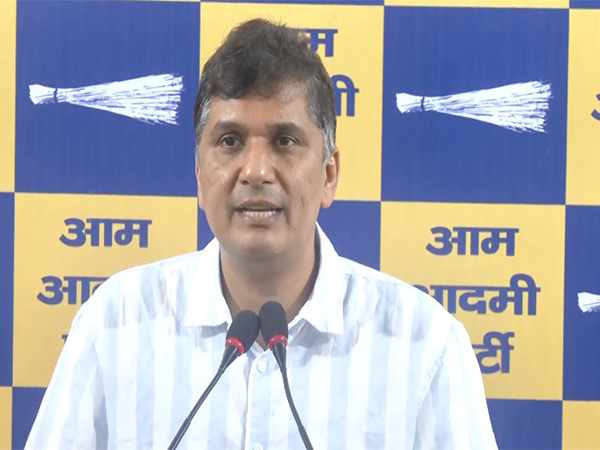
Saurabh Bhardwaj Slams BJP Over Malaria Surge and Waterlogging in Delhi: A Tale of Promises vs. Reality”
Introduction
Delhi, India’s capital city and administrative heart, once again finds itself submerged—literally and figuratively—under the weight of unfulfilled promises and rising health crises. At the center of this political storm is Saurabh Bhardwaj, former Health Minister and senior Aam Aadmi Party (AAP) leader, who launched a scathing attack on the Bharatiya Janata Party (BJP)-led Municipal Corporation of Delhi (MCD) over two pressing issues: unchecked waterlogging across key areas of the city and a spike in vector-borne diseases, especially malaria.
While the BJP had claimed that it had taken adequate steps to prevent waterlogging during the monsoon season, the ground reality in July and August 2025 tells a different tale. Major commercial and residential areas—such as Connaught Place (CP), Sadar Bazar, Karol Bagh, and Laxmi Nagar—have reported persistent water accumulation after even moderate rains. According to Bhardwaj, this water stagnation has become a breeding ground for mosquitoes, leading to a steep rise in malaria, dengue, and chikungunya cases.
In this blog, we will explore the details of Saurabh Bhardwaj’s criticism, the BJP’s counterclaims, and the public health implications of the worsening civic infrastructure in Delhi.
Saurabh Bhardwaj’s Allegations: A Point-by-Point Breakdown
Saurabh Bhardwaj At a recent press conference held at the AAP headquarters, Saurabh Bhardwaj delivered a sharp critique of the BJP-run MCD. His statement was not merely political mudslinging—it was backed with images, videos, and citizen complaints from across Delhi.
Here are the key highlights of his remarks:
1. Failure to Prevent Waterlogging
Bhardwaj pointed out that despite repeated assurances by BJP leaders that the city would remain flood-free during the 2025 monsoon, numerous areas faced severe waterlogging within the first two weeks of rain.
Quote:
“The BJP government had promised that this time there would be no waterlogging in Delhi. But just one rainfall was enough to expose the truth. CP, Sadar Bazar, Rajouri Garden, Laxmi Nagar—everywhere there was knee-deep water.”
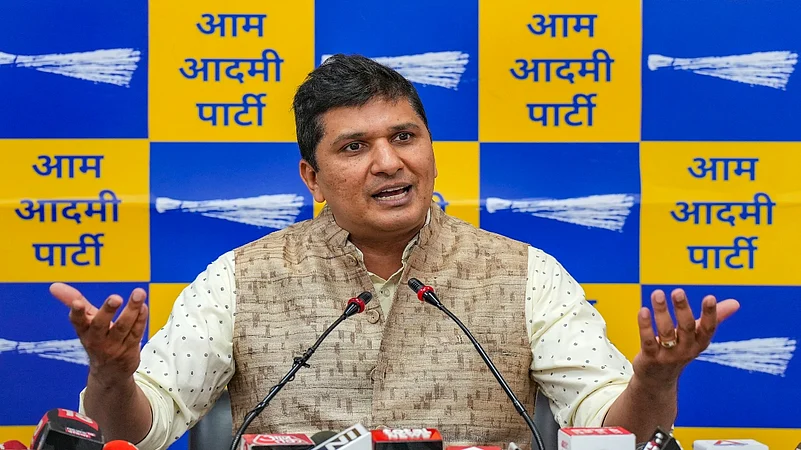
He accused the MCD of not desilting drains adequately and claimed that most of the pre-monsoon cleaning drives were only on paper.
2. Spike in Malaria and Vector-Borne Diseases
Citing data from government and private hospitals, Bhardwaj revealed that malaria cases in July 2025 were nearly double compared to the same period last year.
Quote:
“Every hospital is seeing a flood of fever patients. Doctors are confirming it’s mostly vector-borne illnesses. This is a health crisis and the BJP is pretending nothing has happened.”
He alleged that the MCD had deliberately underreported malaria cases to hide its inefficiency.
3. Lack of Transparency and Accountability
Bhardwaj further attacked the BJP for what he called “blame game politics,” saying that instead of accepting responsibility, the BJP was deflecting attention by pointing fingers at the AAP-led Delhi Government.
Quote:
“BJP is only interested in holding rallies and managing headlines. When it comes to real governance—cleaning drains, spraying anti-larvae medicine—they disappear.”
The Ground Reality: Visuals Tell the Story
Saurabh Bhardwaj Pictures and videos shared by residents across Delhi support Bhardwaj’s claims. Some of the worst-hit areas include:
- Connaught Place (CP): Video footage showed water gushing into shops and offices after just a few hours of rain.
- Sadar Bazar: India’s busiest wholesale market was virtually shut for two days due to waterlogging, leading to massive financial losses.
- Kalkaji and Sangam Vihar: Residents waded through waist-deep water, with broken roads and open manholes adding to the risk.
Social media became the voice of Delhiites, with hashtags like #WaterloggedDelhi, #MalariaCapital, and #MCDFailure trending for days.
BJP’s Response: Blame Game or Bureaucratic Reality? Saurabh Bhardwaj
In response to Bhardwaj’s charges, BJP leaders called the AAP’s attack “baseless and politically motivated.” Delhi BJP chief Virendra Sachdeva issued a counter-statement, claiming:
- The monsoon was heavier than anticipated, which overwhelmed existing infrastructure.
- The MCD had cleaned 80% of major drains before monsoon and was working around the clock to address complaints.
- Vector-control teams were active in all 12 zones of the city, spraying insecticides and fogging areas with high mosquito density.
Quote from BJP Spokesperson Harish Khurana:
“AAP has been ruling Delhi for a decade. What has their government done to improve health infrastructure or stormwater drains? Let them answer before pointing fingers.”
The BJP also accused AAP of neglecting Delhi Jal Board responsibilities, which directly impact waterlogging in unauthorised colonies.
A Deep Dive Into the Malaria Surge
Delhi records cases of vector-borne diseases every year, but 2025 is shaping up to be one of the worst in recent memory.
Hospital Data:
- AIIMS Delhi: 1,200+ cases of malaria and 950 dengue cases reported in July alone.
- Lok Nayak Hospital: 750+ vector-borne admissions, with 25 critical cases.
- Max and Fortis Hospitals: Combined report of over 3,000 outpatient consultations for fever, most malaria-positive.
Medical Experts’ Take:
Dr. Rajeev Kumar, a senior physician at RML Hospital, said:
“The combination of heavy water stagnation, poor waste management, and high humidity is creating a perfect storm for mosquito breeding. We need coordinated action—not political excuses.”
Political Stakes: More Than Just Rain and Mosquitoes
The spat between AAP and BJP is not just about water or disease—it reflects the larger battle for control of Delhi’s civic narrative ahead of the 2027 MCD and Assembly elections.
AAP’s Strategy:
- Position BJP as incompetent on civic issues
- Shift focus to public health and infrastructure failures
- Present Kejriwal-led Delhi Government as proactive (in contrast)
BJP’s Strategy:
- Deflect criticism by blaming “shared jurisdiction”
- Highlight AAP’s failures in education and hospital upgradation
- Use national influence to dominate Delhi’s municipal politics
Both parties are using local issues as a battleground for national optics. Waterlogging and malaria, though immediate, are just triggers for a wider political confrontation.
Citizens Caught in the Crossfire
While politicians trade barbs, Delhi’s residents bear the brunt.
Savitri Devi, a resident of Karol Bagh:
“My 7-year-old son is down with malaria. We’ve spent ₹15,000 already. The government is busy fighting each other while we are left helpless.”
Zeeshan Ahmed, a shopkeeper in Sadar Bazar:
“Rainwater entered my shop and destroyed stock worth lakhs. Who will compensate me? BJP says they cleaned the drains. Then why did this happen?”
The anger on the ground is real and growing, particularly in lower-income neighborhoods where medical access is limited and drain cleaning rarely reaches.
The Science of Waterlogging: Poor Urban Planning Exposed
Urban experts argue that Delhi’s waterlogging is a structural failure, not just a political one.
Causes:
- Encroachment over natural drainage systems
- Illegal construction blocking stormwater routes
- Poor maintenance of the city’s 1,400+ drains
- Delays in desilting tenders and budget approvals
Urban Planner Neeraj Kapoor commented:
“Every year, politicians promise to fix drains. But unless you overhaul the drainage blueprint and hold engineers accountable, this will repeat.”
Solutions: What Needs to Be Done (But Often Isn’t)
Experts recommend a 10-point civic health strategy for Delhi:
- Drain Mapping & GPS Monitoring of cleaning work
- Desilting Certification through third-party audits
- Real-Time Waterlogging Updates via apps like Safaigiri or MCD Connect
- School-Level Malaria Awareness Campaigns
- Medical Camps in High-Risk Zones
- Community-Level Larvae Check Teams
- 24/7 MCD Complaint Helpline
- Inter-departmental Task Force with Health + Urban Development + PWD
- Transparent Budget Reporting for monsoon preparedness
- Independent Citizen Committees to audit civic work
Some of these were implemented partially by the AAP government in previous years, but political tussles with the MCD often stalled their execution.
National Implications: A Capital’s Crisis is a Country’s Concern
As India’s capital, Delhi’s civic condition reflects on the entire nation. Foreign delegations, tourists, and businesses arriving in the city encounter the same flooded roads and healthcare chaos.
World Bank climate resilience report ranked Delhi among the top 10 Asian cities vulnerable to flood-related urban collapse. If corrective action isn’t taken soon, Delhi could face not just seasonal illness but a climate-induced urban health emergency.
Conclusion: A Flood of Questions, A Trickle of Answers
Saurabh Bhardwaj’s attack on the BJP government is more than a political jab—it’s a wake-up call. The monsoon may be seasonal, but the administrative rot is perennial. Whether it’s waterlogging or malaria, Delhi’s residents are being forced to survive in a city where accountability is as elusive as a mosquito in the dark.
The BJP, if serious, must move beyond excuses and show results—especially now that they control the MCD. AAP, on the other hand, must continue to act as a vigilant watchdog, but also ensure that its own departments are not negligent.
Ultimately, this is not about party vs. party. It’s about government vs. failure. And as the rains continue to pour, Delhiites deserve not just drainage but deliverance.
read more latest news


https://shorturl.fm/TXCVu