
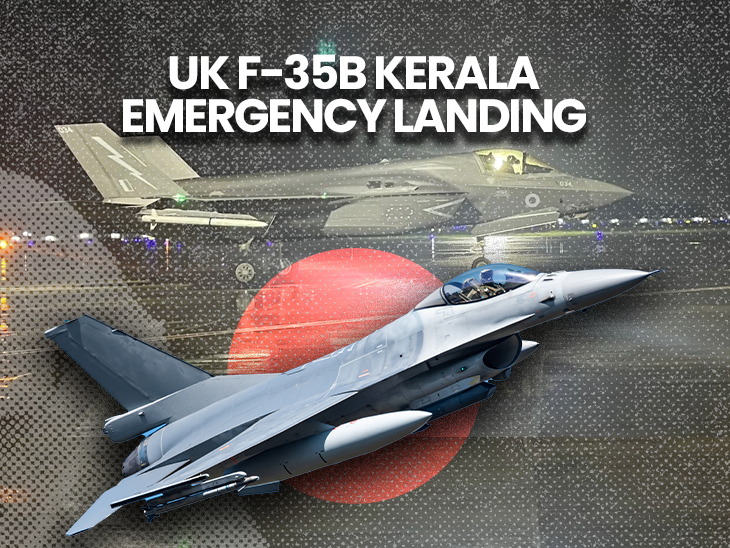
British Fighter Jet Grounded for 19 Days: Symbol of a Crumbling Empire?
Introduction: A Jet That Couldn’t Take Off
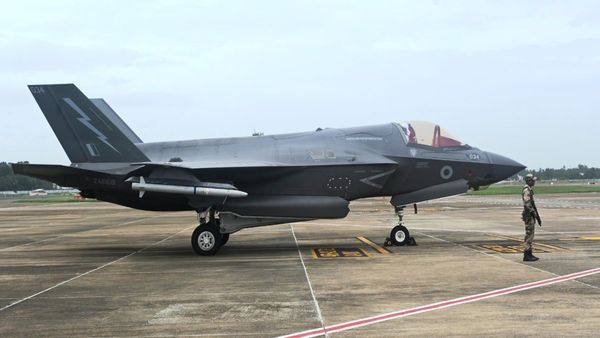
In a world where military prowess signifies not only power but also prestige, Britain’s recent failure to get a single fighter jet airborne for 19 days has stunned defense analysts, geopolitical observers, and military veterans alike. Once a global superpower that ruled the seas and skies, Britain’s Royal Air Force (RAF) now faces an embarrassing and symbolic setback.
The inability of one of its core fighter jets — reportedly the Eurofighter Typhoon or F-35B — to fly for nearly three weeks has triggered broader questions:
Is this just a technical hiccup?
Or does it reflect a deeper rot in the United Kingdom’s declining military capability and global influence?
This blog takes a comprehensive look at the incident, its implications, the current state of Britain’s defense sector, and whether this is indeed a sign that “Britain will go to pieces.”
The Incident: What Exactly Happened?
According to recent reports from defense sources and military insiders:
- One of the British Air Force’s frontline fighter jets was grounded for 19 straight days due to a combination of mechanical failures, lack of spare parts, and maintenance backlogs.
- This was not an isolated incident. Multiple jets in the fleet were reportedly in similar conditions, raising concerns about readiness, response time, and combat capabilities.
Though the British Ministry of Defence (MoD) has downplayed the event, calling it a “routine maintenance delay,” critics aren’t buying it.
Why 19 Days Matter in Modern Warfare
In an age where hypersonic missiles, drone swarms, and AI warfare are redefining combat speed, being grounded for 19 days is not just inconvenient — it’s catastrophic.
Here’s why:
- A modern fighter jet is supposed to fly at a moment’s notice, not sit idle for weeks.
- In real conflict scenarios, 19 days is more than enough time for an adversary to launch, strike, and retreat.
- Such a delay exposes vulnerabilities, especially when the UK is actively part of NATO, Ukraine support coalitions, and has ongoing commitments in Indo-Pacific deployments.
Technical Breakdown: What Went Wrong?
Experts have cited several technical reasons behind the prolonged grounding:
- Shortage of Spare Parts
The global supply chain crisis post-COVID and Brexit-induced customs delays have made it harder for RAF to source essential components. - Aging Maintenance Infrastructure
Many of Britain’s airbases and support systems are operating with outdated equipment and understaffed teams. - Budget Cuts
The UK defense budget, although sizable, has seen reallocations and reductions in maintenance, training, and logistics — directly impacting air fleet readiness. - Pilot Shortage
Several trained RAF pilots have either retired early or moved to the private sector, leaving many jets grounded not just due to mechanical issues, but also a lack of skilled operators.
Symbolism: A Jet That Represents Britain’s Fall?
Once hailed as a military empire, Britain now faces harsh scrutiny over its declining influence. The grounded jet is being seen as a symbolic representation of:
- Diminished global clout
- Internal mismanagement
- Overdependence on foreign tech
- Post-Brexit weakness
Some even argue that the grounded fighter jet is the new HMS Titanic — a modern embarrassment showcasing a once-great power’s unpreparedness.
Comparison: Where Does UK Stand Globally Now?
Let’s take a look at how Britain compares to other nations:
| Country | Combat Jet Readiness | Aircraft Modernization | Budget Stability |
|---|---|---|---|
| USA | High | Ongoing (F-22, F-35) | Stable |
| China | High | J-20, Stealth Drones | Expanding rapidly |
| India | Medium-High | Tejas Mk2, AMCA | Growing steadily |
| Russia | High (Pre-Ukraine) | Su-57, Hypersonic | War-impacted |
| UK | Low | Typhoon aging, F-35B slow | Declining |
This paints a grim picture for the UK. Its air power, once feared, now struggles to stay operational.
Political Fallout and Public Reaction
The incident has sparked outrage in Parliament and across British media:
- Opposition MPs have demanded an explanation from the Defence Secretary.
- Military veterans have called it a “national disgrace.”
- Public sentiment is shifting from pride to frustration — many question how their taxes fund an air force that can’t fly.
Trending UK hashtags:
- #GroundedJetScandal
- #RAFFail
- #BritainWillFall
- #UKMilitaryCrisis
- #EmpireInDecline
Defense Experts React: Britain in Trouble?
🔴 Colonel Richard Kemp (Retd.)
“This isn’t just about one jet. It’s about operational paralysis. If the RAF can’t fly, Britain can’t fight.”
🔴 Dr. Amanda Lewis, Military Analyst
“We’re seeing the consequences of over-politicization of defense. Too many promises, too little delivery.”
Geopolitical Implications
This event, seemingly small, has huge geopolitical consequences:
- NATO Readiness: Britain is a key player in NATO’s air defense strategy. Grounded jets weaken allied deterrence.
- Russia and China’s View: Adversaries may view this as a window of opportunity to push boundaries.
- India–UK Relations: Defense collaborations may suffer if India views Britain as an unreliable military partner.
- Brexit Aftershocks: Many defense supply chain issues are linked to Brexit-related border slowdowns.
Will Britain “Go to Pieces”?
The phrase “Britain will go to pieces” has been trending online and echoed in newspapers. But what does it really mean?
1. Military Pieces
Fragmented air capability, over-dependence on US military assets, low pilot availability.
2. Political Pieces
Scotland pushing for independence, Northern Ireland tensions post-Brexit, weak political leadership.
3. Economic Pieces
Inflation, public sector strikes, collapsing defense industries.
4. Global Standing
Once the ‘Great’ in Great Britain is slowly eroding — diplomatically, militarily, and economically.

What Needs to Change?
To prevent a further slide, experts suggest the UK should:
- Boost defense spending, especially in aircraft maintenance.
- Streamline spare parts procurement and reduce red tape.
- Retain and retrain pilots through incentive programs.
- Invest in next-gen fighters instead of relying solely on US-based F-35s.
- Rebuild local defense manufacturing, especially post-Brexit.
Conclusion: One Jet, A Nation’s Wake-Up Call
While it’s tempting to dismiss the grounded fighter jet as a “small issue,” in the world of high-stakes defense, such delays can be catastrophic. More importantly, they are symptoms of systemic weakness — not just in hardware, but in national priorities.
If the UK doesn’t act now, “Britain will go to pieces” may no longer be just an angry slogan or a viral hashtag. It could become a historical reality — a nation that once ruled the skies, now grounded by its own neglect.
Read more latest news

