
IMF Gives Funds to Pakistan: $1.3 Billion Relief Package Offers Economic Lifeline Amid Deep Financial Crisis
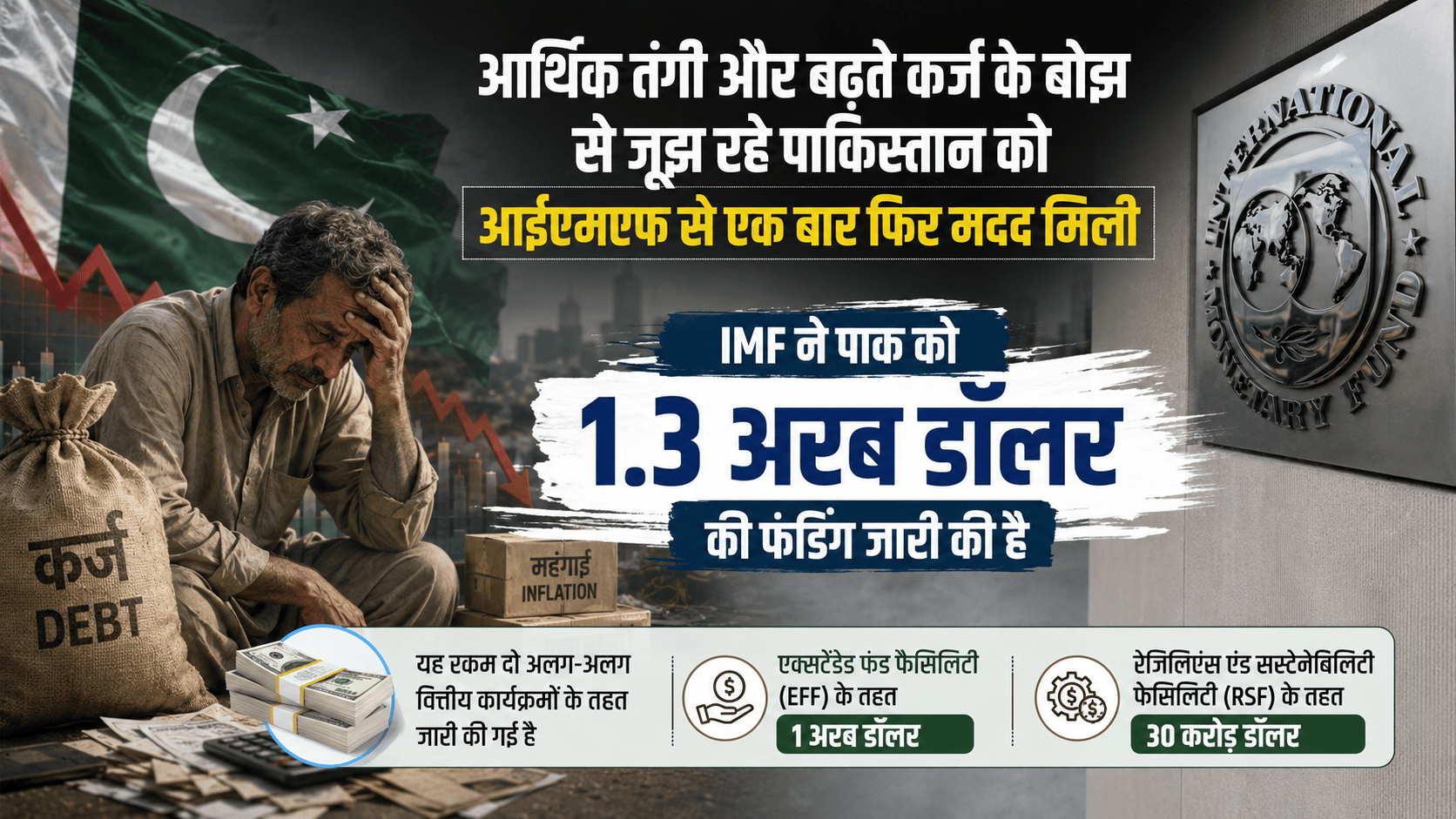
According to official reports, IMF gives funds to Pakistan worth a total of $1.3 billion under two separate financial support programs. This latest financial package is being seen as a significant step toward stabilizing Pakistan’s fragile economy and avoiding a deeper economic collapse.
Pakistan, which has been struggling with severe economic challenges, rising inflation, and mounting foreign debt, has once again received major financial assistance from the International Monetary Fund (IMF gives funds to Pakistan).
The fresh assistance comes at a time when Pakistan is facing one of the toughest financial periods in its modern history. High inflation, declining foreign exchange reserves, political instability, and increasing debt obligations have severely weakened the country’s economy over the past few years. Experts believe the latest IMF support could provide temporary relief, but long-term economic reforms will still be necessary.
The announcement that IMF gives funds to Pakistan has immediately become a major topic of discussion across South Asia and global financial circles. Economists, political analysts, and international observers are now closely watching how Pakistan will utilize these funds.
Pakistan Economic Crisis Deepens
Pakistan’s economy has been under intense pressure due to multiple internal and external factors. Rising oil prices, political instability, declining exports, and weakening currency reserves have all contributed to the current crisis. The country has struggled to maintain adequate foreign exchange reserves needed to pay for imports and debt repayments.
Inflation in Pakistan has reached alarming levels in recent years. Essential commodities including flour, electricity, fuel, and medicines have become increasingly expensive for ordinary citizens. The Pakistani rupee has also witnessed significant depreciation against the US dollar, further increasing the cost of imports.
Against this backdrop, IMF gives funds to Pakistan as part of broader efforts to prevent economic instability from worsening. Analysts say the financial support may help Pakistan stabilize its currency and maintain critical imports for the short term.
Details of the $1.3 Billion IMF Assistance
According to financial reports, the International Monetary Fund released the funds under two separate lending arrangements. One portion of the package comes through Pakistan’s ongoing stabilization program, while another part is linked to climate resilience and economic reform initiatives.
The total amount of $1.3 billion is expected to support Pakistan’s balance of payments, improve foreign currency reserves, and restore investor confidence in the economy. Officials in Islamabad welcomed the decision and described it as a positive signal for global financial markets.
The statement that IMF gives funds to Pakistan has also reassured international lenders and investors who were concerned about the possibility of sovereign default. Pakistan had been negotiating with international institutions for months to secure emergency financial support.
Why Pakistan Needed IMF Assistance
Pakistan’s debt burden has increased sharply over the last decade. The country owes billions of dollars to international lenders, including China, the World Bank, Gulf nations, and private creditors. At the same time, export growth has remained weak, limiting Pakistan’s ability to generate foreign exchange.
Frequent political instability has further complicated economic policymaking. Changes in government, protests, and tensions between political parties have slowed down reforms and weakened investor confidence.
Because of these conditions, IMF gives funds to Pakistan to ensure that the country can continue meeting its international payment obligations. Without external assistance, Pakistan risked facing a serious balance-of-payments crisis.
Experts say that IMF support often acts as a confidence-building measure for international markets. Once the IMF approves funding, other global lenders and investors usually become more willing to provide additional support.
Conditions Attached to IMF Funding
Although IMF assistance provides immediate financial relief, it also comes with strict economic conditions. Pakistan is expected to implement reforms aimed at improving tax collection, reducing government spending, and strengthening financial transparency.
The International Monetary Fund has repeatedly urged Pakistan to broaden its tax base and reduce subsidies that burden public finances. Energy sector reforms and efforts to reduce fiscal deficits are also part of the IMF’s expectations.
Critics argue that IMF-backed reforms often lead to higher utility prices and increased economic hardship for ordinary citizens. However, supporters believe these measures are necessary for long-term financial stability.
As IMF gives funds to Pakistan, the government now faces the difficult challenge of balancing economic reforms with public expectations.
Political Reactions Inside Pakistan
The announcement that IMF gives funds to Pakistan has triggered mixed reactions across the country’s political landscape. Government officials have described the funding as evidence that international institutions still trust Pakistan’s economic recovery efforts.
Supporters of the government argue that the IMF package will help stabilize the economy and reduce immediate financial pressures. They believe the funding will restore investor confidence and improve Pakistan’s international image.
However, opposition parties have criticized the government for relying too heavily on foreign loans. Some political leaders argue that repeated IMF programs indicate structural weaknesses in Pakistan’s economy and failure of domestic economic management.
Public opinion also remains divided. While many citizens recognize the need for emergency funding, others worry that IMF conditions could lead to additional inflation and rising living costs.
Impact on Ordinary Citizens
For ordinary Pakistanis, economic hardship has become part of daily life. Rising food prices, expensive electricity bills, and unemployment have created significant financial pressure on families across the country.
Many people hope that because IMF gives funds to Pakistan, the government will be able to stabilize prices and improve economic conditions. However, economists caution that immediate relief for citizens may be limited because IMF programs generally focus on macroeconomic stabilization rather than direct welfare support.
The Pakistani middle class has been particularly affected by inflation. Small businesses are also struggling due to reduced consumer spending and rising operational costs.
If the IMF-backed reforms succeed, Pakistan could gradually achieve economic stabilization over the next few years. However, the process is expected to remain politically and socially challenging.
Pakistan’s Foreign Exchange Reserves
One of Pakistan’s biggest economic concerns has been the sharp decline in foreign exchange reserves. At one point, reserves had fallen to levels that could cover only a few weeks of imports.
This situation raised fears of a potential default similar to what some other financially troubled countries have experienced in recent years. The fact that IMF gives funds to Pakistan has reduced immediate fears of such a crisis.
The new funding is expected to strengthen the State Bank of Pakistan’s reserves and improve the country’s ability to manage external debt obligations. Financial experts believe this could temporarily stabilize the Pakistani rupee against the US dollar.
However, analysts warn that sustainable recovery will depend on increasing exports, attracting foreign investment, and implementing deeper economic reforms.
International Community’s Response
The international financial community has welcomed the IMF’s decision to support Pakistan. Several global institutions view Pakistan’s stability as important for regional economic and geopolitical balance in South Asia.
Countries with close economic ties to Pakistan are also monitoring developments carefully. China, Saudi Arabia, and the United Arab Emirates have previously provided financial support to Pakistan during periods of economic stress.
As IMF gives funds to Pakistan, global markets are watching whether the country can successfully implement reforms and maintain political stability.
International analysts believe Pakistan’s economic recovery will require cooperation between political leaders, financial institutions, and global partners.
Challenges Still Remain
Despite receiving fresh IMF assistance, Pakistan continues to face major economic challenges. Inflation remains high, unemployment is rising, and industrial growth has slowed considerably.
Political uncertainty also remains a major concern. Frequent political tensions can delay economic reforms and discourage investors from committing long-term capital.
The energy sector continues to place pressure on public finances due to subsidy burdens and operational inefficiencies. Additionally, climate-related disasters such as floods have caused billions of dollars in damage to infrastructure and agriculture in recent years.
Even though IMF gives funds to Pakistan, experts emphasize that external borrowing alone cannot solve the country’s structural economic problems.
The Importance of Economic Reforms
Economists believe Pakistan now has a critical opportunity to implement long-term reforms that could reduce dependence on repeated IMF bailouts. Improving tax collection, supporting exports, modernizing industries, and encouraging foreign investment are considered essential steps.
Pakistan also needs stronger governance, political stability, and consistent economic planning to achieve sustainable growth. Without reforms, the country could continue facing recurring financial crises in the future.
Many experts argue that IMF programs should be viewed as temporary support mechanisms rather than permanent solutions. The latest announcement that IMF gives funds to Pakistan highlights the urgent need for structural economic transformation.
Future Outlook for Pakistan
The immediate future of Pakistan’s economy will largely depend on how effectively the government uses the new IMF funds. Proper financial management and successful implementation of reforms could improve investor confidence and stabilize the economy.
However, failure to meet IMF conditions could create additional challenges and potentially delay future financial support. Pakistan’s leadership now faces enormous pressure to deliver economic stability while protecting vulnerable citizens from excessive hardship.
The phrase IMF gives funds to Pakistan is now dominating headlines across international media because the decision represents far more than just financial assistance. It symbolizes another crucial moment in Pakistan’s long struggle with debt, inflation, and economic instability.
Conclusion
The decision by the International Monetary Fund to release $1.3 billion in assistance marks a major development for Pakistan’s struggling economy. At a time when the country is facing rising debt, inflation, and political uncertainty, IMF gives funds to Pakistan as a temporary economic lifeline.
The funding is expected to strengthen foreign exchange reserves, support financial stability, and restore some confidence in international markets. However, the road ahead remains difficult. Pakistan must now implement meaningful economic reforms, improve governance, and create sustainable growth opportunities.
While IMF gives funds to Pakistan may provide short-term relief, long-term economic recovery will depend on disciplined policymaking and political stability. The coming months will determine whether Pakistan can use this opportunity to move toward economic recovery or continue facing recurring financial crises.
read more latest news

