

Gold and Silver Prices Fall Despite US–Iran War: Why Bullion Became Cheaper
Gold and silver prices The global financial market has been experiencing significant volatility due to rising geopolitical tensions, particularly the conflict between the United States and Iran. Traditionally, during wars or global crises, investors move toward safe-haven assets such as gold and silver. However, the current situation has surprised many investors and analysts because Gold and silver prices have actually declined despite the geopolitical instability.
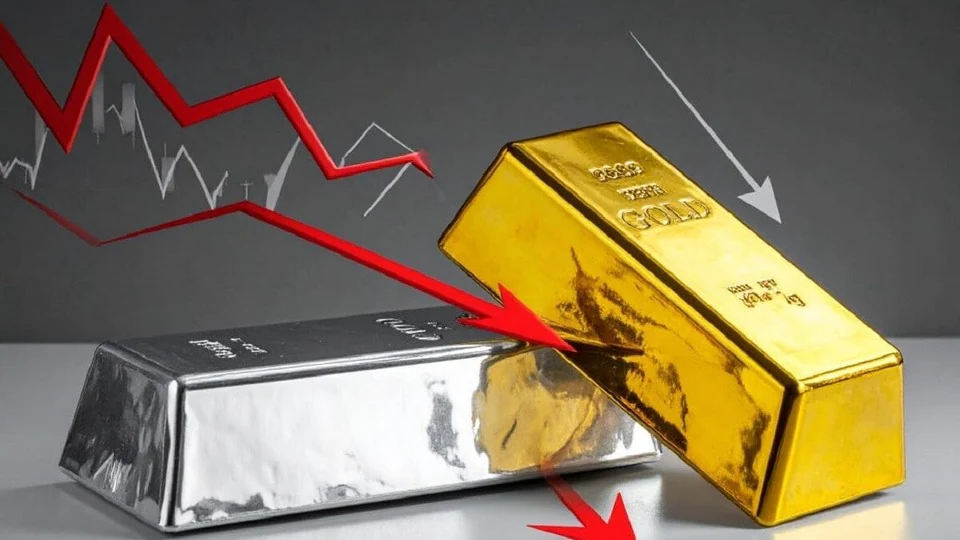
In recent weeks, Gold and silver prices have dropped sharply. Reports indicate that gold has become cheaper by more than ₹23,000 per kilogram during the ongoing conflict, while silver has fallen by nearly ₹1.60 lakh from its earlier peak. The decline in Gold and silver prices has sparked widespread discussion among economists, traders, and investors trying to understand why precious metals are moving in the opposite direction of expectations.
This blog explains the key reasons behind the fall in Gold and silver prices, the global factors influencing bullion markets, and what this means for investors.
Global Market Reaction to the US Iran Conflict
The conflict between the United States and Iran has disrupted global energy supply routes, particularly around the Strait of Hormuz. Normally, such geopolitical risks increase demand for safe-haven assets like gold. However, despite the tensions, Gold-silver prices have moved downward rather than upward.
Financial markets across the world have experienced major fluctuations due to the conflict. Stock markets, oil prices, currencies, and commodities have all reacted sharply to the evolving situation. Even though geopolitical tensions typically boost demand for bullion, this time several economic factors have counterbalanced that effect, causing Gold and silver prices to fall instead.
Strong US Dollar Impact
One of the most important reasons behind the decline in Gold-silver prices is the strength of the US dollar. During global uncertainty, investors often move their money into the dollar as a safe currency.
When the dollar becomes stronger, commodities priced in dollars become more expensive for buyers using other currencies. This reduces global demand and pushes Gold and silver prices downward. According to market analysts, the strengthening of the dollar index has been one of the key factors influencing the fall in Gold-silver prices.
Rising Interest Rates Reduce Bullion Appeal
Another major factor influencing Gold-silver prices is global interest rate policy. Central banks, particularly the Federal Reserve, have maintained relatively high interest rates to control inflation.
Gold and silver are considered non-yielding assets because they do not generate interest or dividends. When interest rates rise, investors often prefer assets such as bonds or savings instruments that provide returns. As a result, demand for precious metals decreases and Gold and silver prices decline.
Profit Booking by Investors
Profit-taking is another major reason behind the drop in Gold and silver prices. Over the past year, bullion prices have seen a strong rally, and many investors accumulated significant gains.
When global markets become volatile, investors often sell some of their gold or silver holdings to lock in profits or raise cash. This process increases supply in the market and pushes Gold and silver prices lower.
During the recent geopolitical turmoil, many investors sold precious metals to cover losses in stock markets or to maintain liquidity. This behavior has contributed significantly to the decline in Gold and silver prices.
Rising Oil Prices and Inflation Concerns
The war in the Middle East has also caused a surge in crude oil prices, which has affected inflation expectations worldwide. Rising energy prices increase inflation concerns and may force central banks to keep interest rates higher for longer.
Higher interest rates again reduce the attractiveness of non-yielding assets like gold and silver. Consequently, Gold-silver prices have faced downward pressure even during the geopolitical conflict.

Market Liquidity and Cash Demand
During periods of global uncertainty, investors often prefer liquidity. Instead of holding physical assets like gold, many investors move their money into cash or highly liquid financial instruments.
This shift toward liquidity has also contributed to the fall in Gold and silver prices. When large investors sell bullion to increase cash reserves, market supply increases and prices fall.
Impact on Indian Markets
The decline in Gold and silver prices has been particularly noticeable in the Indian market. India is one of the world’s largest consumers of gold and silver, and any change in international bullion markets directly affects domestic prices.
Recent reports show that gold prices dropped significantly in Indian commodity markets, while silver saw an even steeper decline. The fall in Gold and silver prices has created mixed reactions among consumers and investors.
For consumers planning to buy jewelry or invest in bullion, the fall in Gold and silver prices could present a good buying opportunity. However, investors who purchased metals at higher levels may face short-term losses.
Differences Between Gold and Silver Performance
Although both metals are often grouped together, the reasons behind the fall in Gold and silver prices are slightly different.
Gold is primarily a financial asset and safe-haven investment. Silver, on the other hand, has strong industrial demand because it is used in electronics, solar panels, and manufacturing.
During economic uncertainty, industrial demand may decline, which can cause silver to fall faster than gold. This is why the drop in Gold and silver prices has been more severe for silver compared with gold.
Global Commodity Market Dynamics
Commodity markets are interconnected, and movements in one sector often influence others. During the current conflict, investors have shifted their focus toward energy commodities such as oil and natural gas.
The rising prices of energy commodities have attracted significant investment, reducing the amount of capital flowing into precious metals. As a result, Gold and silver prices have faced additional pressure.
Role of Algorithmic Trading
Modern financial markets are heavily influenced by algorithmic trading systems. These automated systems react quickly to market signals and technical indicators.
When certain price levels are reached, automated trading systems may trigger large sell orders. This type of activity can accelerate declines in Gold and silver prices, even if the broader economic conditions remain unchanged.
Safe-Haven Demand Still Exists
Despite the recent decline, analysts believe that gold remains an important safe-haven asset. In fact, the drop in Gold and silver prices may only be temporary.
If geopolitical tensions escalate further or global financial markets become more unstable, investors could once again shift toward precious metals. In such a scenario, Gold and silver prices may rise again.
Investor Strategy During Volatility
Market experts advise investors to adopt a long-term perspective when investing in precious metals. Short-term fluctuations in Gold and silver prices are common, especially during periods of geopolitical uncertainty.
Instead of reacting to daily price movements, investors should focus on diversification and risk management. Gold and silver still play an important role in protecting portfolios against inflation and economic instability.
Future Outlook for Gold and Silver
Looking ahead, analysts expect continued volatility in Gold and silver prices due to global economic uncertainties. Factors such as interest rate policies, currency fluctuations, and geopolitical tensions will continue to influence bullion markets.
If central banks begin lowering interest rates or if the US dollar weakens, Gold and silver prices could rebound strongly. On the other hand, continued strength in the dollar and high interest rates may keep prices under pressure.
Conclusion
The recent decline in Gold and silver prices during the US–Iran conflict has surprised many investors who expected bullion to rise during geopolitical tensions. However, a combination of factors—including a strong US dollar, high interest rates, profit-taking by investors, and shifting investment trends—has pushed Gold and silver prices lower.
Even though the war has created global uncertainty, economic and financial market dynamics have overshadowed the traditional safe-haven appeal of precious metals. As a result, Gold and silver prices have dropped significantly, making gold cheaper by more than ₹23,000 per kilogram and silver about ₹1.60 lakh below its peak.
For investors and consumers, the current decline in Gold and silver prices highlights the complex nature of global financial markets. While short-term movements can be unpredictable, precious metals continue to remain an important part of the global investment landscape.
Read more latest news

