
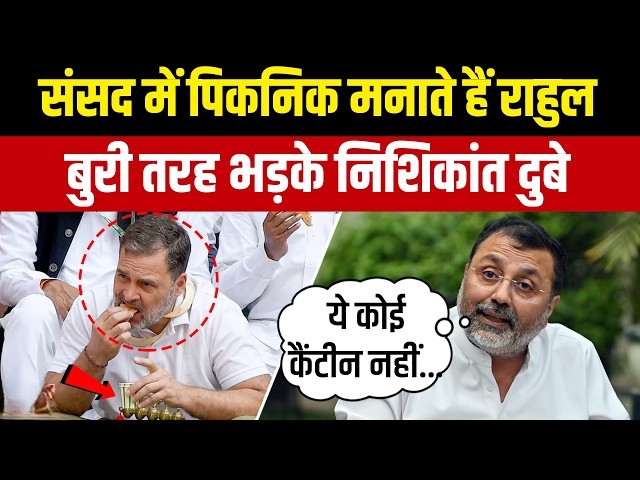
This Is Parliament, Not a Canteen: Nishikant Dubey Scathing Attack on Rahul Gandhi Sparks Heated Debate in Parliament.
Indian politics once again witnessed a dramatic moment in Parliament when Nishikant Dubey sharply criticized Rahul Gandhi, accusing the opposition of undermining parliamentary decorum. The BJP MP’s remarks quickly triggered a heated exchange in the House, igniting fresh debates about the conduct and behavior of opposition leaders during parliamentary proceedings.
The controversy began when Dubey declared, “This is Parliament, not a canteen,” a remark aimed at criticizing what he described as irresponsible behavior by opposition members. His comments soon became a focal point of national political discussion, as analysts and politicians weighed in on the ongoing tensions between the ruling party and opposition leaders.
During his speech, Dubey delivered a Scathing attack on Rahul Gandhi, accusing him of treating parliamentary proceedings lightly and failing to maintain the seriousness expected from elected representatives.
Rising Tensions in Parliament
India’s Parliament has frequently been the stage for intense political confrontations. Debates over policies, governance, and political ideology often lead to heated exchanges between ruling party members and opposition leaders.
In this latest incident, Dubey’s Scathing attack on Rahul Gandhi reflected broader frustrations within the ruling coalition regarding opposition strategies in Parliament. According to Dubey, disruptions, protests, and dramatic political gestures are increasingly replacing constructive debate.
He argued that such behavior undermines the institution of Parliament, which is meant to serve as the primary forum for national dialogue and policymaking.
The Parliament Not a Canteen Remark
Dubey’s comment that Parliament is “not a canteen” quickly went viral across political circles and social media platforms. Supporters of the ruling party praised the statement as a reminder of the seriousness required in legislative proceedings.
Opposition leaders, however, strongly criticized the remark, accusing Dubey of making unnecessary personal comments.
Despite the backlash, Dubey continued his Scathing attack on Rahul Gandhi, insisting that elected representatives must respect parliamentary traditions and maintain discipline during debates.
According to Dubey, parliamentary proceedings should focus on policy discussions and national interests rather than theatrical politics.
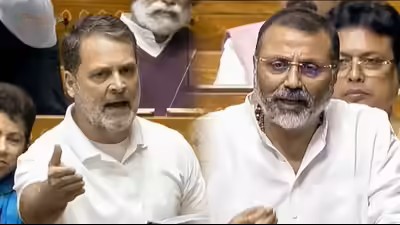
Opposition Responds to the Criticism
Members of the opposition swiftly responded to Dubey’s remarks. Several leaders argued that criticism of the government is an essential part of democratic functioning.
They claimed that Dubey’s Scathing attack on Rahul Gandhi was politically motivated and aimed at diverting attention from pressing national issues.
Opposition MPs also pointed out that disruptions in Parliament often occur because their demands for discussion on key issues are ignored by the government.
These competing narratives highlight the deep political divide currently shaping parliamentary debates.
Parliamentary Conduct Under Scrutiny
The controversy has sparked a broader debate about parliamentary conduct. Political analysts have noted that disruptions, slogan-shouting, and walkouts have become increasingly common in legislative sessions.
In this context, Dubey’s Scathing attack on Rahul Gandhi has reignited discussions about the standards expected from elected representatives.
Some commentators believe that stronger rules and stricter enforcement of parliamentary discipline may be necessary to maintain order during debates.
Others argue that protest and dissent are legitimate forms of political expression within a democratic system.
Political Rivalry Intensifies
The rivalry between the ruling party and the opposition has intensified in recent years, particularly in the lead-up to major elections. Parliamentary confrontations often reflect broader political battles taking place across the country.
Dubey’s Scathing attack on Rahul Gandhi is seen by many observers as part of this larger political struggle.
Supporters of the ruling party argue that the government is attempting to maintain order and focus on governance, while critics claim the government is unwilling to tolerate strong opposition voices.
Such narratives frequently shape public perception of parliamentary debates.
Role of Rahul Gandhi in Opposition Politics
As one of the most prominent leaders in the opposition, Rahul Gandhi often finds himself at the center of political controversies.
His speeches, campaigns, and parliamentary interventions frequently attract strong reactions from both supporters and critics.
Dubey’s Scathing attack on Rahul Gandhi therefore resonates beyond a single parliamentary exchange, becoming part of the broader political discourse surrounding the Congress leader’s role in Indian politics.
Supporters of Rahul Gandhi argue that he represents a key voice challenging government policies and raising issues affecting ordinary citizens.
Media and Public Reaction
The incident quickly captured national attention, with television channels, newspapers, and digital platforms extensively covering the exchange.
Dubey’s Scathing attack on Rahul Gandhi became a trending topic on social media, with users expressing diverse opinions about the controversy.

Some commentators praised Dubey for defending parliamentary decorum, while others criticized his remarks as unnecessarily confrontational.
The polarized reactions reflect the broader political divisions that characterize contemporary Indian politics.
Debate Over Parliamentary Decorum
Maintaining decorum in Parliament has long been a challenge in many democracies around the world.
Frequent interruptions, protests, and confrontational rhetoric often disrupt legislative proceedings.
In this context, Dubey’s Scathing attack on Rahul Gandhi has sparked renewed discussions about whether stricter parliamentary rules are needed.
Supporters of reform argue that stronger enforcement mechanisms could ensure that debates remain productive and focused on national issues.
Critics, however, warn that excessive restrictions could limit legitimate opposition voices.
Impact on Political Discourse
Political rhetoric in India has become increasingly sharp in recent years. Leaders from different parties frequently exchange strong criticism during public speeches and parliamentary debates.
Dubey’s Scathing attack on Rahul Gandhi illustrates how such rhetoric can shape political narratives and influence public opinion.
For many voters, these exchanges serve as indicators of the broader ideological battles between political parties.
They also highlight the intense competition for public attention in a highly dynamic political environment.
The Importance of Parliamentary Debate
Despite controversies and disruptions, Parliament remains the central institution of India’s democratic system.
It is the forum where laws are debated, policies are scrutinized, and the government is held accountable.
In his remarks, Dubey argued that his Scathing attack on Rahul Gandhi was motivated by a desire to preserve the dignity of parliamentary proceedings.
According to him, lawmakers must prioritize meaningful debate over political theatrics.
However, critics argue that confrontational rhetoric can itself contribute to the deterioration of parliamentary discourse.
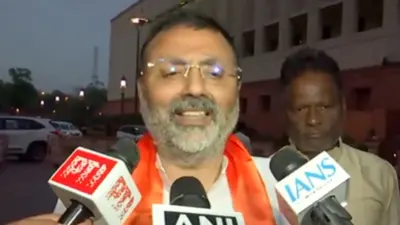
Broader Political Implications
The controversy surrounding Dubey’s remarks may have broader political implications.
As the debate continues, both the ruling party and opposition leaders are likely to use the incident to reinforce their respective narratives.
Dubey’s Scathing attack on Rahul Gandhi could energize supporters of the ruling party while also mobilizing opposition voters who see the remarks as unfair criticism.
Such controversies often play a role in shaping political messaging ahead of elections.
Public Expectations from Leaders
Citizens generally expect elected representatives to uphold high standards of conduct and focus on addressing national challenges.
Incidents like Dubey’s Scathing attack on Rahul Gandhi often prompt discussions about whether political leaders are meeting these expectations.
Many observers believe that constructive debate and respectful dialogue are essential for strengthening democratic institutions.
At the same time, political competition inevitably leads to sharp criticism and passionate exchanges.
Looking Ahead
The controversy surrounding Dubey’s remarks is unlikely to fade quickly. Political leaders, commentators, and citizens will continue to debate the issues raised by the incident.
Dubey’s Scathing attack on Rahul Gandhi has already become a significant talking point in national political discussions.
Whether the debate leads to meaningful reforms in parliamentary conduct remains uncertain.
However, the incident has once again highlighted the importance of maintaining balance between vigorous political debate and respectful parliamentary behavior.
Conclusion
The statement “This is Parliament, not a canteen” delivered by Nishikant Dubey has sparked a major political debate about the role and conduct of opposition leaders in India’s Parliament.
His Scathing attack on Rahul Gandhi has drawn strong reactions from both supporters and critics, reflecting the deep political divisions within the country.
While some view Dubey’s remarks as a necessary defense of parliamentary decorum, others see them as part of the ongoing political rivalry between the ruling party and the opposition.
Ultimately, the controversy underscores the challenges of maintaining productive and respectful debate in a highly competitive political environment. As Parliament continues its work, the focus will remain on how leaders from all sides can ensure that democratic institutions function effectively while representing the diverse voices of the nation.
Read more latest news

